ARC 342R / ARC 388R / T D 357T / T D 387D
Mon 9:00am-12:00pm, SUT 2.110
Open to all ARC students and all Theater and Dance students
Charles Davis: charles.davis@austin.utexas.edu
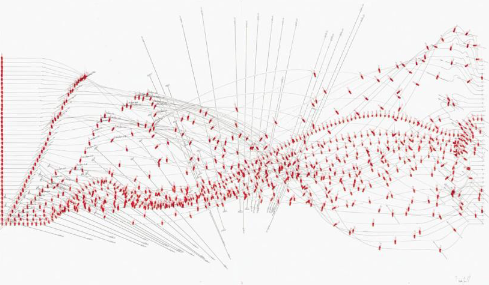
The purpose of this seminar is to develop a principled rubric for diagramming the ephemeral complexity of Black space in the United States. Black placemaking is still grossly undertheorized in contemporary architectural debates largely because of its ephemeral character; while spatial rituals do not always produce novel building forms, they radically transform the public meaning of built spaces, both great and small. The general ‘materiality’ of space theorized by postwar scholars such as Henri Lefebvre and Michel Foucault directly inspired Edward Soja’s and David Harvey’s cultural study of urban space, and more recently bell hooks’ and Sara Ahmed’s feminist analysis of racialized space. We will expand this scholarly tradition by applying the tools of modern dance choreography and critical geography to the documentation of eight historical case studies.
Each week, students will review one rubric or technique for recording space, from the notational systems of dance choreography to the topographical methodologies of critical geography. These approaches range from the abstract drawings produced by choreographers such as Rudolph Von Laban, William Forsythe, and Trisha Brown; Joseph Beuys’ performative theory of fluxus; W.E.B. Dubois’ infographics on African American life; and In the first half of each class, we will engage with primary readings and secondary interpretations of a single technique. Then, in the second half of each class, we will experiment with applying each technique to a historical case study. Final projects will consist of a suite of drawings (between 4-6) that record an ephemeral aspect of a historical case study. The best work will be displayed in an upcoming exhibit held at the Chicago Architecture Center in the spring of 2027.