Exploring Unfinished Edges in Australia

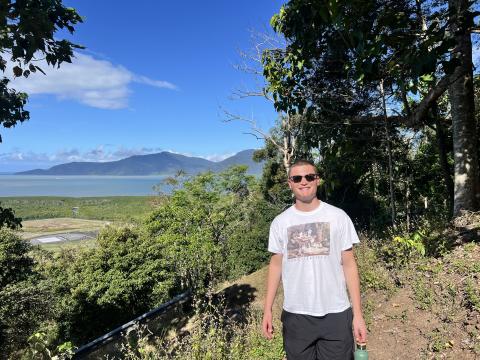
Aaron Pendergast (M.Arch) is fascinated by the relationship between cities and their edges. Born in Tampa, Florida and then spending time in Charleston, South Carolina, the tension between waterfronts and urban edges was impossible for him to ignore, but not exclusive to these places. With support from the 2026 Boone Powell Family Travel Prize in Urban Design, Pendergast had the opportunity to study these forces at the coastlines in Australia.
“The primary focus of my research has been figuring out what makes an edge meaningful and effective,” said Pendergast. “That question has sat inside a larger series of questions I have been working through in my writing on what makes our cities successful to begin with and why we return to them despite the challenges and damage that come along with our modern cities. Urban theory answers this question for the city’s interior, yet remains silent when the edge is mentioned.”
Established by Boone Powell (B.Arch ’56) and his daughters Laura (MSCRP ’95) and Leilah (MSCRP ’96), the Boone Powell Family Prize in Urban Design has provided independent research travel funding to School of Architecture students since 2005. As the 2026 recipient, Pendergast’s project, “Unfinished Edges: Learning to Inhabit Our Future,” capped off with a two-week research trip to Australia during the summer to study how different cities meet their waterfronts.
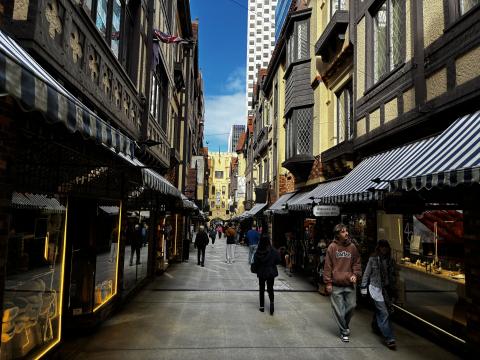
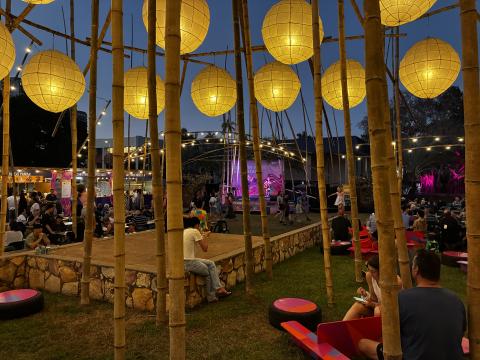
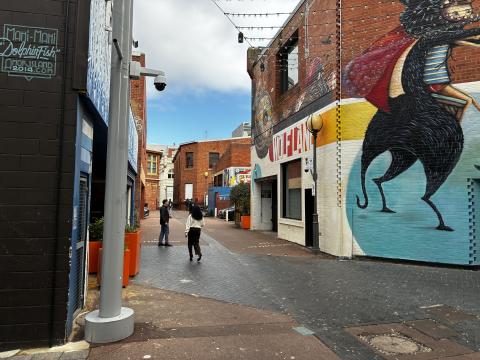
Pendergast visited seven different areas of Australia for this hands-on research: Melbourne, Darwin, Perth, Fremantle, Sydney, Cairns, and Katoomba.
“Before visiting, most literature and analysis I’d studied pointed toward the concept of access as the priority, where all else would fall into place once these open and connected spaces could be reached,” he said. “Visiting these cities challenged that. While this idea of access remains critical in terms of many of our edges, what mattered more was the intentional programming of uses for the city’s edges. How a space is actually designed to be used is more important than the ease of getting to it.”
Now back on campus, Pendergast reflected on the trip and how it has impacted his research perspective moving forward.
“Reading about and standing in a place are two completely different kinds of understanding,” said Pendergast. “Our job is not to invent something new for every place, rather it is to understand how and why people love the places already in front of us and design around that.”