
Faculty Publications: Spring 2026

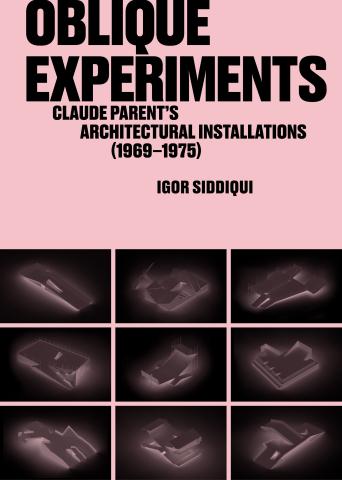
Oblique Experiments: Claude Parent’s Architectural Installations (1969–1975)
Igor Siddiqui; Applied Research + Design Publishing, 2025.
This book prompts the reader to imagine the radical potential of obliqueness in a range of contemporary practices—beyond the literal prospect of life on sloped floors. As such, Oblique Experiments builds upon Parent’s work in order to imagine new forms of experimentation in architecture, design, and art.
With the radical proposition of life on inclined planes—a theory known as the oblique function—the French architect Claude Parent sought to free architecture of orthogonal form, renew its social relevance, and inspire people’s interest in the built environment. Oblique Experiments: Claude Parent’s Architectural Installations (1969–1975) explores the significance of a series of temporary interventions that he designed in an attempt to convert his theory into practice. Referred to as practicables, these installations incorporated oblique geometries, involved interdisciplinary collaboration, and made themselves at home in existing buildings, often inside of French cultural centers known as maisons de la culture. Using rarely published archival materials as well as new drawings produced by the book’s author, Oblique Experiments brings overdue attention to this series of architectural experiments with enduring intellectual and creative appeal.
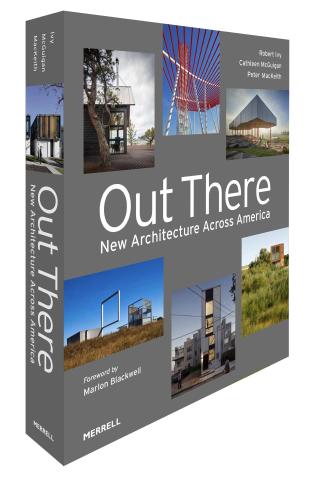
Out There is a critical survey of 50 architectural firms working across America’s regional cities and small towns. These practitioners operate at every scale and with all building types, weaving a rich architectural tapestry that reflects the breadth and diversity of the American landscape. What unites the firms featured in this volume is a commitment to architecture’s civic, social, and environmental responsibilities.
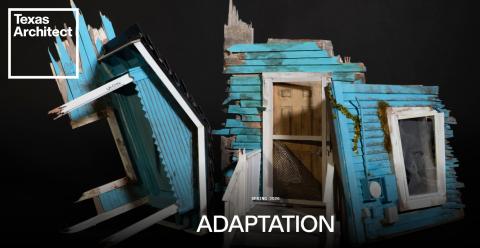
Embracing Adaptation: A Case for Creative Reuse Over Preservation
Keith Simon; Texas Architect Magazine, April 2026
This articles weighs in on the ongoing debate about whether to tear down or preserve Dallas City Hall, a Brutalist building by IM Pe, and presents a third, sustainable option to adapt the building.
Keith Simon discusses adaptive reuse as the most impactful path to sustainability, arguing that extending a building’s life is the single most impactful sustainability strategy that we have in our industry. He contrasts adaptation with preservation, urge a future-oriented approach that repairs, remediates, and evolves existing structures while preserving cultural memory and enriching occupant experience. In short, it advocates long-term, performance-focused design that extends lifespans, reduces environmental impact, and sustains cultural memory.
Residence 1401 by Miró Rivera Architects (Juan Miró)
Lara Hallock; “Framing the View.” Luxe Interiors + Design, March/April 2026.
A key focus of this article is the seamless connection between indoors and outdoors, achieved through large glass openings, courtyards, and the preservation of existing trees, inspired by the concept of “borrowed scenery.”
The article describes a modern home in Austin’s Clarksville neighborhood designed by Miró Rivera Architects for a pair of empty nesters, blending contemporary design with respect for the area’s historic character. The house is organized into intersecting pavilions and carefully uses its sloped site, rooflines, and materials to maximize space while maintaining a low, neighborhood-friendly profile. Inside, warm wood finishes, curved ceilings, and built-in furnishings balance the home’s modern geometry, creating a cohesive and highly functional living environment tailored for downsizing. Overall, the project demonstrates how thoughtful design can create a rich, private, and nature-connected living experience even within a compact urban setting.
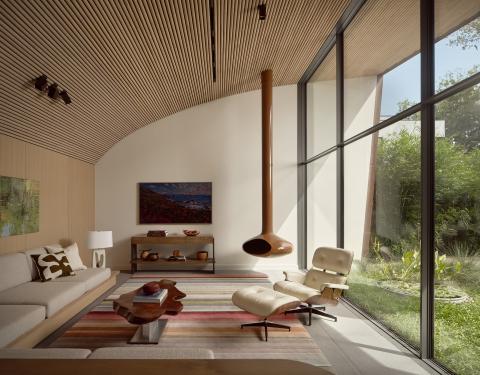
Project: Residence 1401 Credit: Casey Dunn
Casa Lotus by Miró Rivera Architects (Juan Miró)
Sergio Rodriguez-Blanco; “The Mud and the Lotus Flower.” Architectural Digest Mexico, March/April/May 2026.
The project balances structural rigor with aesthetic sensitivity, combining materials, light, and spatial layout to create a contemplative atmosphere. The spaces are not just traversed but experienced as a continuous visual narrative.
The house featured in the article—known as Casa Lotus—is conceived as a space where architecture, art, and landscape merge to create a livable gallery-like experience. The design is based on the idea of “conscious living,” in which each architectural element serves as a support for artworks without losing its domestic function. Overall, the house redefines the concept of a home by blending everyday life with artistic expression, becoming an environment where art and architecture are in constant dialogue.
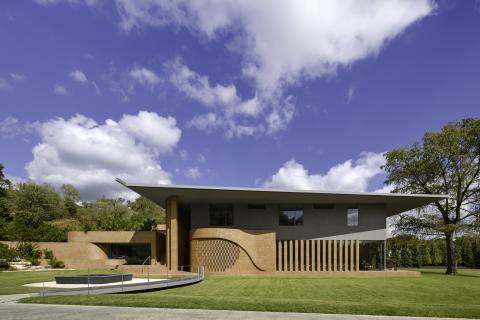
Project: Casa Lotus Credit: Rafael Gamo