ARC 327R, ARC 386M
T 3:30PM-6:30PM, WMB 5.102
Open to ARC Upper Division Undergrads and Grads
Instructor: Jeffery Halstead
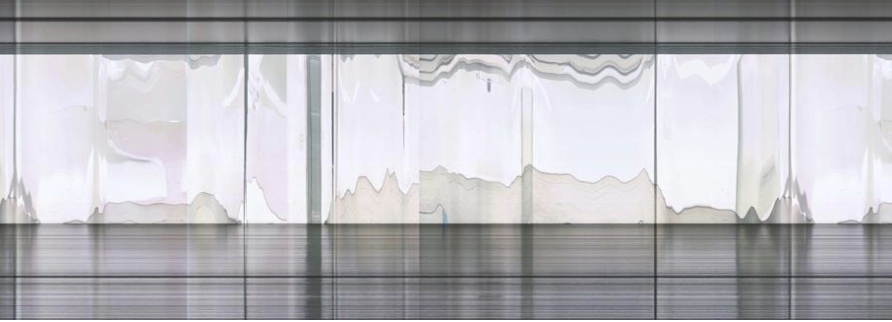
This seminar examines how sensing technologies translate the built environment into data and assemble partial observations into models of the world. Contact sensing measures through direct physical contact with a material or surface; remote sensing gathers information at a distance through cameras and other instruments. Together, these approaches offer ways to investigate how architecture is captured, interpreted, and reconstructed. Just as large language models are trained on vast collections of text, including material scraped from the web, visual datasets provide the basis for computational systems to reconstruct spatial environments. The seminar considers the implications of a constantly updating model of the world, assembled from photographs, sensor readings, and accumulated viewpoints. Working with photogrammetry, Gaussian splatting, and slit scanning, students will examine how these representations organize spatial knowledge, attending to the gaps, distortions, and assumptions embedded within them. Through readings, discussions, technical workshops, and fieldwork, students will translate collected data into architectural elevation studies, exploring relationships between surface, depth, movement, and time. The elevation becomes a means of investigating architecture as an environment continuously recorded, updated, and reconstructed.