
On Not Losing the Plot

As Ken Yeh recalls, he was happily getting ready for a weekend at the beach during the early ’90s when his cousin walked in and said, “What are you doing? We have SAT’s today!” The weekend plans quickly evaporated and off he went to take the test, await his results, and follow up with a visit to the U.S. Embassy in Kuala Lumpur, Malaysia, (this being the repository of prospectuses for colleges and universities in the pre-internet era). There on a tiny shelf were the names of distant and unknown places: Syracuse, Colorado Springs, Texas … hang on, Texas — that’s the home of J.R. and his pals in the world-famous soap opera “Dallas.” The prospectus came off the shelf, and there in the centerfold was The University of Texas at Austin with pictures of an indoor swimming center of enormous proportions. As a national swimmer, Ken decided: This was it. He sent in his application and was thrilled to be accepted.
When it came time for Ken to leave home, venturing to the U.S. for the first time, Ken’s dad handed him a one-way ticket, $1,000 in traveler’s checks, and a phone number to call on arrival. After multiple layovers and 48 hours of travel, Ken arrived in Houston only to find out that he needed a quarter to make a phone call. Relying on the kindness of strangers, quarter in hand, Ken called his contact to hear she had no idea who he was, but as luck would have it, her daughter was also studying at UT. They picked him up at the airport and drove together to Austin, finding accommodation in a share-house on Red River Street. A couple of years later at the School of Architecture, he would meet Carol Marra, who had made her way to Austin as the second of three Longhorn siblings.
The School of Architecture was our first home. We had keys to the buildings and spent more time there than in our real homes. It is a time we recall with fondness for the lifelong friendships and the many professors who would influence us: Gerlinde Leiding, with her quiet force; Andy Vernooy, working alongside us at 3 a.m.; Sinclair Black, who had a first-rate B.S. detector and once said during a critique that “you’re walking on thin eggshells of metaphor”; and Michael Benedikt, who was as insightful as he was incisive, teaching us to question everything. They and many others taught us to be sharp, apply ourselves and persevere.
Subsisting on $1.25 fried rice from a now-defunct food cart of Guadalupe, we learned to be resourceful, scrounging for model materials in the trash, picking up cardboard from the bicycle shops, and raiding the wood shop for scraps. We read “Shelter and Land Use” from Stewart Brand’s “Whole Earth Catalog” in Battle Hall, listened to stories of Pliny Fisk and Austin’s Green Building Program, visited projects by Lake Flato — all of which seeded acute environmental awareness.
Thirty years on, these influences remain visible in our work as we strive to be resourceful in the face of scarcity and design in dialogue with environmental and social contexts:
Our Shelter@Rainforest project is a strategy for an architectural and cultural intervention in a remote and scarred landscape in Malaysia. Informed and formed by an understanding of vernacular traditions and input from the local Murut community, the project utilizes design and technology to create an architecture of resilience that fulfills the commercial goals of the client. Designing a modular kit-of-parts led to accelerated building processes and simplified logistics, overcoming scarcity of labor and minimizing environmental impacts.
Sky House transforms the historical British-Australian urban terrace-house into a new vision of sustainability: integrating and balancing adaptive reuse, environmental performance, climate, social adaptability and regenerative design. Renovation and adaptation of these existing buildings ensure their embodied culture is not lost and the embodied carbon remains locked away.
Eco-House Leura, our own home, combines a sensitive approach to nature with an economy of means — incorporating numerous salvaged, seconds and recycled materials. Responding to the site’s ecology and challenging conditions, wildfire risks, and a desire for flexibility and adaptability, the home transcends multiple constraints to demonstrate how we can protect and regenerate the environment that sustains us.
A great education equips you with the capability to take risks and attempt daring works of architecture in circumstances and geographies that appear dubious. It also reveals obvious inequity within the educational system — not every university is like UT, and not everyone gets a great education. Our answer to this frustration has been to put what we learned in service of society and with gratitude for the people, the institution and the opportunities that continue to define our work.
Eco House Leura by Marra+Yeh Architects. Photo by Brett Boardman.
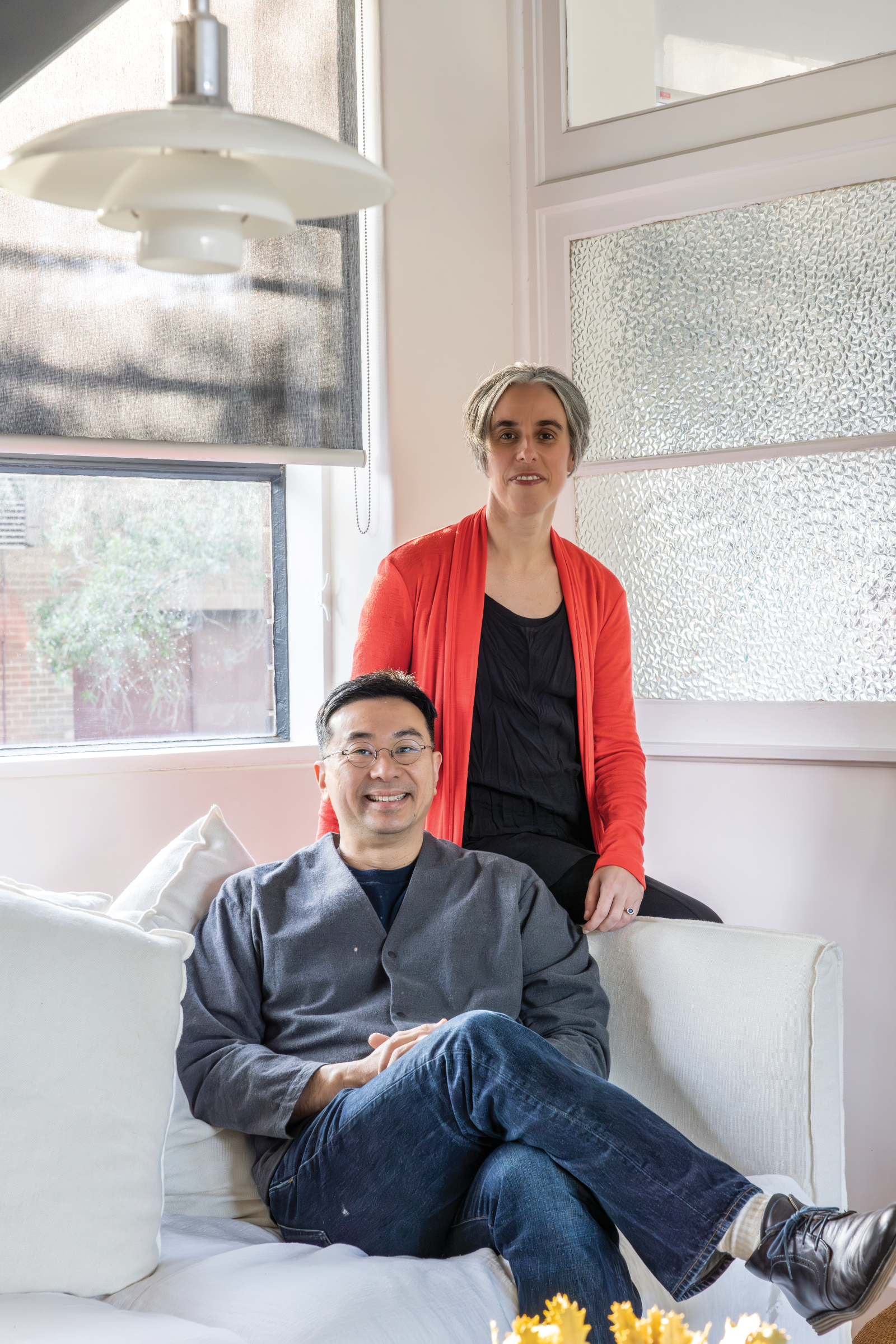
Ken Yeh and Carol Marra. Photo by Brett Boardman.
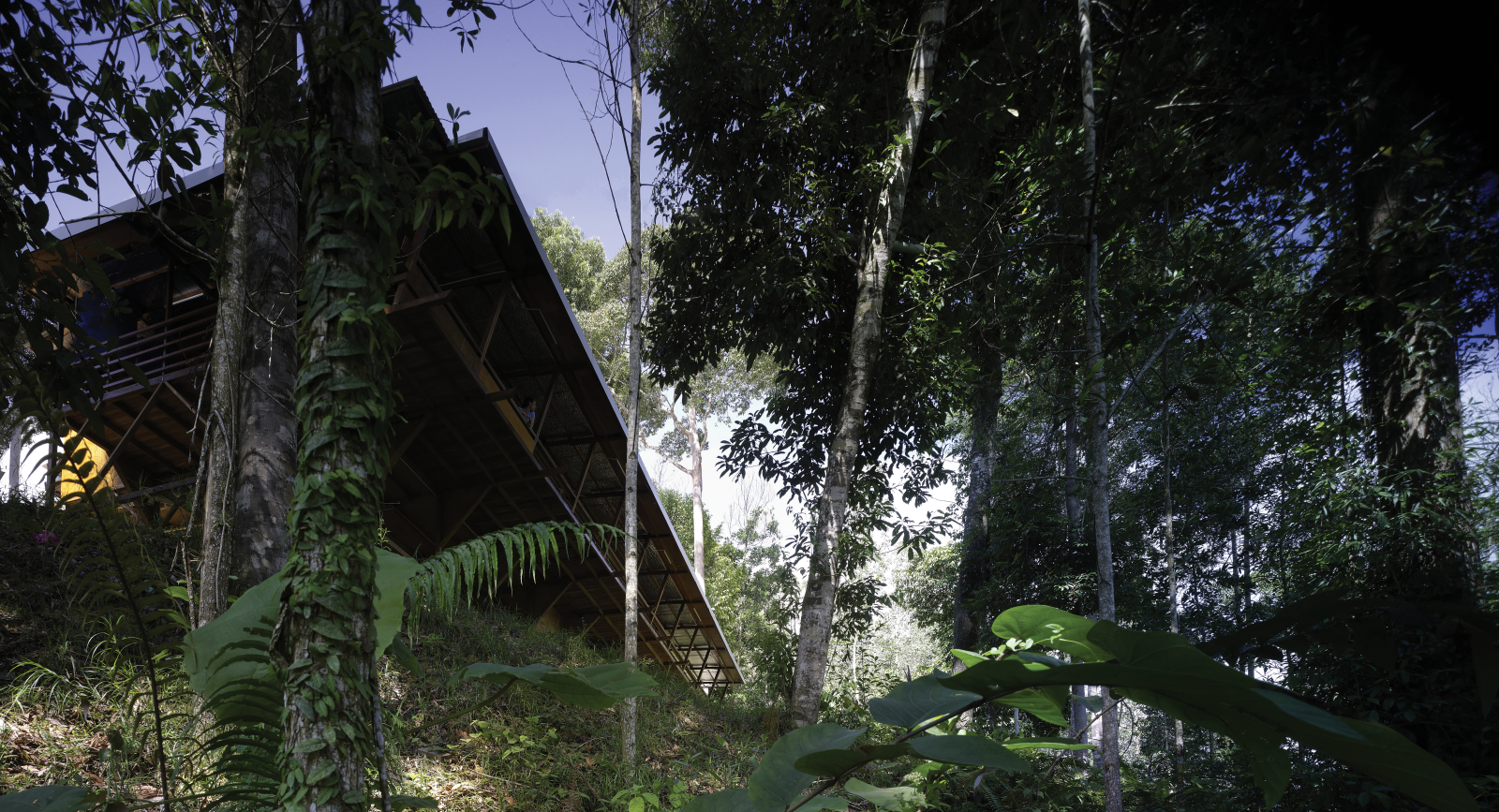
Shelter@Rainforest by Marra+Yeh Architects. Photo by Brett Boardman.
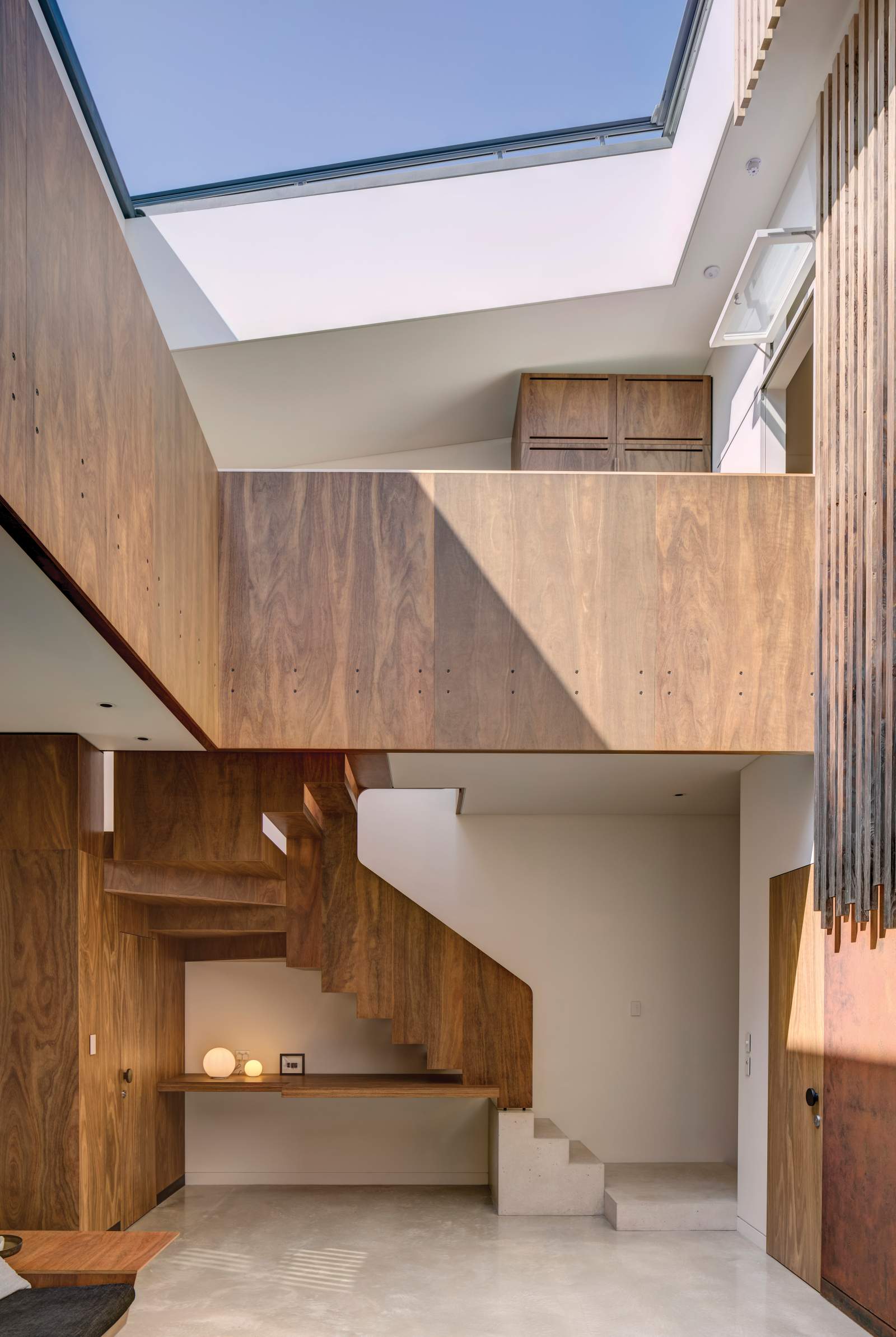
Sky House by Marra+Yeh Architects. Photo by Brett Boardman.