Finding and Making Instruments of Care for Puerto Rico

Students in Emerging Scholar in Design Fellow Carlos H. Blanco’s Spring 2026 Advanced Studio explored how architecture can support care, resilience and ecological systems, with Puerto Rico at the heart of their investigation.
Puerto Rico presents an urgent and multi-layered backdrop of environmental precarity, infrastructural fragility, and socio-economic transformations that intersect across both rural and urban territories. The island faces increasingly frequent and intense hurricane seasons, such as the 2017 season where Hurricane Maria triggered a near-total collapse of the island’s electrical system. Through this studio, students learned to see architecture as an instrument of care and resistance, one that operates as a precise, poetic mechanism that supports the delicate interplay between technological innovation and ancestral and ecological knowledge, rather than as a singular, definitive solution.
The studio was split into three main phases. First, students conducted territorial research across selected U.S. landscapes. Through drawings and physical modeling, they investigated the underlying political, environmental, and infrastructural systems of their selected site. They also developed “instruments of care,” which are speculative architectural devices that respond to site conditions, created through various techniques of drawing, tracing, scaling and more. In total, each student produced drawings that map out and resolve a single instrument or set of instruments, addressing the material logic, performative capacity and relationship to the site.
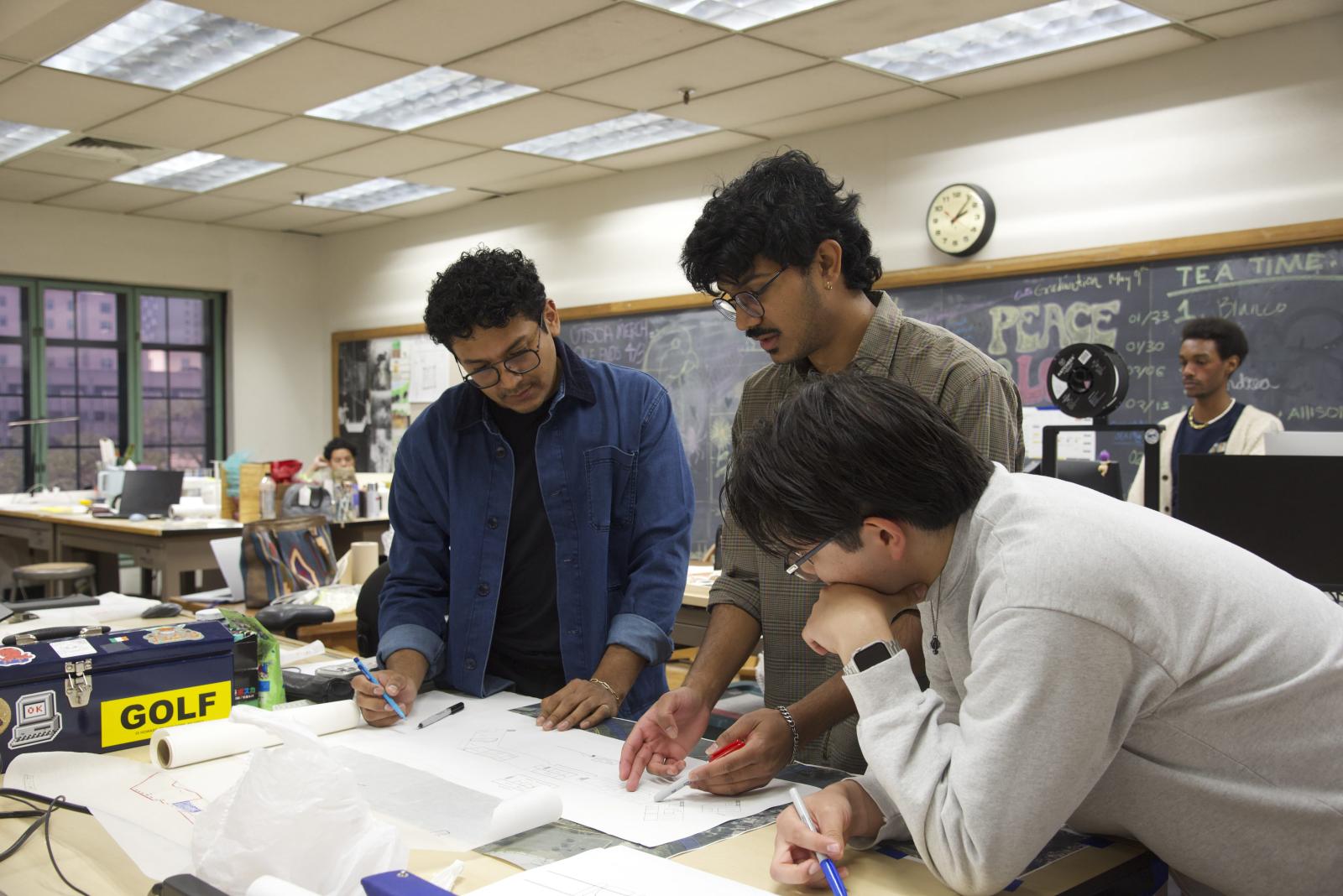
Photo from studio, with Carlos Blanco and Daniel Guerra and Suhas Aleti
"This semester, students were tasked to become critical thinkers, choosing to let their intuition guide their design, while addressing a micro-thesis inquiry through design. It isn’t an easy task, but necessary for designers to observe, reflect, and respond to our world.” said Carlos H. Blanco.
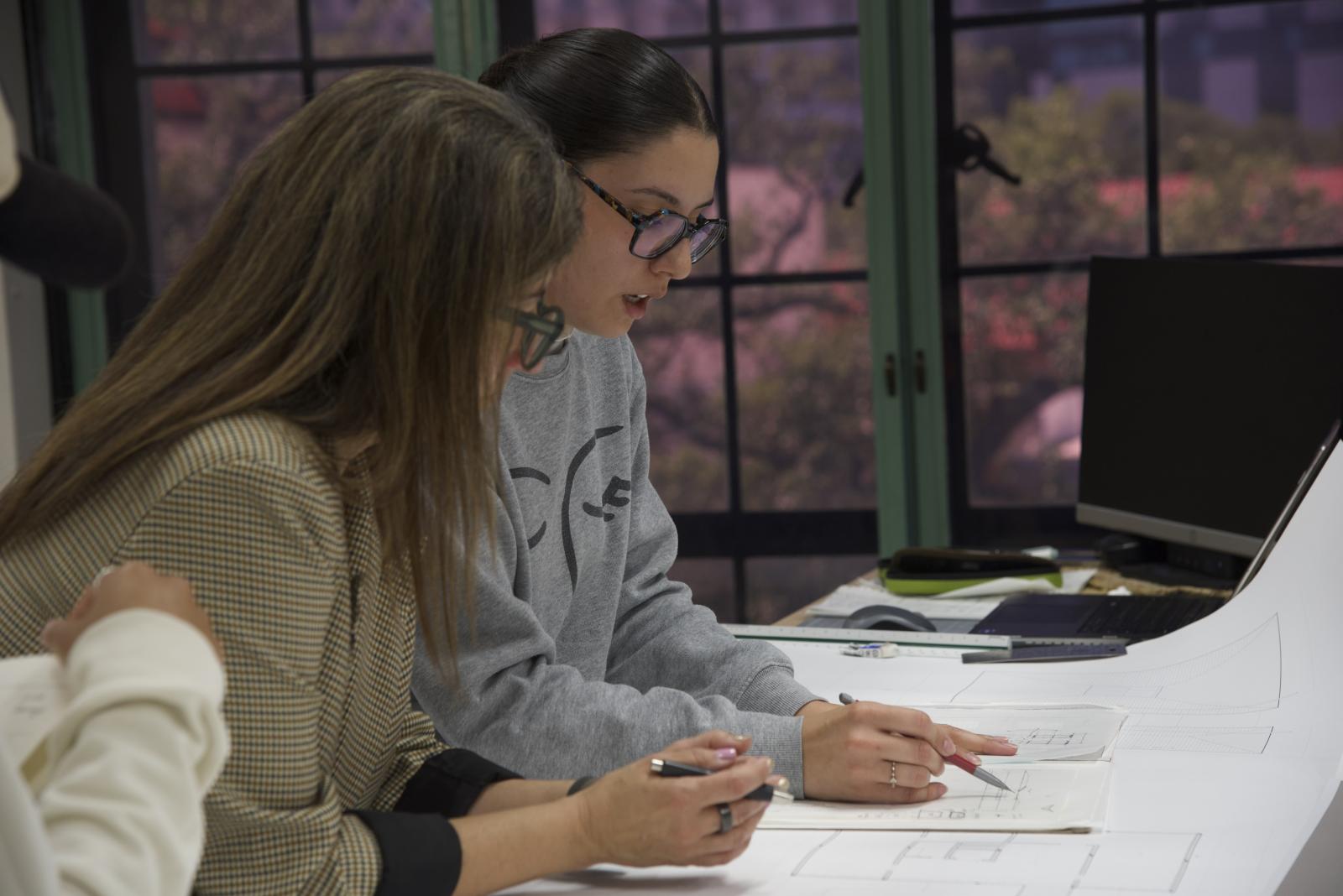
Photo from studio, with Ada Corral and Andrea Bailey-Ortiz
In the second phase of the studio, students traveled to Puerto Rico to further their research. Andrea D. Bailey-Ortiz (M.Arch) is one of the fourteen students in this studio that traveled across the island to get a firsthand look at the island’s varied infrastructure, landscape and culture.
“This trip allowed us to witness, and attempt to understand, the realities, both positive and negative, that shape the daily lives of Puerto Ricans on the island, and in some ways, within the diaspora as well.”
Bailey-Ortiz explains that the site visit enhanced the research she was doing in studio. She expressed that when you're researching Puerto Rico from afar and in English, it is easy to primarily focus on infrastructure failures and other shortcomings, but that’s not the full picture.
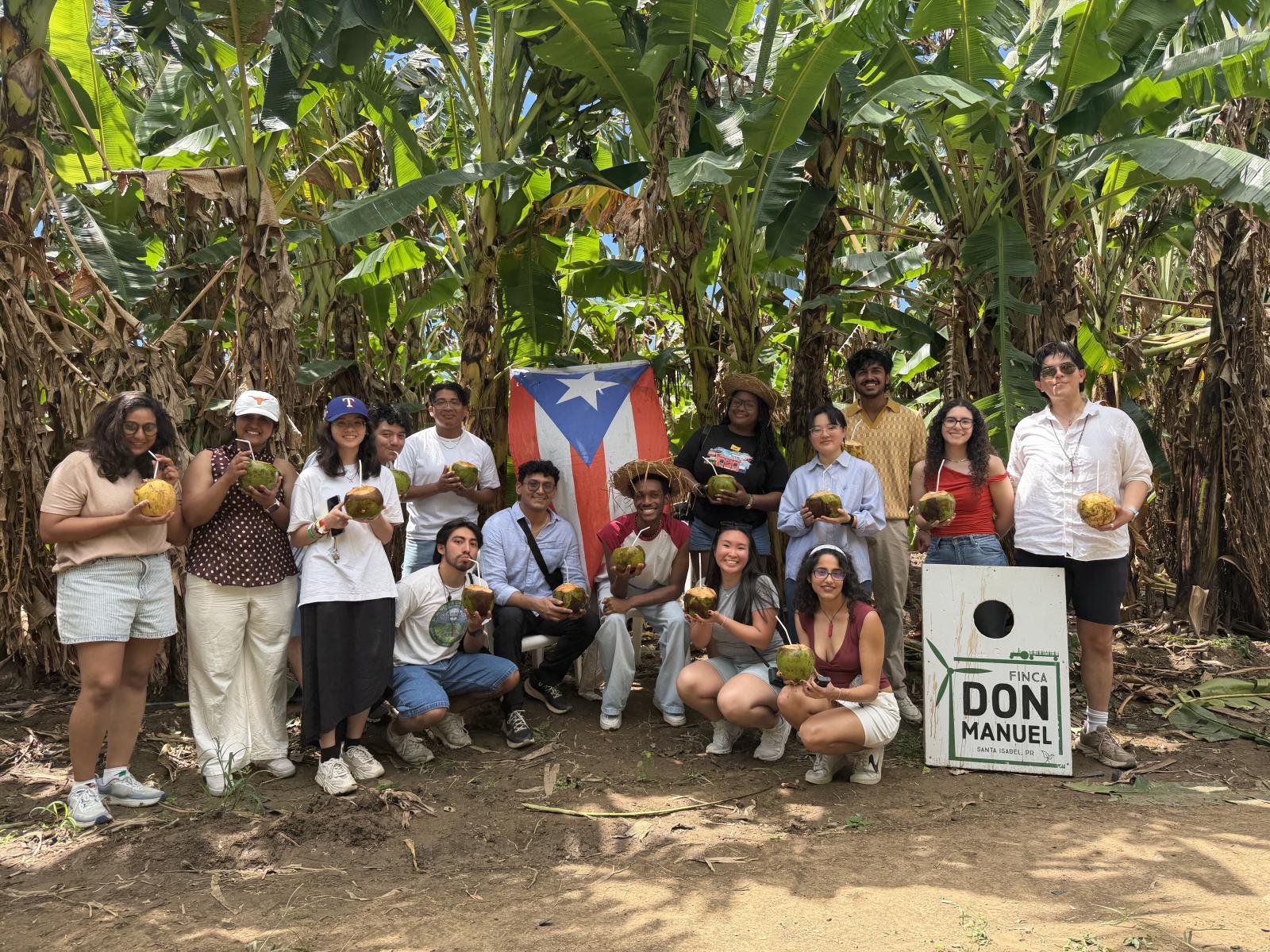
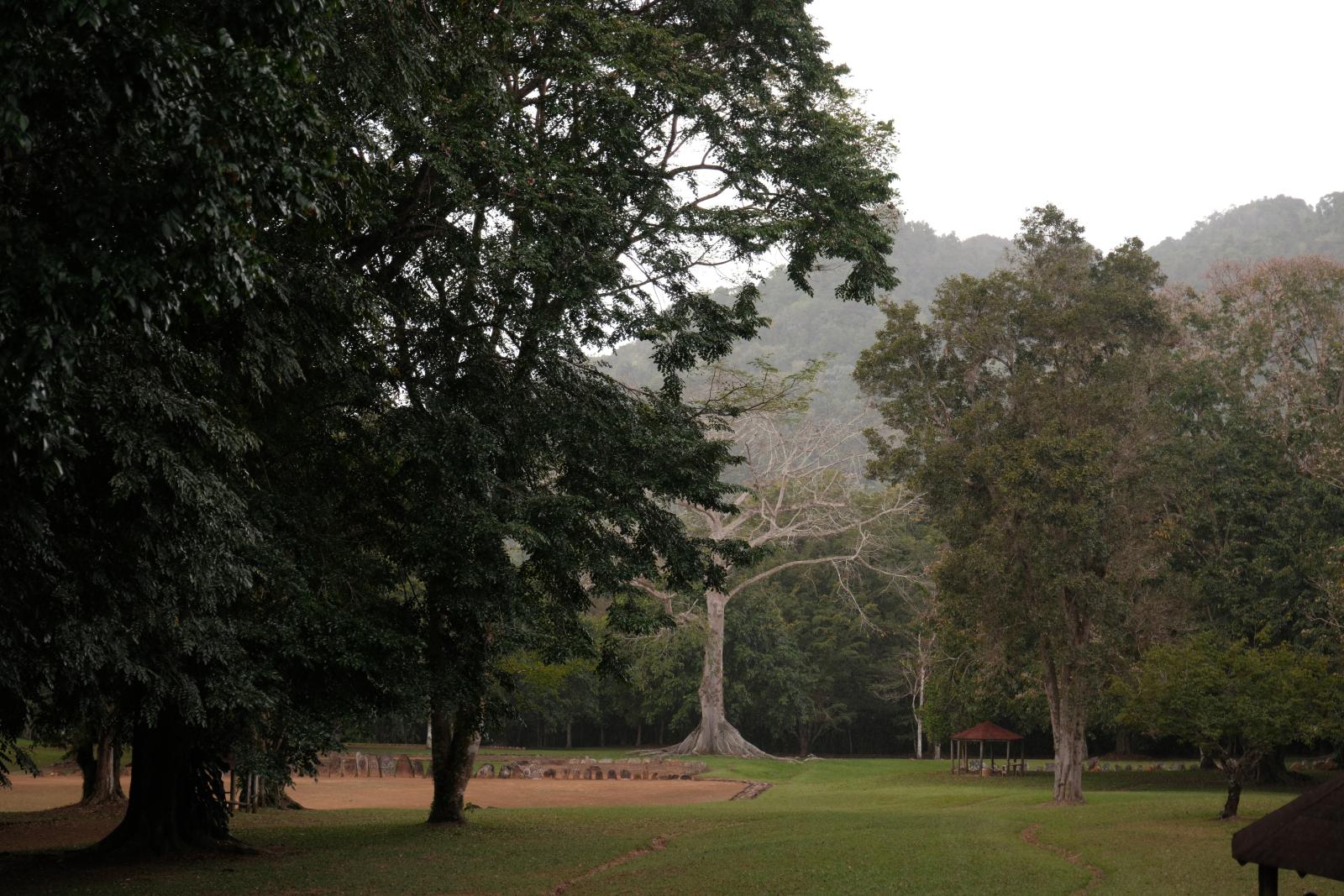
Photo of the studio trip to Puerto Rico
“Our visit revealed a parallel truth: local communities and everyday people are often the driving force behind networks of support, looking out for one another, especially in times of need or crisis.”
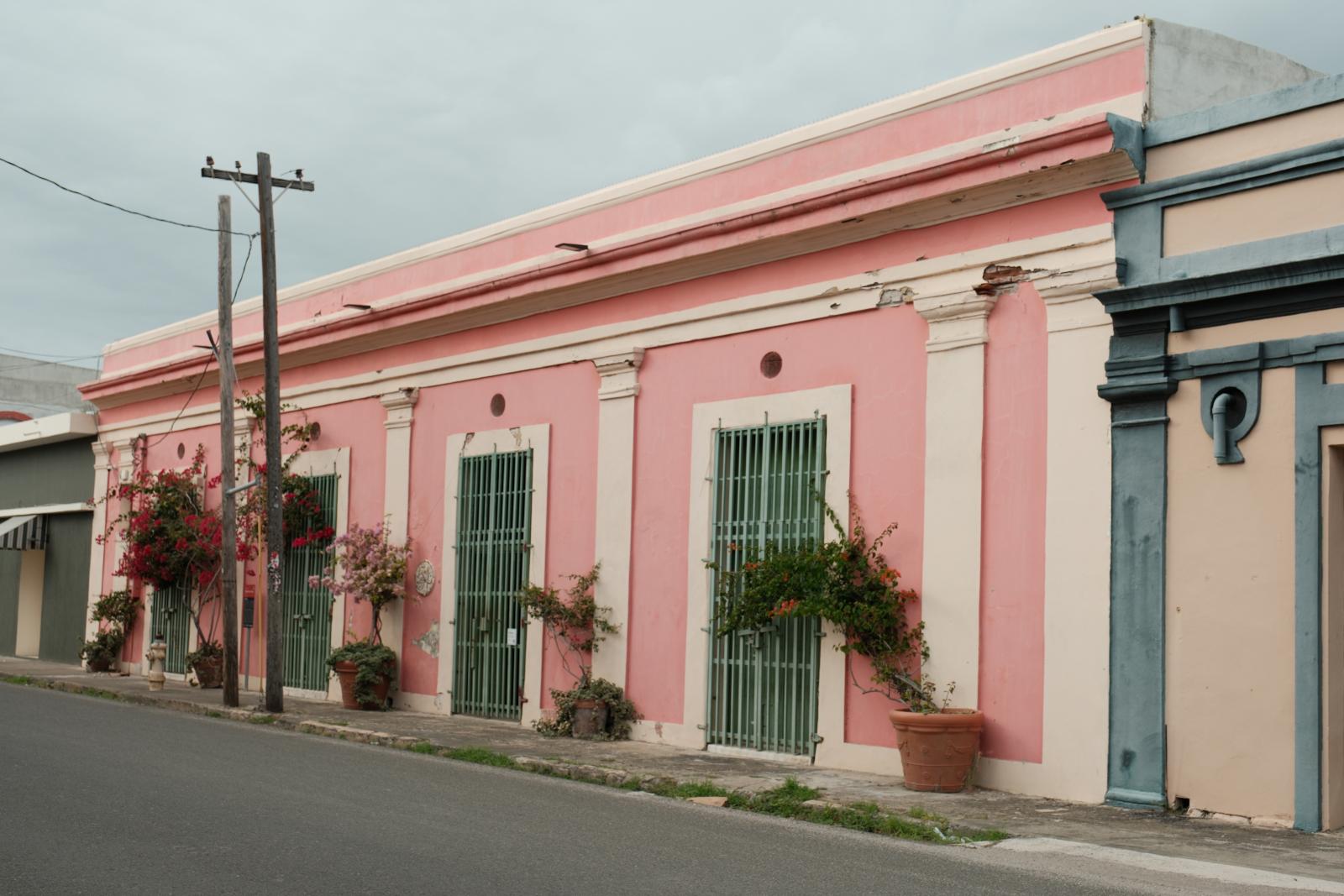
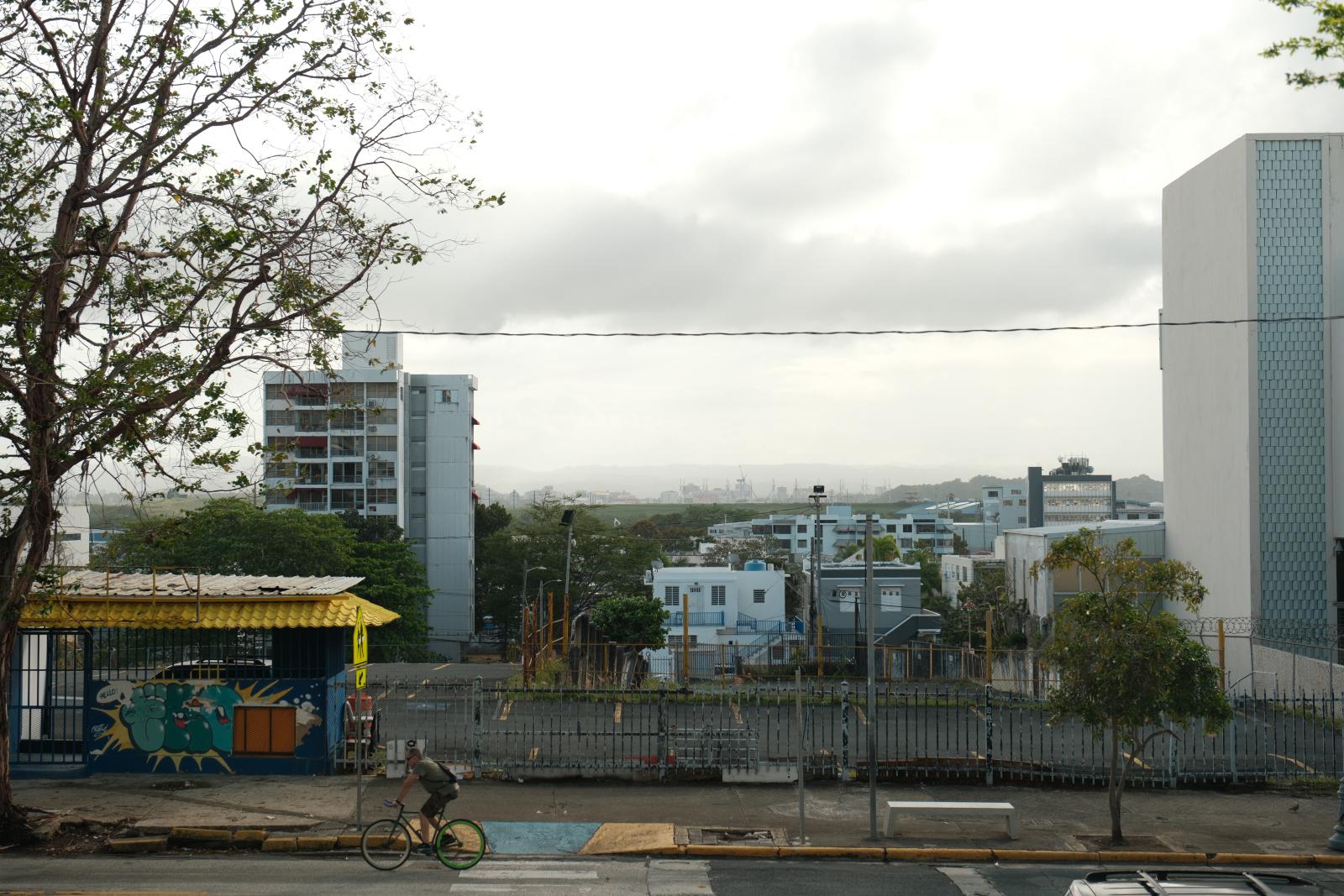
Students were not confined to one area; they observed both rural and urban sites across the island. During their week of exploration, they visited San Juan, Dorado, Manati, Arecibo, Utuado, Adjuntas, Ponce, Salinas, Santa Isabel and Fajardo. Their days were a mix of independent exploration and guided visits to museums, town centers and local farms, which provided a more layered and grounded understanding of the island. Daniel Guerra (B.Arch) reflected on the different biomes, economies, and built conditions, which he says don't often get read together.
“The most persistent observation was that Puerto Rico's built environment isn't one condition. It's a gradient of exposure to capital, maintenance, and institutional attention,” said Guerra.
“Dorado showed that the island's environment can be well maintained. Knowledge and labor exist. What's uneven is who those resources actually reach. Arecibo made that gap legible in the building stock itself. The rural interior operated differently: infrastructure was sparse, but what existed in its place were community networks, agricultural knowledge, and informal economies. People had built systems of care around institutional absence rather than alongside it.”
Bailey-Ortiz remarks that the decision to not solely stay in San Juan’s greater metro area, was crucial to understanding the differences between the regions, despite their close proximity.
“Even as a native Puerto Rican, our studio visit to Puerto Rico was incredibly insightful for me,” said Bailey-Ortiz. “The [studio] consisted of extensive exploration and immersion in Puerto Rican culture and everyday life. I believe it also helped many of my classmates better understand the diverse identities that make up Puerto Rican culture and how these have shaped our society.”
In the final phase of the studio, students worked in pairs to create a site-specific project that captures their research, speculation, and implementation of their architectural instruments of care.
A central aim of the studio was Blanco’s insistence that students formulate thoughtful questions to guide their work. He pushed them to consider what they were genuinely curious about and what they were looking to explore within architecture themselves.
“For me, it is incredibly important to approach this intervention with a holistic and decolonial mindset. As a result, many of my questions revolved around how architecture can be used as a tool to support community and environmental resilience, rather than imposing solutions that assume we know what is best for any given site of its users,” said Bailey-Ortiz.
“This studio clarified something I hadn't quite named before; that there are systems of care that architecture can facilitate. Not just through architecture as a formal object, but questions how it operates (internally and externally), who operates it, and whether the people it serves can understand and use it without depending on someone else to maintain it for them,” said Guerra.