
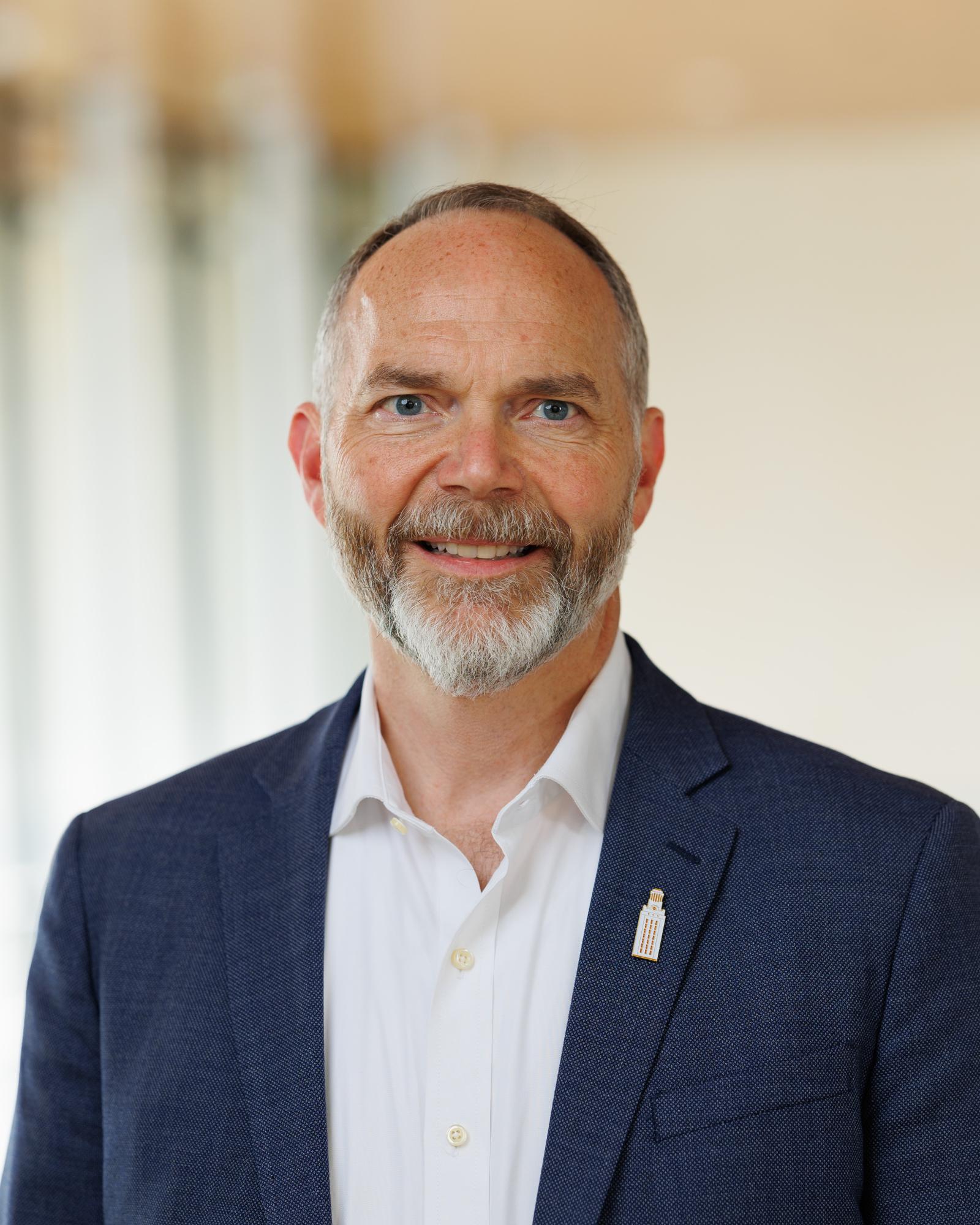
Interview with Brent Stringfellow, University Architect

What exactly is a “campus culture” and how is it constructed and enriched through the built environment? How does the care and planning of natural landscape, in particular, define our culture at UT Austin?
The university campus is certainly a part of the culture of Austin and an active participant in the creation of that culture. It is part of the city’s very identity; when you’re at the center of Austin, you're on the 40 Acres of The University of Texas. Our campus is an environment that symbolizes legacy in a way that is forward-looking, offering very specific histories and aspirations in its contemporary and historic buildings, as well as the landscapes and open spaces. Landscape has the power to cite history while also pointing towards our ambitions for the future. Speedway is the ultimate example: what was once a vehicular road is now one of the most evocative places to walk on campus. Its lively transformation demonstrates the power of landscape on the culture of the university over time.
I would also argue that a campus culture is defined by how space is managed and maintained. How is it taken care of? What are we focused on? What are the unique pieces that make it whole? Landscape strategy communicates what's important, and maybe what's less important, depending on different times of the of the campus's life. At the end of the day, the personality of these spaces is defined by how the students choose to use it. A great example is the flag courts. Out on Main Plaza, these are, for most part, ceremonial, formal, welcoming elements that help to frame the Tower. It is an impressive monumental aspect of the university, but if you swing by there around 6:30 at night, the court is transformed into a practice area for the cheerleaders. While the flips and somersaults are somewhat to our chagrin due to the damage to the lawn, at the same time, this activation serves as proof of how a university environment is never static.
These spaces are dynamic in ways that might surprise you. There are high density and high traffic areas with lots of rapid movement, like Speedway, or 24th St, or the approach to Hogg Memorial Auditorium, or Bevo Boulevard on game day. On the other hand, there are areas like the South Mall, which offers a formal entry sequence into the historic part of campus, or areas like Waller Creek that are very informal, natural, and meandering. Waller Creek is particularly symbolic of our campus’ engagement with the city, especially with the work of the Waterloo Conservancy to give the waterway more presence while improving water drainage and flow. We’re excited to expand the potential of the creek even further as a campus amenity. Still, there are countless pocket park-type spaces on campus that can remain undiscovered, even if you've been here for years.
The variety of landscape across the campus reflects, in many respects, the variety of activities and values that come together at a university and make it a special place. We have all these different spaces that ultimately speak to how the culture of a university sees itself in physical form.
Describe the ways in which you feel the UT Campus affects and is affected by the City of Austin—what inspires you about this symbiotic relationship? How is the momentum of growth and development advancing the school’s Campus Master Plan process?
The university is a huge center of gravity in the city and in its development. It's an interesting time for Austin, and we are looking to nurture our growth in parallel with the city’s. Physically, the relationship between the university and the city is very different now than it was 30-40 years ago, when there was a much bigger distinction between city and campus. Now, The University of Texas at Austin has assumed the role of an urban campus, no longer an island in the center of town. Our presence is a certainly a product of our scale as an institution. We're a 90,000-person city within a city with immense event capacity. To convey the massive scale of UT Austin, I often joke: Imagine if New York City had Yankee Stadium, the Metropolitan Museum of Art, Lincoln Center, a University, and Central Park all piled on top of one of another on a couple blocks. There is no single hand-off point from the city into the university, and there are countless ways to arrive (some more impressive than others). It is important for us to thoughtfully consider how the edges of campus are informed within the new Campus Master Plan. On one hand, you have South Mall, which is a very traditional gateway welcome, or the approach from Martin Luther King Jr Blvd turning onto University Ave, which offers a formal welcoming point of campus. Or, consider West Campus and the Drag, intersecting with all of the life that has been accelerated by the development of West campus, which now brings more students than ever from this direction. The West Mall remains a thoughtful design, elegantly upholding its purpose as it frames The Tower. On the other hand, you have places like 21st St. and 24th St.—they're a little messier and aren’t clear as gateways. We’re excited to put more thought to these spaces and landscape plays an essential role in defining each experience as coherent, comfortable, welcoming, and directional.
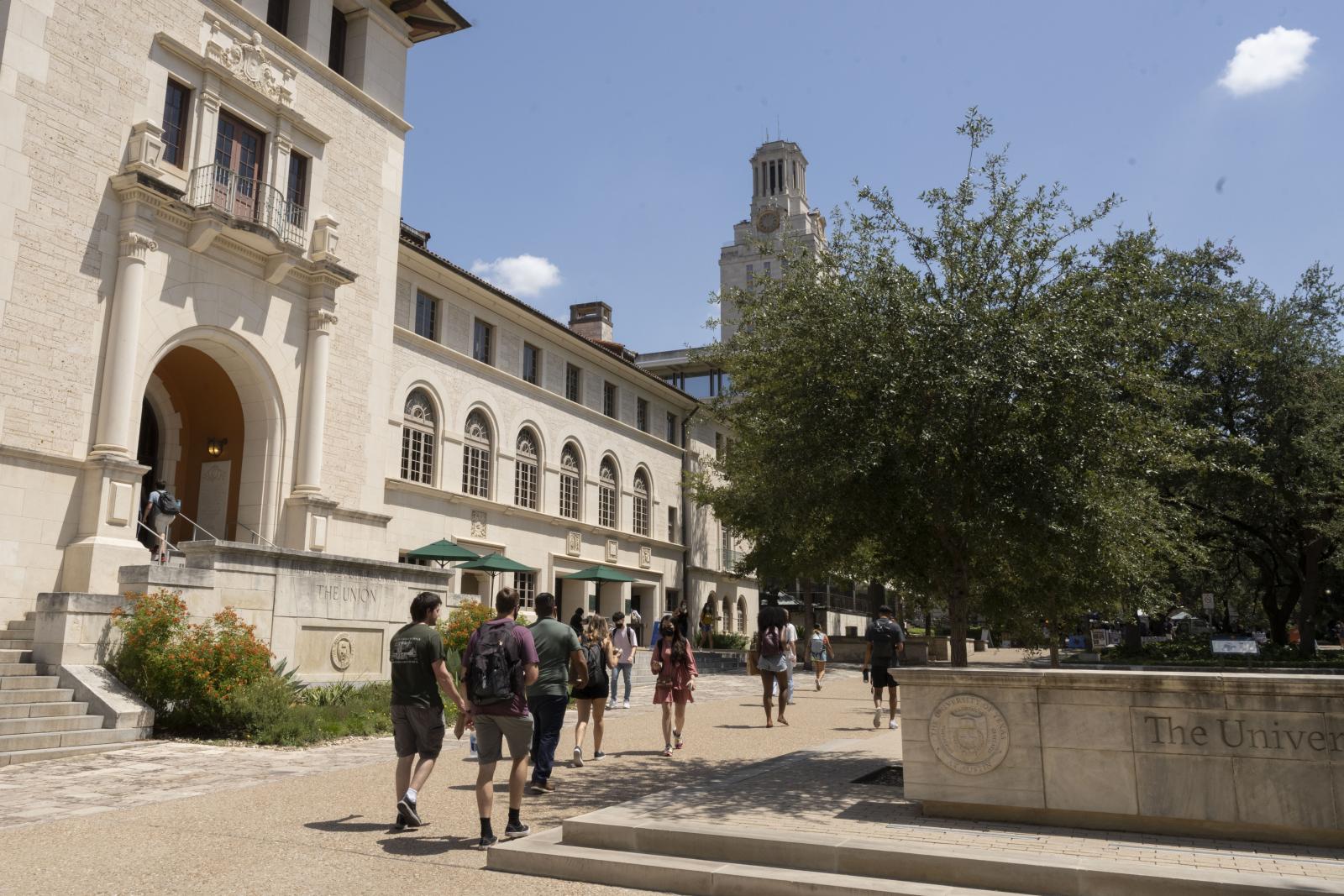
The goal of directionality sets the tone for the master plan with thoughtfulness about the character of different parts of campus. The university campus will always remain unique, and we want to make sure that it maintains its voice while embracing a fluid and dynamic relationship with the surrounding city.
As we embrace the next chapter of our history as a school, how do you expect the needs of students, faculty, staff, and visitors changing over time? What legacy do you want to ensure we maintain as changes take shape, and how can that legacy be further expressed through architecture, landscape, and planning?
I'm an architect, so I'm always biased. In my mind, well-crafted buildings with adaptive flexibility will stand the test of time. If you understand the basics of what makes a good space, regardless of how it specifically is used, it sets a tone for constant reimagination and reconfiguration. If it's a great space to be in, it will find its place. There are certainly examples on campus where this is already happened through Paul Cret’s original Master Plan, which is approaching 100 years old and continues to be successful. Digital culture, especially phone culture, has increased the importance of place. When so much of your life is lived virtually, having a compelling physical place becomes very important. This is a key part of the university experience as well as the Austin experience. Austin is called the Live Music Capital of the world not just because you can see bands play, but, rather, the full experience of the culture. People aren't coming here because there's a specific building or a museum, they come here because there's a vibe. I think having a really high-quality space with thoughtfulness about the environment will render it very flexible and great place to be, even if I'm sitting there on my phone.
As University Architect and Associate Vice President for Campus Operations at UT Austin, what unseen infrastructure do you think about regularly that users of campus might never consider?
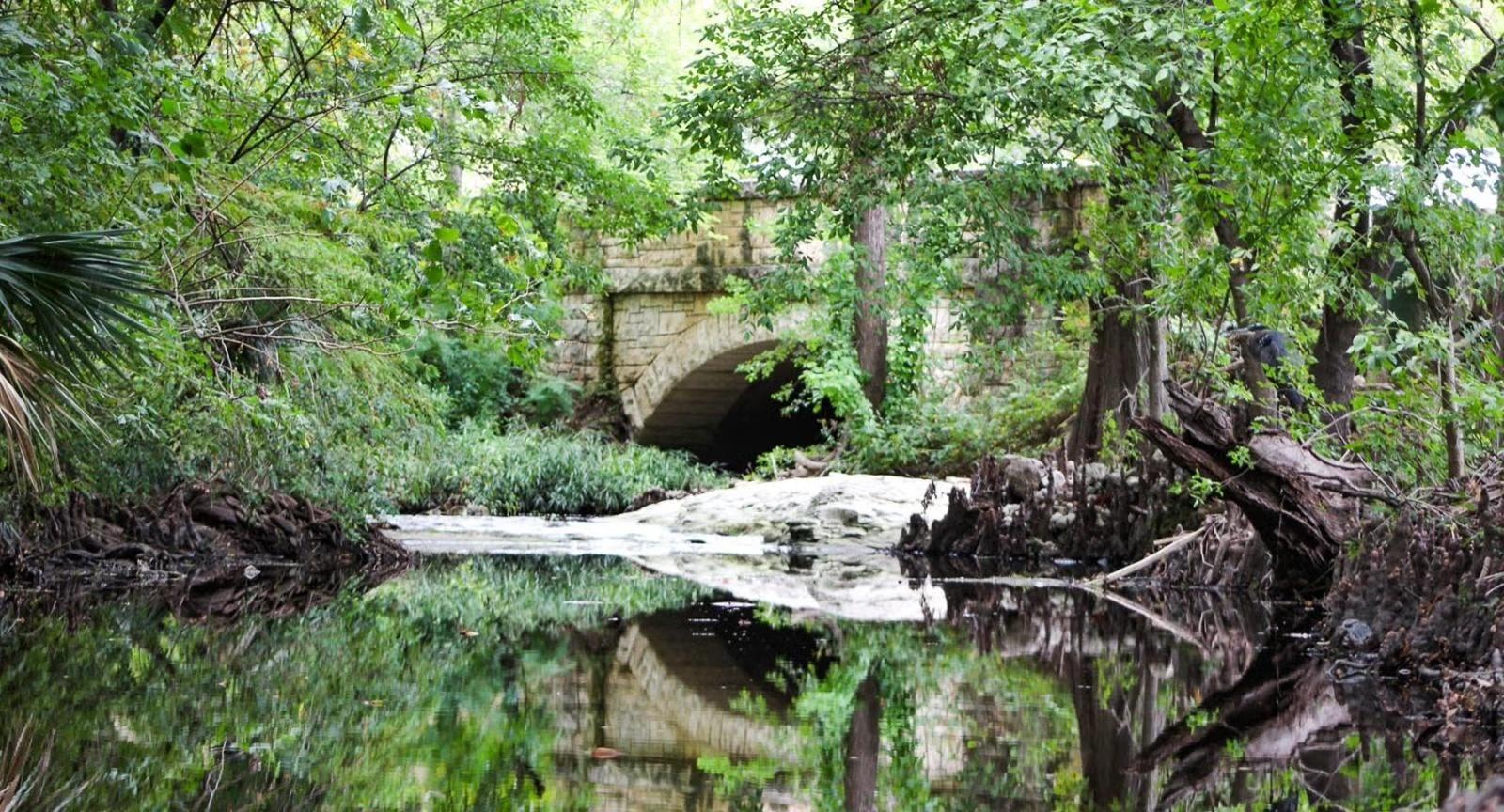
Waller Creek is a really great example—it’s a huge part of how our city functions with its system of waterways. It occupies a lot of our time, particularly when we're thinking about landscape, and functions as stormwater control on campus. Some people may fixate on the notion that it never rains here, but when it rains, it all comes at once. Controlling that water is critical. Ninety-seven percent of the rain that falls on campus goes to Waller Creek. Designing a landscape that can help modulate these huge rains and reduce the potential for catastrophic flooding is essential. Most people don't think about where the storm water is going or how it works, let alone why more paving is bad and more plants is good.
There are other unseen infrastructures on campus. For example, we have 14 miles of underground tunnels that distribute all our utilities like electricity or hot water, cold water, steam, etcetera. Other infrastructure is hidden in plain sight, like pathways and roads. The design of more accessible sidewalks and roads on campus has traditionally been reactive, and the new Campus Master Plan must more proactively consider how people are moving around and what they need to get there. We’re hoping to reassess these paths and roadways. Do we need all of it? Can we reclaim some pavement for natural landscape? We are a living laboratory as a campus, engaging new technologies and approaches to infrastructure as a part of our educational mission.
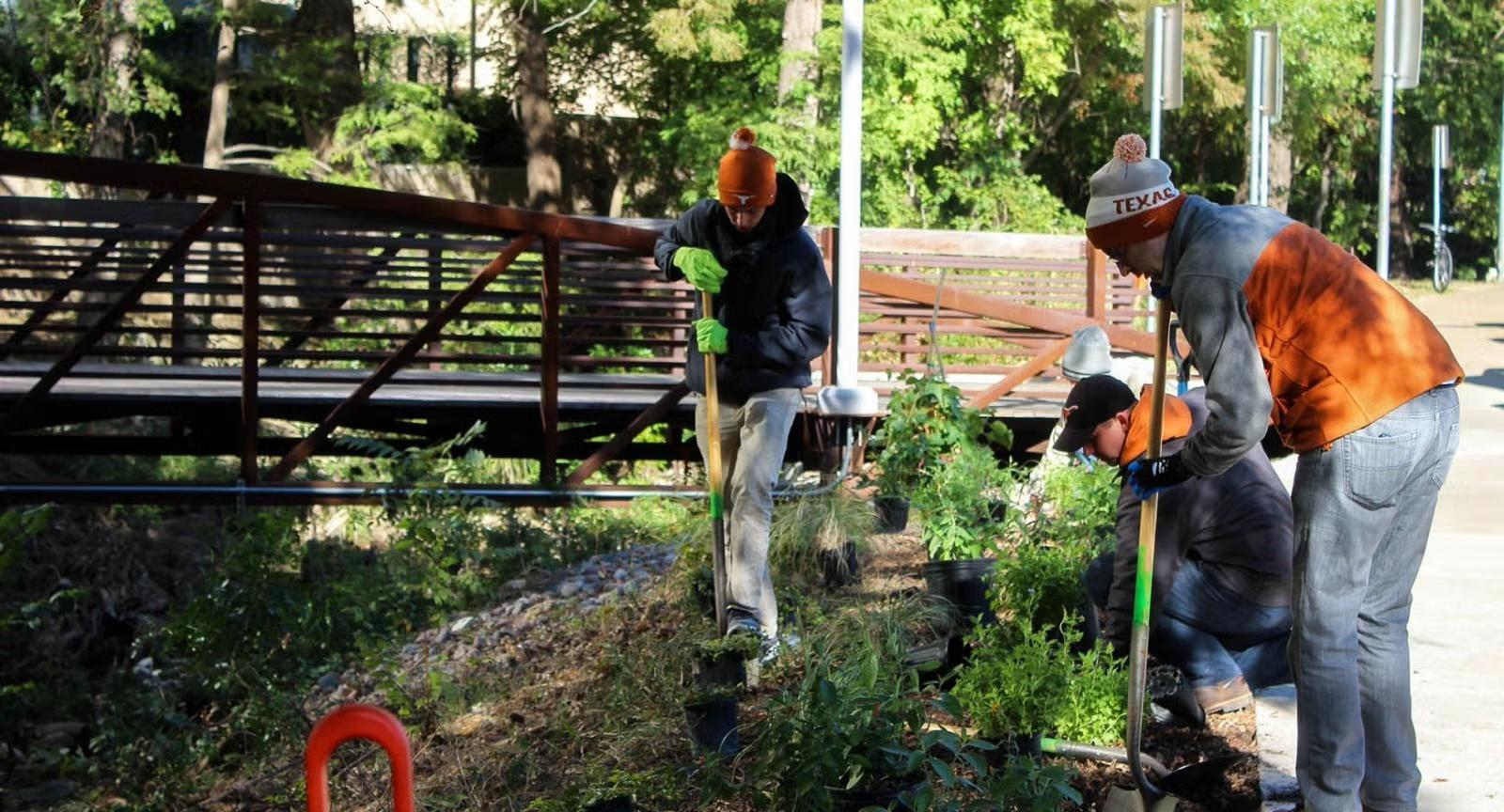
Overall, water management is one of our biggest challenges. We're about to embark on building a new campus water treatment plant, the Water Hub. It will allow us to create our own reclaimed water source, which helps with the campus infrastructure in several ways. First, for our chilling needs so that we don't have to use millions of gallons of water to keep our buildings cool. It will also be invaluable for more responsible irrigation, especially for areas of campus with formal ornamental planting that are more water intensive. We’re also exploring how to update and modernize our systems for more conservative irrigation and greater sensitivity to Waller Creek.
Speak more about how the Forty Acres serves as an example for other universities and public institutions as we reenvision our campus for the future? What experiments and innovations do you hope the selected Master Plan design team will embrace?
Widespread sustainability research and active implementation is happening on campus. For example, the College of Natural Sciences and the Biodiversity Center are invaluable partners for the health of our Turtle Pond, and the Utilities and Energy Management (UEM) Group often partners with the School of Engineering . Perhaps most notable is the Carl J. Eckhardt Combined Heat and Power Plant (CHP). This facility and the Water Hub serve as compelling case studies, and we’re excited to continue exploring how people use our buildings and landscape through the new Campus Master Plan. We’ve relied on anecdotal knowledge for some time, so we’re looking to invest in technological ways of quantifying utilization so we can observe a “heat map” to help with future planning.
This spirit of collaboration impacts everything that we do, and it’s one of the reasons I love working in a university. There is always extra effort and interest in considering different ways of doing things. The School of Architecture is a huge professional resource for our future as a campus, as well, and we’ve enjoyed working with faculty to consider our historic buildings and our technologies. In particular, we’ve had a wonderful experience working with Assistant Professor Liang Wang whose Advanced Urban Design Studio focused on the potential future I-35/UT Caps. We’ve also got 54,000 students at UT Austin who can offer some great ideas, so we’re eager to communicate and reach out to the wider community as a part of the master planning process.
Tell us about some places on campus that move you. Where is a place where you enjoy a quiet moment; a place you’ll meet an old friend; and the favorite tree you like to sit under?
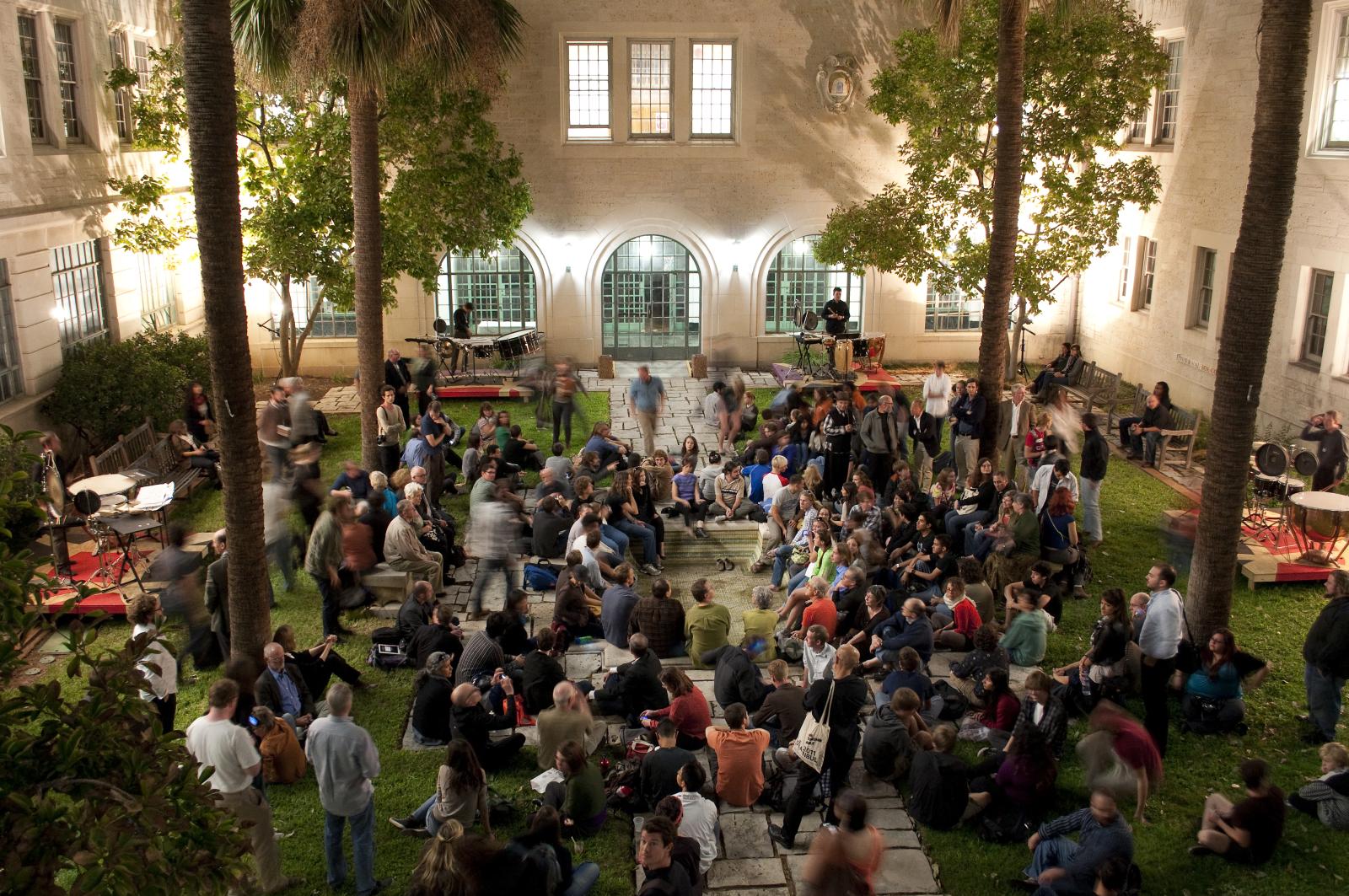
This is always a tough one. It can depend on the time of day and the season, but the Hal & Eden Box Courtyard at Goldsmith Hall is one of my favorite outdoor spots on campus. I remember discovering it—it was the second time I came to UT Austin, and I didn’t realize it was the architecture school right away, but I remember being struck by the amazing proportions of space. It just feels perfect, especially for some quiet time.
I also think about trees constantly, especially the heritage live oaks. Some of the most stunning examples of our campus trees are over by the Etter-Harbin Alumni Center along Waller Creek. There's a rocky outcropping underneath the cypresses, and that’s one of the loveliest moments of nature along the creek.
Don't make me name a favorite tree, though. We've got 4,000 of them, so it would be a challenge!

Brent Stringfellow is the Associate Vice President for Campus Operations and Planning and serves as the University Architect for The University of Texas at Austin. Before joining UT, he was the Associate Vice President of Facilities & University Architect at Lehigh University. Prior to joining higher education, Brent spent 20 years in private practice with award-winning firms in New York and Boston with a focus on institutional and academic projects. Brentreceived his undergraduate degree in design of the environment from the University of Pennsylvania and a Master in Architecture from Harvard University‚ Graduate School of Design. Brent is a registered architect in Texas and Pennsylvania, and a member of National Council of Architectural Registration Boards, the American Institute of Architects, and the Association of University Architects. In addition to his professional experience, he has taught at Smith College, Pratt Institute, City College of New York, Fudan University, and Lehigh University.
READ THE ENTIRE LANDSCAPE FIRST ESSAY SERIES HERE →