Q&A with Bi’Anncha Andrews

Bi'Anncha Andrews joins The University of Texas at Austin School of Architecture as an Assistant Professor. Her scholarly work critically examines how processes of redevelopment impact marginalized communities, emphasizing the intersections of race, class, and gender, particularly within low-income public and affordable housing contexts. Drawing on ethnographic research, community-engaged methodologies, and trauma-informed principles, she explores the multifaceted losses experienced by displaced residents—extending beyond the physical loss of housing to encompass disruptions to neighborhood-based social support networks and access to vital social services.
What drew you to study displacement amid urban redevelopment and gentrification, and what questions are at the heart of your work?
I was drawn to this work by a basic but often overlooked question: When a neighborhood is described as improving, who gets to experience that improvement—and who is made to leave, or loses the ability to remain on their own terms? This work is personal for me, too. My own family has had to navigate displacement connected to gentrification and the redevelopment of downtown Raleigh, North Carolina. That experience has shaped how I understand displacement—not as an abstract policy outcome, but as something that can unsettle people’s homes, relationships, routines, and sense of belonging.
My professional experience has deepened that understanding. As a social worker in Washington, DC, and Maryland, I helped individuals and families relocate and reconnect with critical social services and support networks disrupted by displacement. For some, those networks were not simply interrupted; they were eliminated. That work showed me that displacement's effects can extend well beyond the loss of housing.
While housing loss is one of the clearest forms of displacement, it is not the whole story. Residents and small businesses can also lose customers, social networks, cultural institutions, familiar public spaces, and the practical support that makes daily life possible. Those losses are often gradual, difficult to document, and absent from conventional measures of redevelopment success.
My research centers on how public policy, private investment, and neighborhood change shape people’s ability to stay, participate, and build a future in place. I ask not only who moves, but also who feels compelled to move, who remains under increasingly difficult conditions, and what happens to the relationships and institutions that make a neighborhood a community. My personal and professional experiences are why I take a trauma-informed, community-engaged approach to this work. What we discuss in class and theorize in scholarship directly affects people on the ground who are contending with these issues in their daily lives. Ultimately, I want my research to hold urban planners, policymakers, private developers, and others who may be directly involved in decision-making processes more accountable to the people whose lives and livelihoods are most affected by it.
How might planners and policymakers better conceptualize and measure social and relational losses?
The first step is to treat displacement as a process, not just an event. If we measure only formal evictions or changes of address, we miss people who leave because rents, property taxes, business costs, or everyday conditions have become untenable. We also miss those who stay but lose access to neighbors, customers, services, cultural spaces, or a sense of belonging.
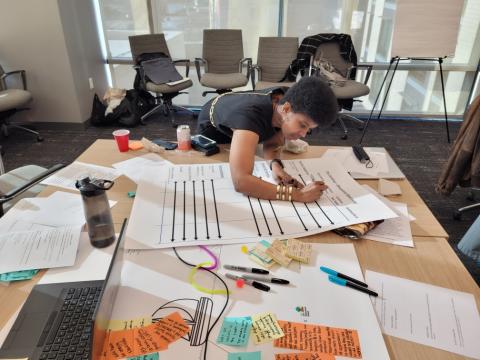
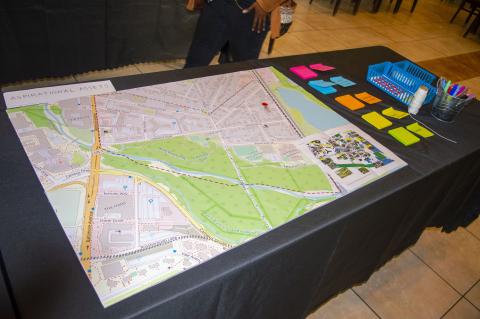
Planners can build a fuller picture by combining quantitative indicators with community-led, qualitative research. That might include tracking housing and commercial rent burdens, evictions, business closures, ownership changes, and residents’ ability to return after redevelopment. It should also include interviews, oral histories, participatory mapping, and surveys that ask about changes in social support, access to familiar services, cultural continuity, and perceived ability to remain. For small businesses, that means looking beyond whether a storefront is occupied to consider who owns the business, whether it serves local residents, and whether it can afford to stay.
Just as important, this work should begin before redevelopment decisions are made and continue afterward. Communities should help define what counts as loss, what outcomes matter, and how findings will shape decisions. Measurement is not simply a technical exercise: it determines which harms become visible—and which can be ignored.
As you settle into Austin, what questions are you most interested in exploring here?
Austin offers an important opportunity to examine how rapid growth and redevelopment affect the people, businesses, and institutions that have helped shape the city. I’m interested in how displacement pressures vary across neighborhoods and how they affect renters, homeowners facing rising costs, small businesses, and communities with deep cultural and historical ties to place.
I’m also interested in how Austin’s policies and planning decisions influence who can benefit from growth. Which tools help people remain in their neighborhoods and share in new investments? Where are there gaps between the goals of affordability and preservation and people’s day-to-day experiences? And how can residents and local businesses have meaningful influence—not only during public engagement, but in the decisions and benefits that follow?
I’m coming to these questions with curiosity rather than assumptions. Austin’s communities have their own histories, priorities, and strategies for responding to change. I hope to learn from local residents, organizations, public agencies, and colleagues, and to develop research that is useful to the people most affected.
What should students know about your teaching emphasis and style? What can they expect to learn next semester?
I want students to leave my classroom better able to connect ideas about housing, planning, and community development to the choices that shape people’s lives. We’ll examine how policies and markets influence neighborhood change, who benefits from investment, and how planners can respond to displacement and inequality. Students can expect to engage with research and real-world cases, while also asking whose perspectives are represented—and whose are missing.
My teaching style is rigorous, collaborative, and grounded in practice. I encourage students to question familiar narratives, bring their own experiences and perspectives into discussion, and support their arguments with evidence. I also want the classroom to be a place where uncertainty and disagreement can be productive, provided we engage one another thoughtfully.
Next semester, students can expect to build practical skills in analyzing housing and community development challenges, interpreting evidence, and communicating ideas clearly. Most of all, I hope they develop a stronger sense of how planning decisions affect people and a deeper understanding of the responsibility—and possibility—involved in shaping more equitable communities.