
Students Win National Urban Design Competition

ULI Hines Student Competition
A team of University of Texas at Austin students from the Community and Regional Planning, Urban Design and Business Administration programs earned first place in the prestigious Gerald D. Hines ULI Urban Design Competition, taking home the $35,000 grand prize.
For the competition, dozens of student teams from across the country analyzed a parcel of land within the Hancock Center, north of Downtown Austin. The site sits 1.5 miles southwest of UT's campus, just west of I‑35 with nearby access from East 41st and East 43rd Streets. The students were tasked with acting as master developers, proposing a 10‑year plan to transform the complex site into a connected and sustainable district, featuring graphic boards and explanation of their choices. Only four teams were selected to move forward to the finals.
The winning UT team is comprised of:
Michael Alada (Team Leader), Master of Community and Regional Planning & Master of Science in Sustainable Design, The University of Texas at Austin
Anushka Deshpande, Master of Urban Design, The University of Texas at Austin
Meng-Shin Lin, Master of Community and Regional Planning & Master of Science in Sustainable Design, The University of Texas at Austin
Sushmita Gautam, Master of Urban Design, The University of Texas at Austin
Josh Hu, Master of Business Administration, The University of Texas at Austin
The different interdisciplinary teams from the McCombs School of Business and the School of Architecture worked together to evaluate the competition prompt and strategies. Each team was required to work in a multifaceted way, incorporating design, planning, market potential and feasibility into their development strategies.
The students only had two weeks from receipt of the competition brief to the submission date. They worked with mentors from the local Urban Land Institute chapter to perfect their proposals.
In addition to the national competition, students participated in the School of Architecture and the McCombs School of Business’ Texas Real Estate Center's in-house ULI competition. In February, an in-house jury met to judge the different proposals. This annual in-house juried competition is made possible by the support of the Mike and Betsy Cogburn and the Cogburn Family Foundation. Two teams, "GreenLink" and "Hancock Recentered" received first prize and $2,500. Three teams, "The Mall," "Mosaic41," and "The Well" received $1,200 for second prize.
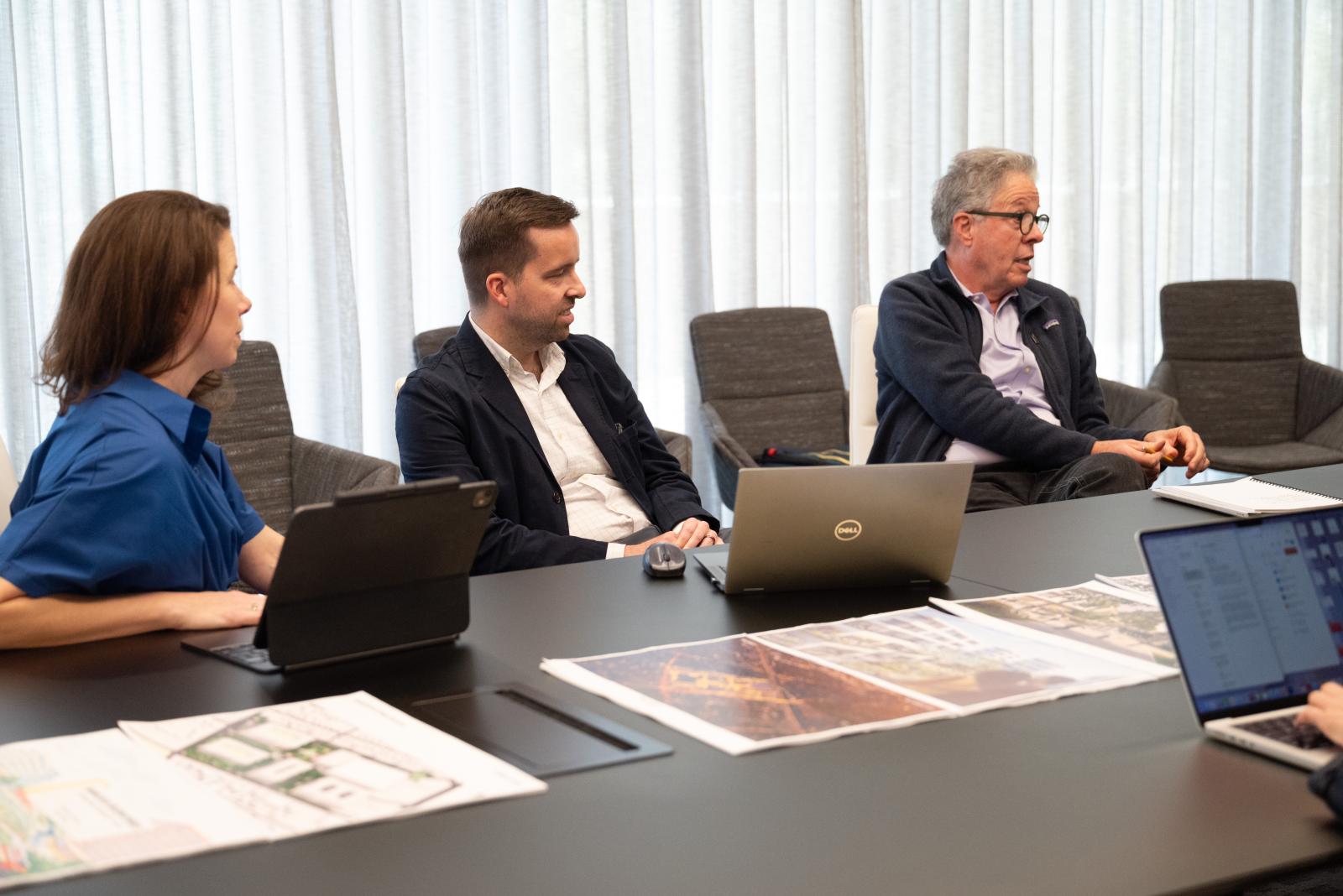
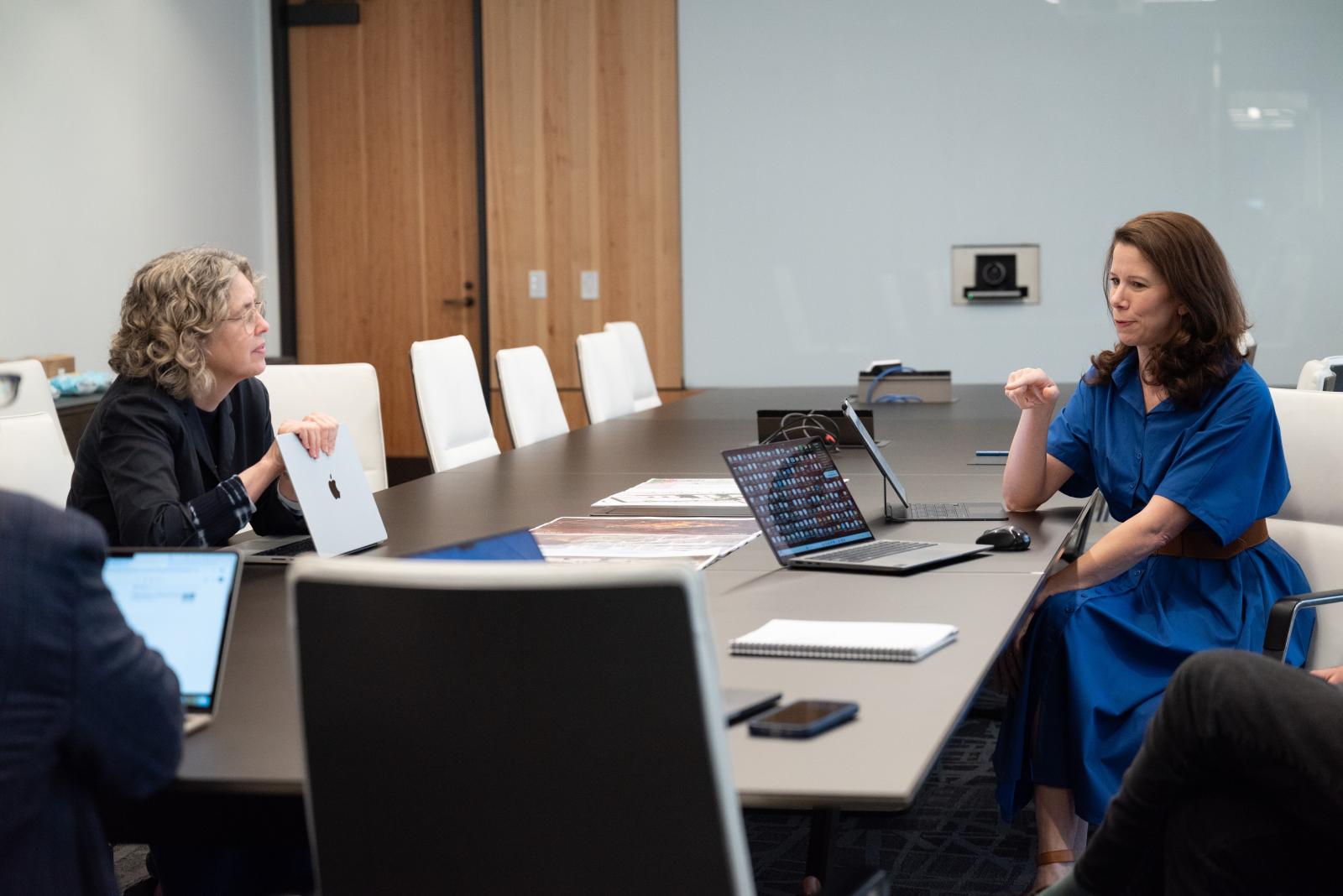
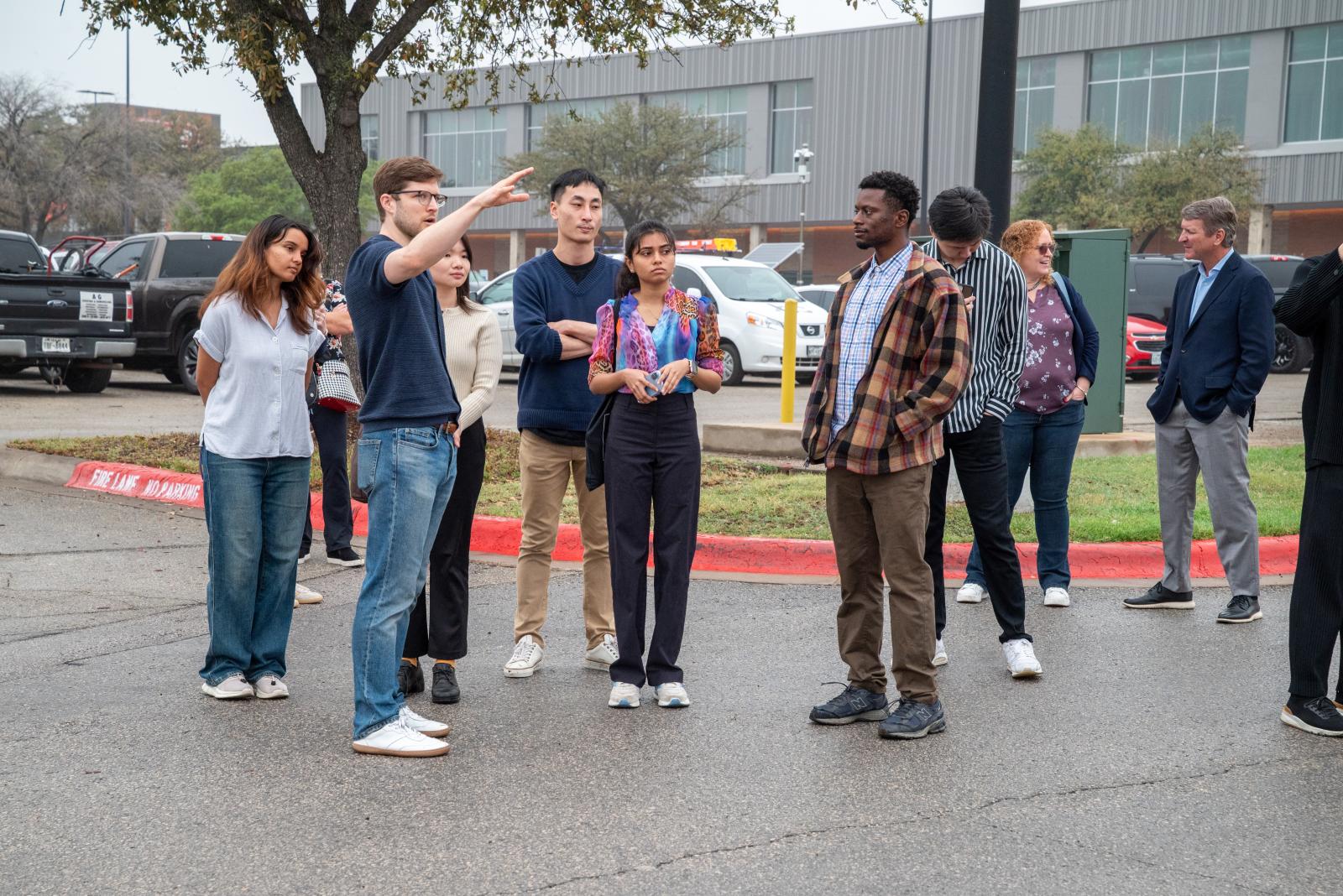
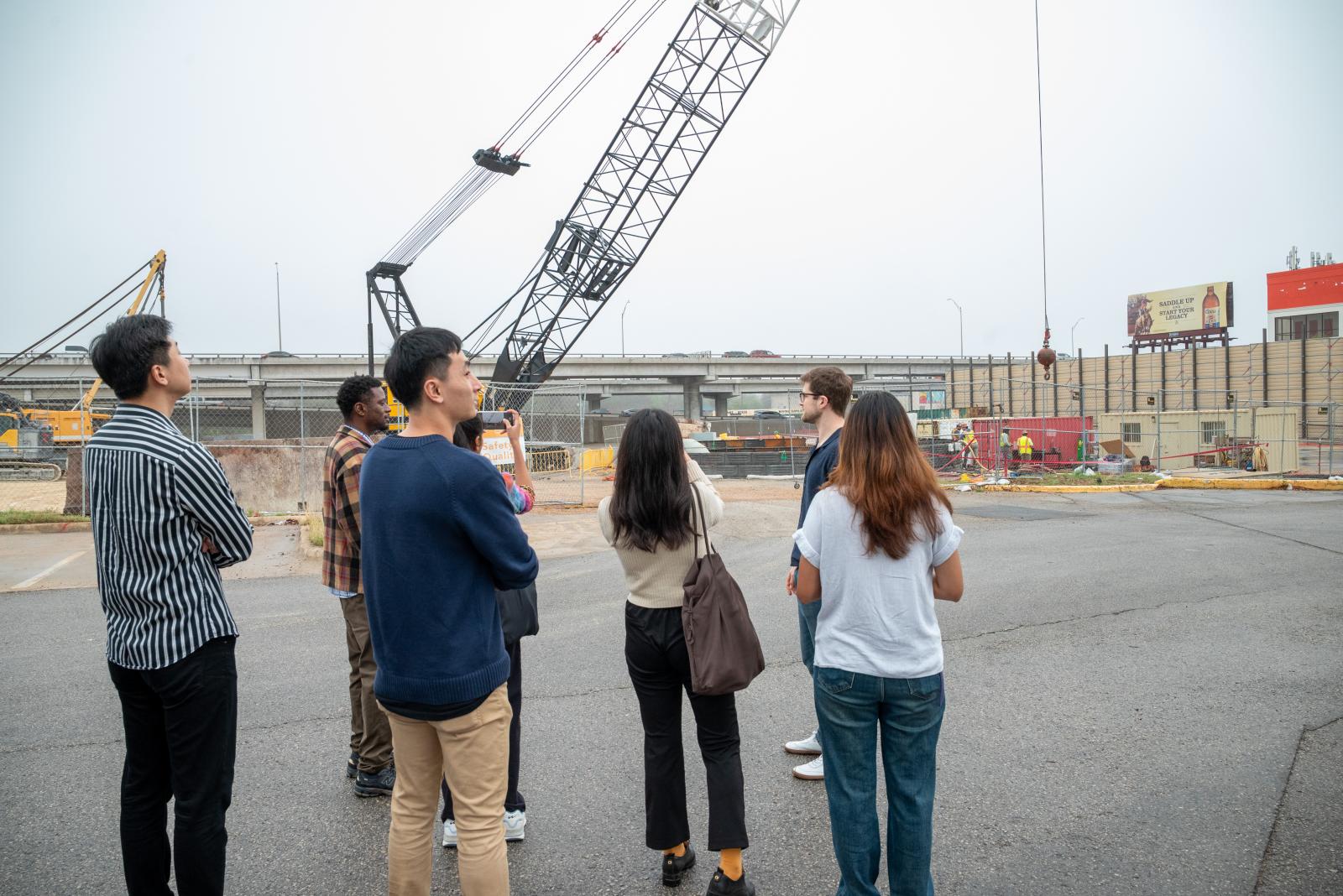
In March, the finalists visited the physical location of their site analysis. There, students met with ULI Austin and the actual property developers, Regency Centers, to gain insight on the area.
The Campaign Brief
The 2026 ULI competition focused on a site within the Hancock Center, north of Downtown Austin. The site sits 1.5 miles southwest of UT's campus, just west of I‑35 with nearby access from East 41st and East 43rd Streets. The students were tasked with acting as master developers for the complex project site.
According to the competition brief, as the master developer, they entered into a Master Development Agreement with the landowner to provide a proposal to transform the site into a thriving, mixed-use, mixed-income development. The proposal had to evaluate the benefits and financial possibilities of redeveloping the site within a 10-year period. The vision for the area needed to increase connectivity and mobility around the site, address housing affordability and inclusivity, create a positive economic impact, include connection to surrounding neighborhoods, and increase the sustainability and resilience of the immediate area.
UT Austin's Winning Proposal: The GreenLink
The in-house competition winning project and the national winner from UT Austin students is titled “The GreenLink.” It transforms a shopping center marked by underdevelopment into a vibrant, inclusive neighborhood where diverse residents connect, where healthcare and housing exist in harmony, and where the highway’s wound becomes a place of renewal. It demonstrates that cities can heal themselves, one neighborhood at a time.
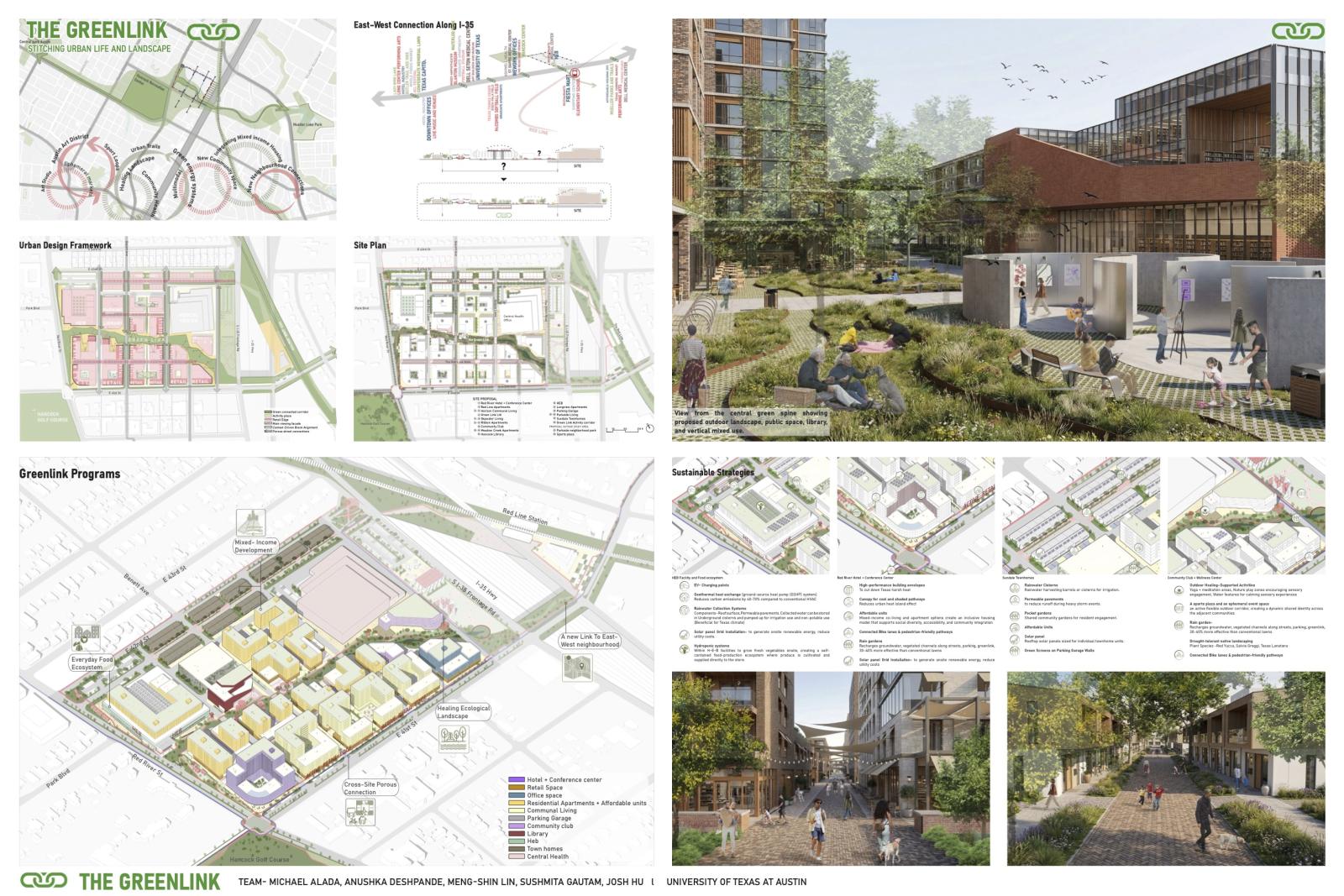
The GreenLink by Anushka Deshpande, Sushmita Gautam, Michael Alada, Josh Hu, Meng-Shin Lin
Michael Alada (CRP/Sustainable Design), the team lead for GreenLink, says a pivotal part of identifying their theme, was identifying a medical corridor within the area, which could provide care to residents and growth to the industry.
“We are most excited about the green infrastructure, wellness features, elements of circularity, and being able to transform 41st street. It is what stands out about our site. We took a lot of inspiration from South Congress, and 2nd street on how to create a vertical mixed-use retail edge, but with our own twist,” said Alada.
In addition to their research, Alada says they planned for the future of the development to align with the city’s goals pertaining to sustainability, safety and accommodating growth.
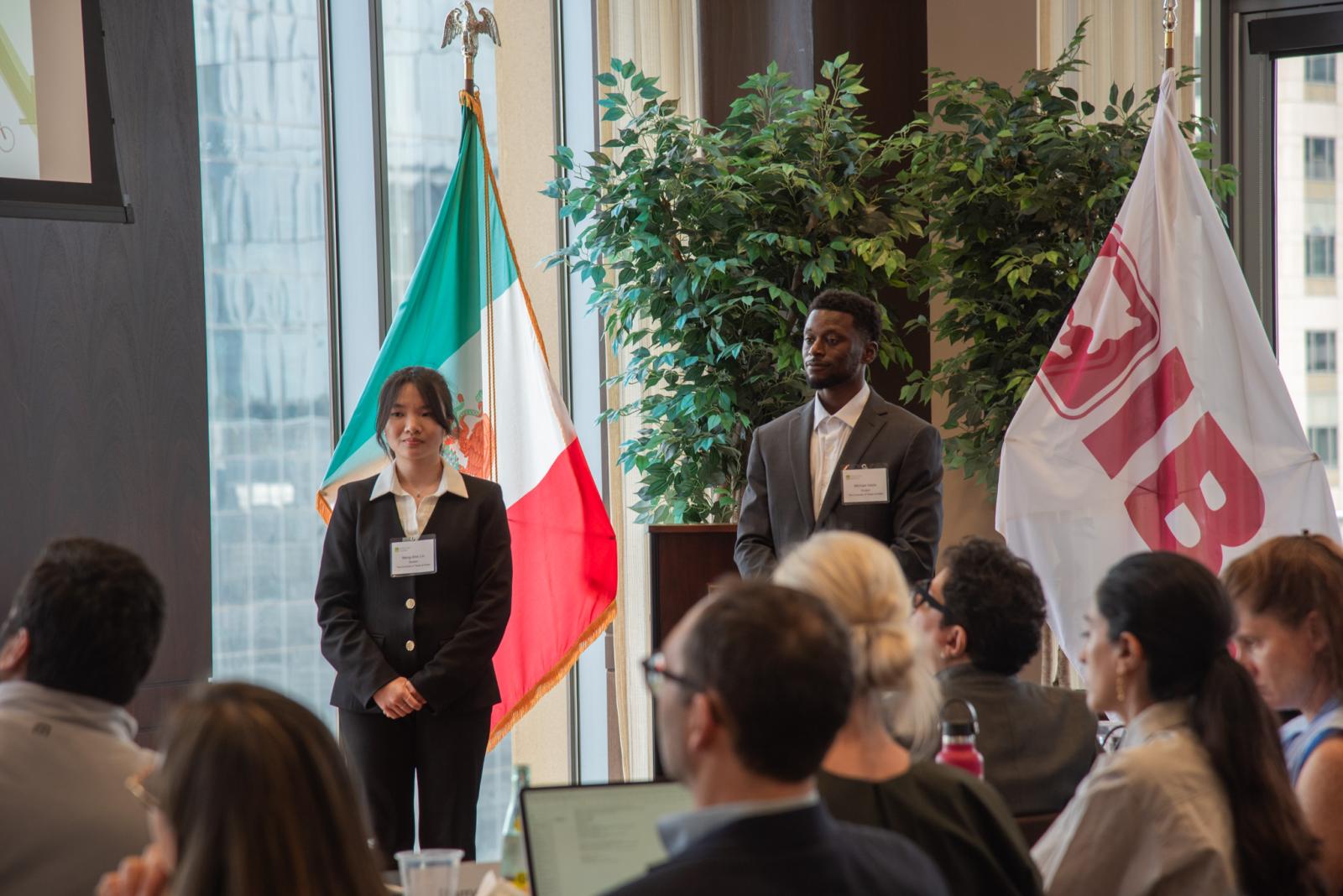
“We really thought about water and energy as key features of our site. Austin has goals for carbon-free energy by 2035, and 2040 net-zero commitment. In addition, we are aware that water reuse and conservation is a big deal, especially with population growth. We were to conduct extensive water research for onsite irrigation and reuse, and even able to find incentive programs to help us with financial feasibility of both water and energy features.”
Overall, Alada described his team as talented individuals that seamlessly worked together to take home first place.
"Working within our multidisciplinary team has been awesome experience. It is the perfect combination of when the planners and urban designers meet. Not only are we multidiscipline, we are also multi-cultural, bringing a local and global point of view in our design thinking," said Alada.
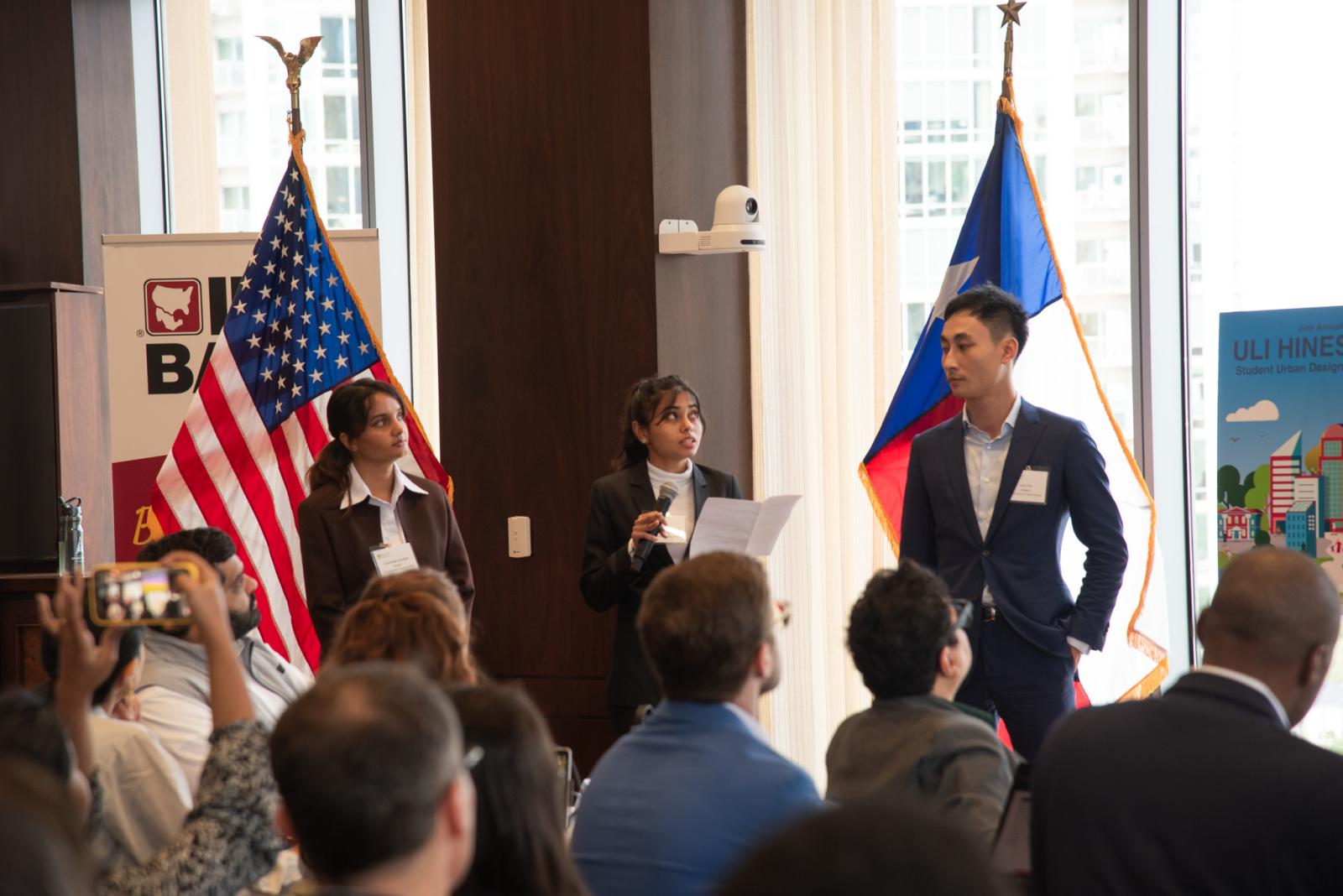
The Experience
Since students were competing in an extracurricular competition, they received no class credit for their work. However, they all highlighted the benefits of participating in the competition process, irrespective of the competition's results.
“Participating in the ULI competition, especially as an M. Arch student myself, was a great learning and collaborating opportunity that transcends the discipline that I’m in," said Toan-My Le (M.Arch). "Through the competition, I gathered insights and learned more about the interdisciplinary work that can happen in real life when it comes to a big urban project." Le's team project, "Mosaic41,” focused on tackling the affordability crisis, negative net migration (more people moving out of Austin than in), and attempted to link the green nodes surrounding the site.
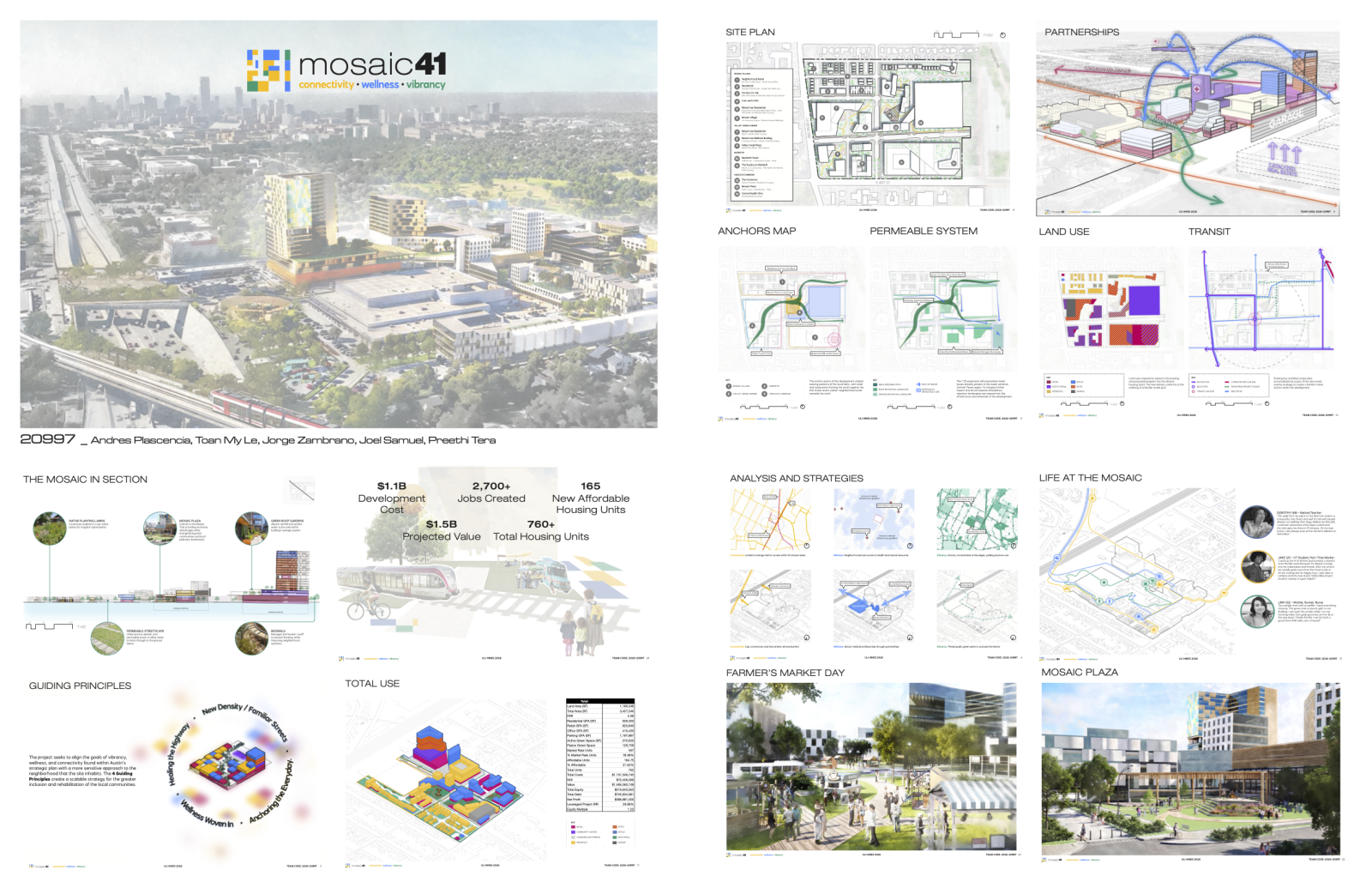
Mosaic41, created by Andres Plascencia, Toan-My Le, Jorge Zambrano, Joel Samuel, and Preethi Tera.
One of the hallmarks of this competition was that the teams must be comprised of students of at least two different disciplines. Students like Austin Vidich (CRP) said this collaborative and interdisciplinary effort led to more interesting and thoughtful design choices.
“It was interesting working with architectural students. From a planner's perspective, they can get very caught up in small details that I would often ignore or overlook. It was fun. They helped me zoom in and see the trees, and I helped them zoom out and see the forest,” said Vidich. His team’s project, “The Third Condition” positioned the Hancock Center as a site of reconnection between long‑separated communities, and prioritized preservation of the existing structures and enhancement of what “already works” in the area.
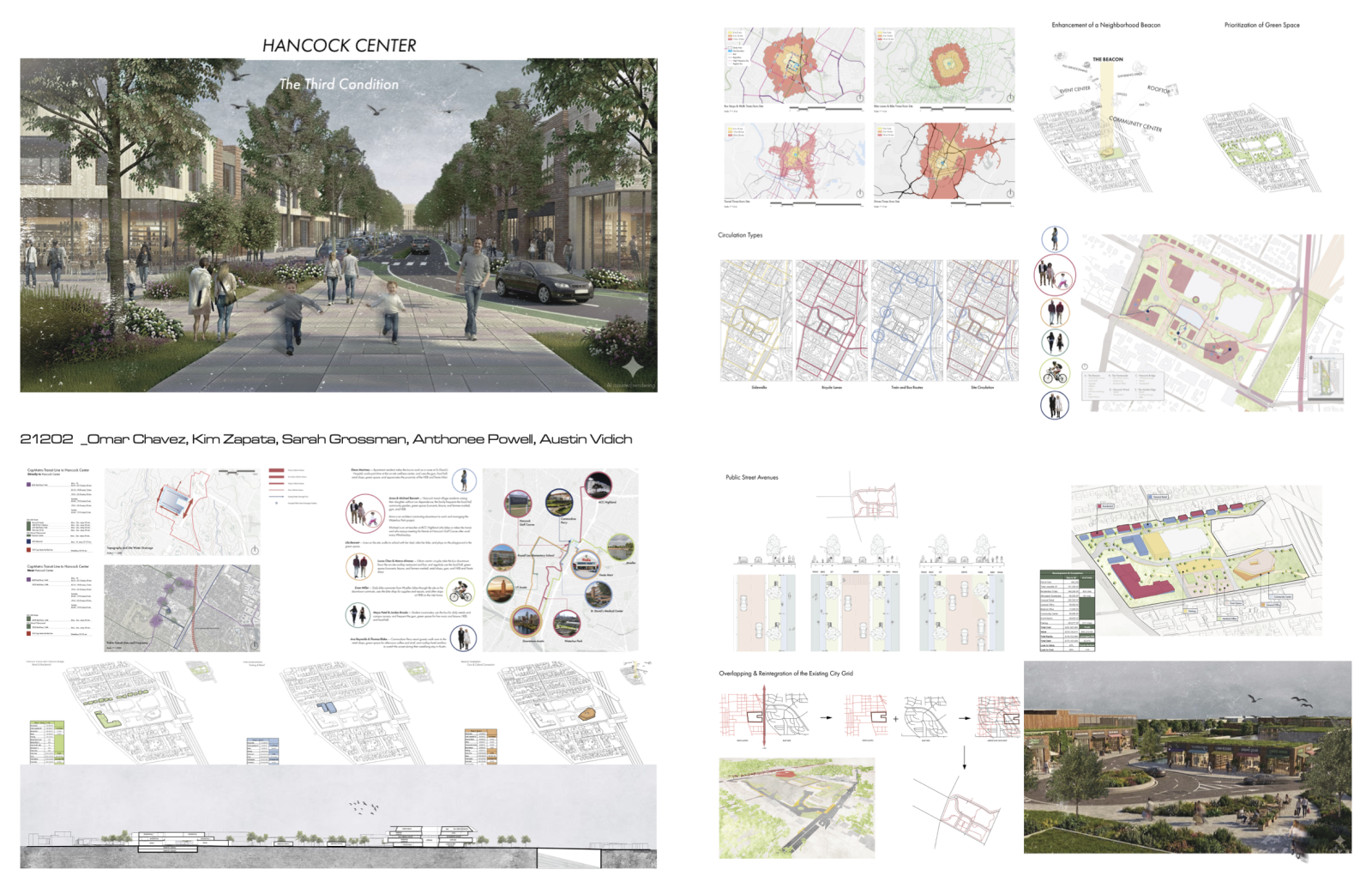
Hancock Center, the Third Condition by Omar Chavez, Kim Zapata, Sarah Grossman, Anthonee Powell, and Austin Vidich
Kate Terry (MLA) also reflected on the collaborative process. Her team's project, "The Mall," re-envisioned how innovative forms of urban development can mitigate the infrastructural disruptions of the past by foregrounding cross-community connections that unlock more varied and accessible types of development.
"What stood out in this process is how, as designers, we share a visual language--using sketching as a tool to think and solve problems together. I’ve learned how much a shared mode of making can build trust and speed up iteration. It’s been a reminder that drawing isn't just about communication, but about building ideas collaboratively," said Terry.
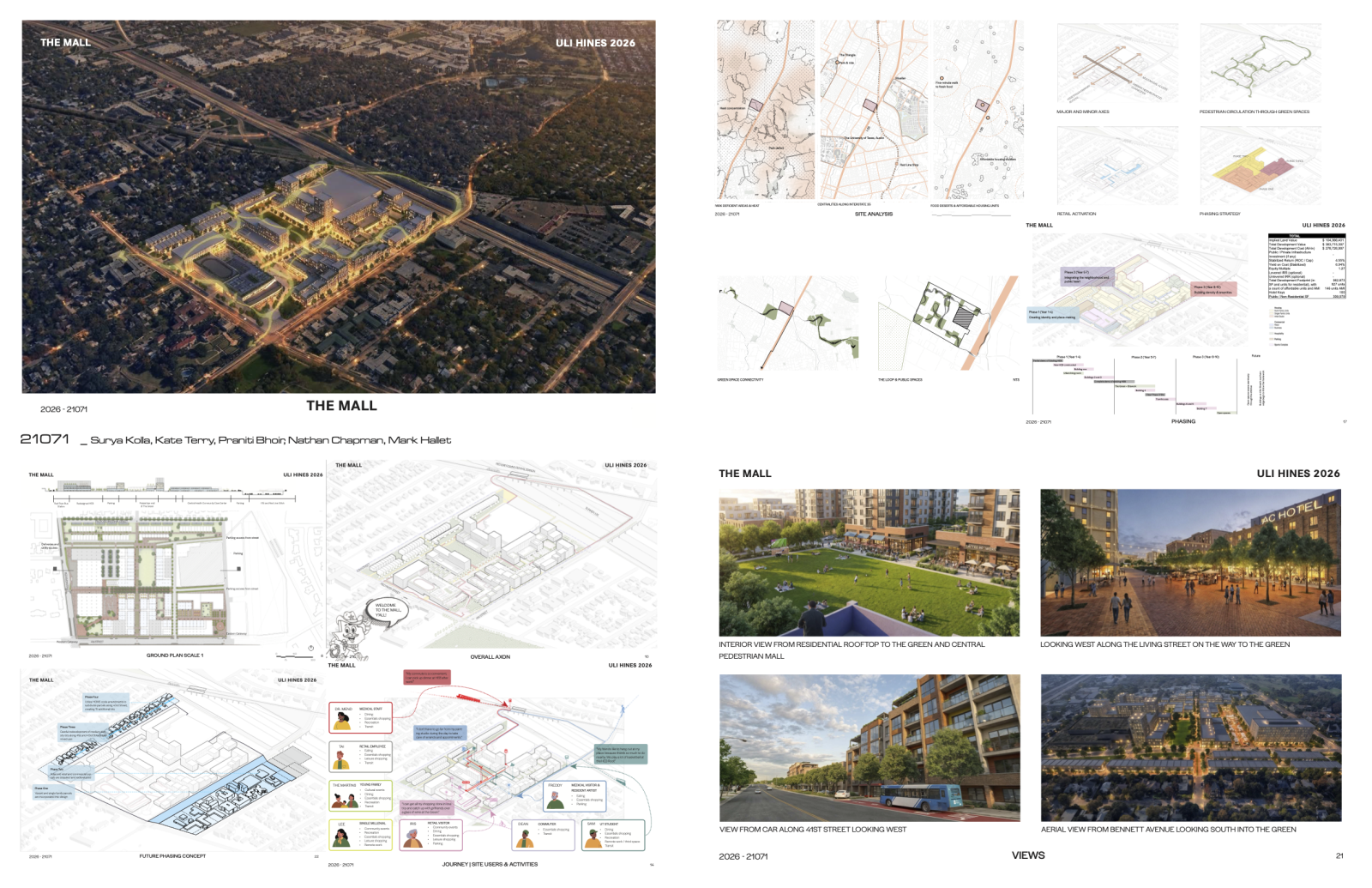
The Mall by Surya Kolla, Kate Terry, Praniti Bhoir, Nathan Chapman, and Mark Hallet
This competition was a source of pride for students like Jonathan Negron (CRP). The brief offered an opportunity to get more hands-on experience than the traditional classroom setting. Negron says the brief challenged them to take a complex problem and turn it into a viable, living place, which was realized in their project, “The Well at East Ave.”
“I’m really proud of how we didn’t just bulldoze the past but were really intentional in how this space was informed by past iterations, the location, and the culture of the community,” said Negron. “We took the site's history as a towncenter and reimagined it for the future. I love our concept for the Fiesta Stitch. We lined the walkway with micro-retail stalls. It feels like a genuine handshake between our district and the commercial space on the east side of the expressway, pulling people from both directions to cross the stitch.”
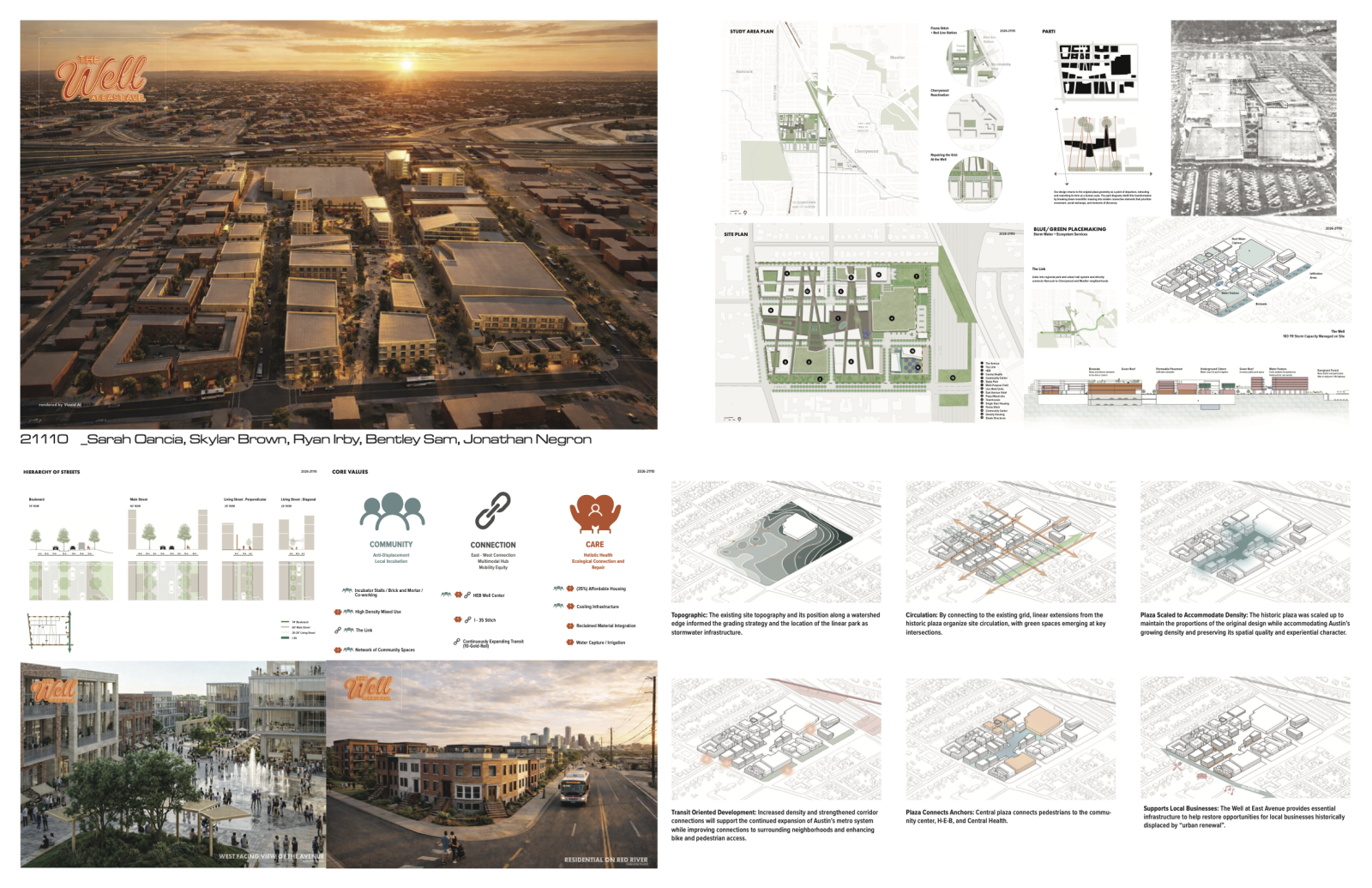
The Well at East Avenue by Sarah Oancia, Skylar Brown, Ryan Irby, Bentley Sam, and Jonathan Negron
While the competition focuses on a specific parcel of land in Austin, ULI notes that this is an ideas competition; there is no expectation that anyone will apply the submitted schemes to the site. Learn more about the competition here.