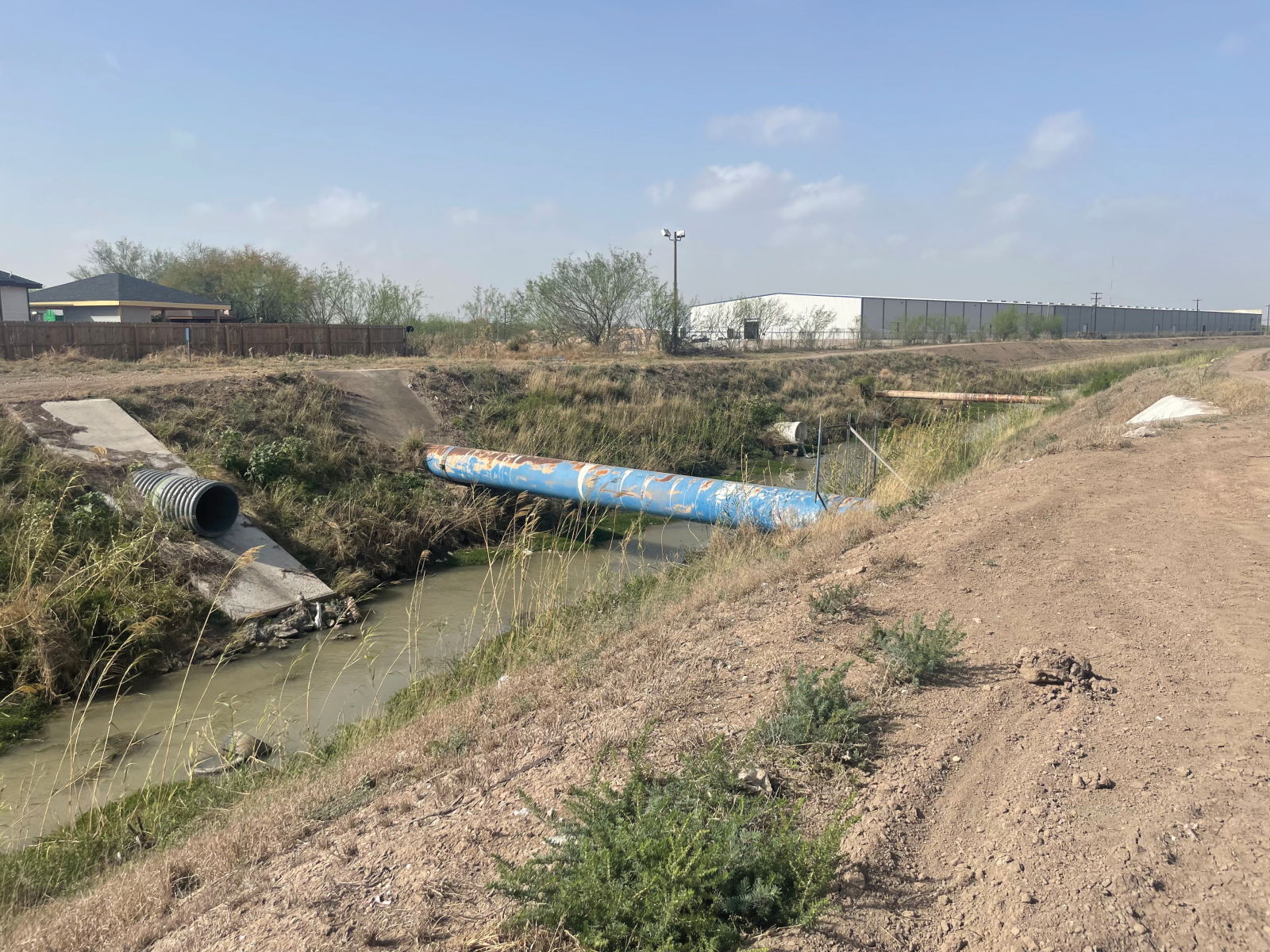
The Cadence of Community: Miriam Solis and Maggie Hansen in Conversation

Winning the 2025 SOM Foundation Research Prize, selected for Monument Lab's 2026 Re:Generation initiative, and securing long-term donor funding for continuous studio interdisciplinary work in the RGV, their multipronged project brings planners, landscape architects, city officials, and local youth together to advance ecologically resilient planning and design efforts, including mobility corridors with revitalized public greenspaces that are shaped by community priorities and needs.
In conversation, Solis and Hansen reflect on the years of partnership development that now empowers their students to collaborate with residents of Pharr, commemorating their history and co-designing public greenspaces for future generations.
Miriam Solis: The groundwork for this project began eight years ago with the start of The University of Texas at Austin’s Bridging Barriers Grand Challenges program. Housed within the Office of the Vice President for Research, Scholarship and Creative Endeavors (OVPR), the initiative asked faculty across disciplines to identify urgent issues and translate research into practice. I was invited to join the faculty steering committee for Planet Texas 2050 — one of the three challenges funded by the initiative — which focuses on supporting Texas’ future in the face of environmental changes and rapid population growth.
Upon receiving seed funding, I partnered with Carmen R. Valdez, then Associate Professor at UT's School of Social Work, who was leading a community-engaged research center at Dell Medical School at the time. Together, we began envisioning a project that built upon my existing relationships with environmental organizations across Texas as well as her extensive network.
It is often difficult to start a new project outside one’s immediate geography, but we explored the possibility of undertaking the project in the Panhandle, San Antonio, Houston, and in the Rio Grande Valley. Jonathan Lowell, OVPR engagements and programs coordinator, played a key role in facilitating those early discussions and remains an integral part of our origin story. He connected us with Marisa Oliva-Rodriguez at the Texas Children in Nature Network (TCINN), whose enthusiasm and collaboration helped catalyze our work. With her collaboration, by Fall 2022, we started conversations with folks in the RGV about undertaking a collaboration, and our first coalition meeting was held on Jan. 27, 2023.
Maggie Hansen: It is important to recognize the scale of time and energy required for effective community-engaged design. This work is inherently incremental and depends on sustained relationships, frequent check-ins, and an adaptive approach that allows the group to shift based on community priorities. In this case, our team joined an effort where there was already a meaningful foundation of trust.
Miriam Solis: Our coalition included leaders of community-based and environmental education organizations. We also intentionally involved civic leaders at the start to ensure the work was actionable. Across conversations with our coalition of community members and city officials, we consistently heard a desire to focus on youth, park spaces, and green infrastructure. This was when Maggie’s work in landscape architecture became integral to our efforts. We wanted to actualize the impact of our research, and Maggie breathes life into our discussions.
Maggie Hansen: At its core, the project seeks to articulate and realize young people’s visions for eco-connectivity and accessible mobility in south Pharr. Miriam’s 2023 planning practicum documented priorities directly from Pharr youth, which encouraged our partner TCINN and the City of Pharr to launch the Pharr Youth Eco‑Alliance.
These youth, aged 15 to 17, surveyed and documented key environmental concerns from their communities through dialogue with older generations, participatory mapping, photography, and conversations with municipal officials. In their research, they recognized an opportunity to imagine and enact design interventions at Jones Box Park that better represent local ecology and more directly serve community needs.
As one of the most biodiverse regions in North America and a critical corridor for bird and butterfly migration, the Rio Grande Valley offers an incredible context for rethinking how we design and care for landscapes. The region includes an extensive network of parks developed within the last 20-30 years. For landscape architecture students, these parks offer opportunities to observe and study mature ecological systems.
Community-based design work requires that we work at a pace that allows meaningful input. This project offers students exposure to key methods of participatory practice, with scopes of work that allow them to see the project’s beginning while contributing to a clear milestone. Students in my 2025 advanced studio spent a week on-site with ARISE Adelante, a community-based organization, and the City of Pharr Parks and Recreation, developing and refining a framework plan for landscape improvements to Jones Box Park. They also received preliminary design feedback from the Youth Eco-Alliance cohort who previously shared their experiences and insights with UT researchers. It was a full-circle moment for local partners to visualize how the park improvements might take shape and an invaluable experience for landscape architecture and architecture students.
Miriam Solis: Community engagement is a critical skill in the planning world — just as critical as technical insight. Engaged scholarship requires moving at the pace of a community, allowing time and space for coalition building.
The traditional role of a researcher is to come up with a question and design a project around that question. We sought to expand the roles of researcher and designer, identifying those questions as a collective with direct input from people living in these areas. It was important for us to value the idea that community members have their own forms of expertise that are crucial to identifying problems and responses, honoring their existing legacies of stewardship and collective care. It is a very special opportunity that wouldn’t have been possible without the University’s support.
This interview has been edited for length and clarity.
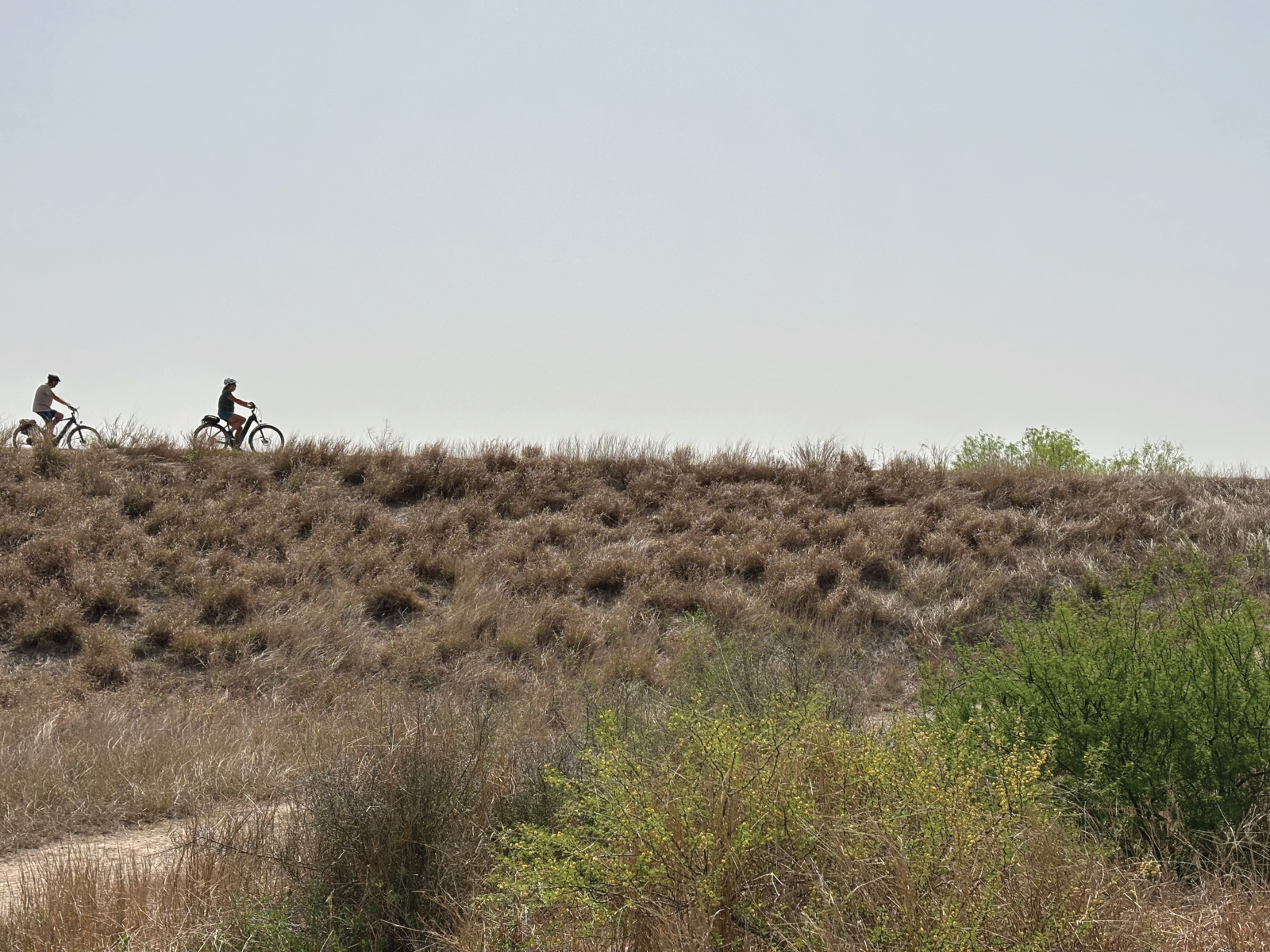
Hike and bike trails in Estrero Grande State Park, 2025
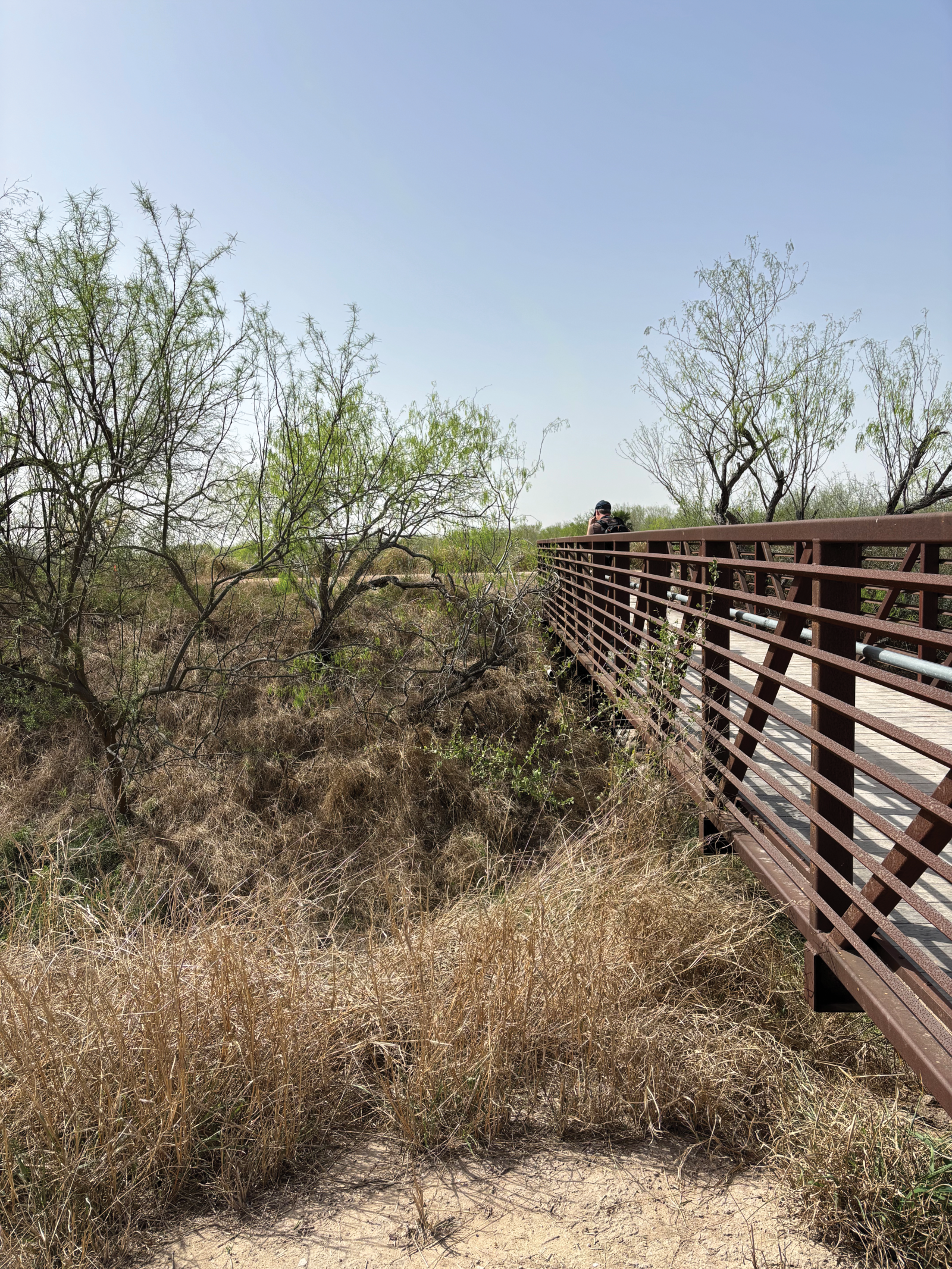
Jones Box Park in Pharr, TX, 2025