
Historic preservation seeks to find effective and artful ways of maintaining and reusing significant buildings, landscapes, and communities. Central to the discipline is the attempt to preserve cultural identity in the face of the threats of urban sprawl and loss of social diversity.
The Historic Preservation Program at The University of Texas at Austin exposes students to multiple fields in the discipline of historic preservation—architectural conservation and documentation, historic site management, and preservation planning and development. The coursework is practical, technical, and theoretical in scope, encompassing the study of history, research techniques, materials conservation, documentation and interpretation of historic resources, restoration methodologies, and sensitive design for adaptive reuse.
Students explore a wide array of historic properties, from rural vernacular sites to significant works of the Modern Movement, from interior furnishings and buildings to landscapes and urban centers. The special emphasis of the program is on works of the later nineteenth and twentieth centuries, especially on examples of Modernism. International travel is strongly supported by the program. Recent students have studied in Italy, Mexico, Turkey, and Ukraine, and there are also programs currently under development in China, France, and the Dominican Republic.
PROGRAM HIGHLIGHTS


Historic preservation
DEGREES + PROGRAMS
The Historic Preservation Program at the University of Texas as Austin offers a graduate-level degree program and a doctoral-level degree in Historic Preservation, which can be achieved through the lens of Architecture or Community & Regional Planning.
| GRADUATE | PH.D. |
|---|---|
HISTORIC PRESERVATION NEWS
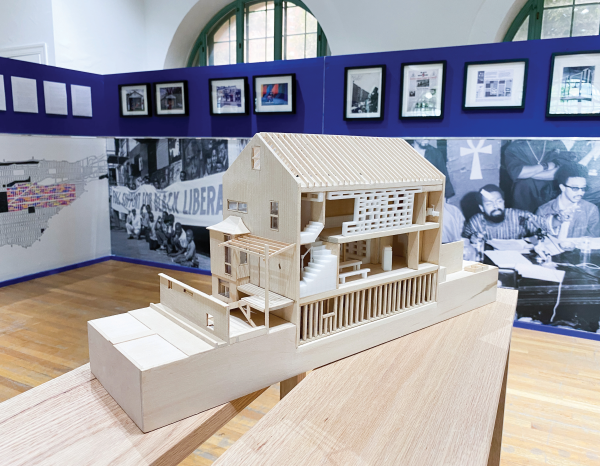
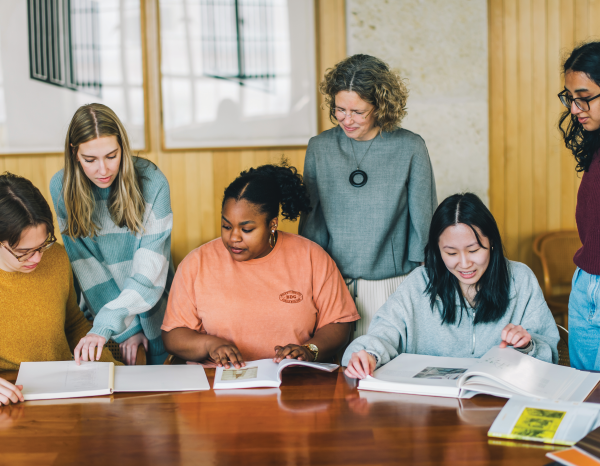
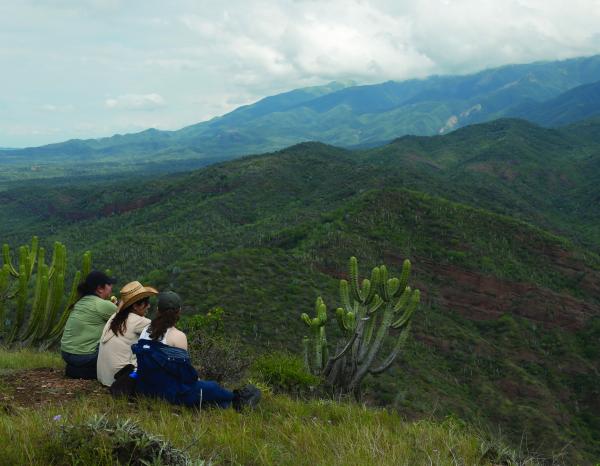
HISTORIC PRESERVATION STUDENTS IN ACTION


FOLLOW US
- Instagram Post
 @utsoa
In the inaugural volume of The Plot, we looked at how Josh Conrad, Ph.D., mapped the digital and physical stacks of the John S. Chase Architecture and Planning Library.
Instagram Post @utsoa
On October 26, acclaimed architect Michael Maltzan (@michaelmaltzanarchitecture) presents his lecture, “Scales of the City.”
Instagram Post @utsoa
Beautiful scenes from Genoa, Italy 💜
Architecture student Gabriela Fuentes sent these photos in, documenting her time working with @rpbw_architects as part @utsoaprp!
Instagram Post @utsoa
Introducing a new annual print publication from the School of Architecture: The Plot.
Instagram Post @utsoa
Scenes from our BLOCKWORK symposium 🧱
.
.
.
.
.
.
.
Organized by Professor Francisco Gomes. Thank you to The Concrete Masonry Checkoff (The Beauty of Block) and the Texas Masonry Council (@txmasonry)
for supporting the symposium.Instagram Post @utsoa
On October 12, Johnston Marklee (@johnstonmarklee) founding partner Mark Lee will be on campus to celebrate the opening of the firm’s exhibition “Looks and Books.” with a lecture titled “Now and Then.”
Instagram Post @utsoa
📝 Applications are open for 2027-2028 undergraduate and graduate programs!
Apply today to join an interdisciplinary community of designers, planners, and scholars committed to creative exploration, ambitious scholarship and critical practice.
UTSOA at a glance:Instagram Post @utsoa
On September 30, architect, urbanist and author @felipecorrea_sc presents his lecture, "The Domestic Surround.”
Instagram Post @utsoa
On October 1-2, The University of Texas at Austin School of Architecture presents BLOCKWORK: Concrete Masonry Architecture of the Americas.