
"Landscape as a Setting for Art and Culture" by Mary Margaret Jones

At Hargreaves Jones, we seek to foreground landscape as the essential foundation for civic and environmental resilience. We approach each project as an opportunity to reveal the unique qualities of a place: whether amplifying the natural phenomena of a site, expressing historic narratives, transforming infrastructural impediments into open space opportunities, or integrating art within the public realm. The projects create platforms for cultural expression and opportunities for individual interpretation and discovery.
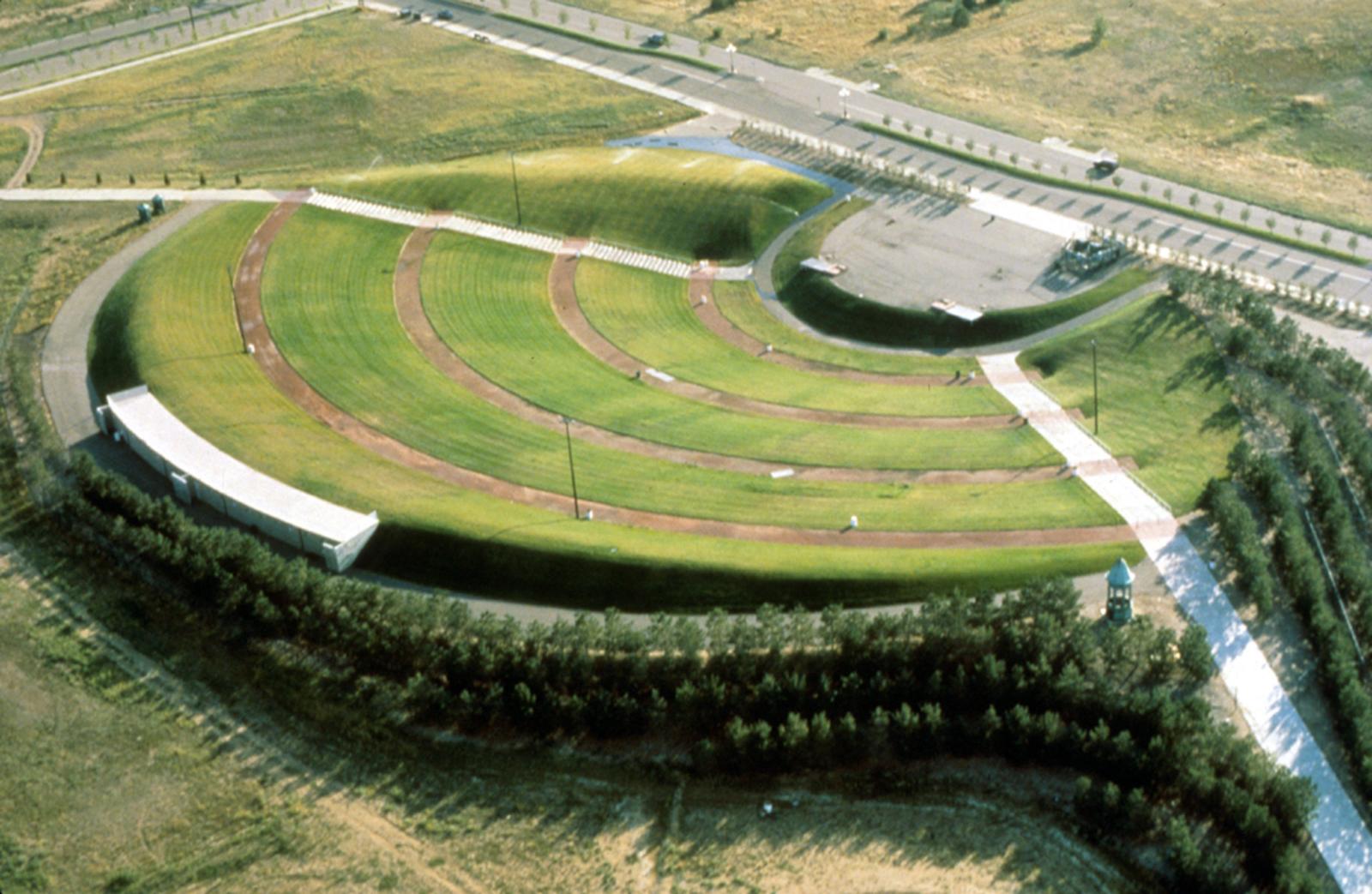
LANDSCAPE AS ART
The firm’s early work, such as Fiddlers Green Amphitheater, explored the potential for landscape to be sculptural. The amphitheater is a simple but powerful earthwork—a bowl to the Colorado sky—that hosts symphonies in the summer and sledders in winter.
Lakewood Hills is a single, long, straight line of water to the horizon of California hills with weirs that mark its levels. Ultimately a stormwater management system for a residential area, it began as a gesture that brought the sky to the ground and expressed the regional use of water as irrigation, as sustenance, and as a precious resource.
Candlestick Park and Byxbee Park in California were both collaborations with artists that converted landfills into evocative public landscapes that juxtapose constructed land works with natural systems.
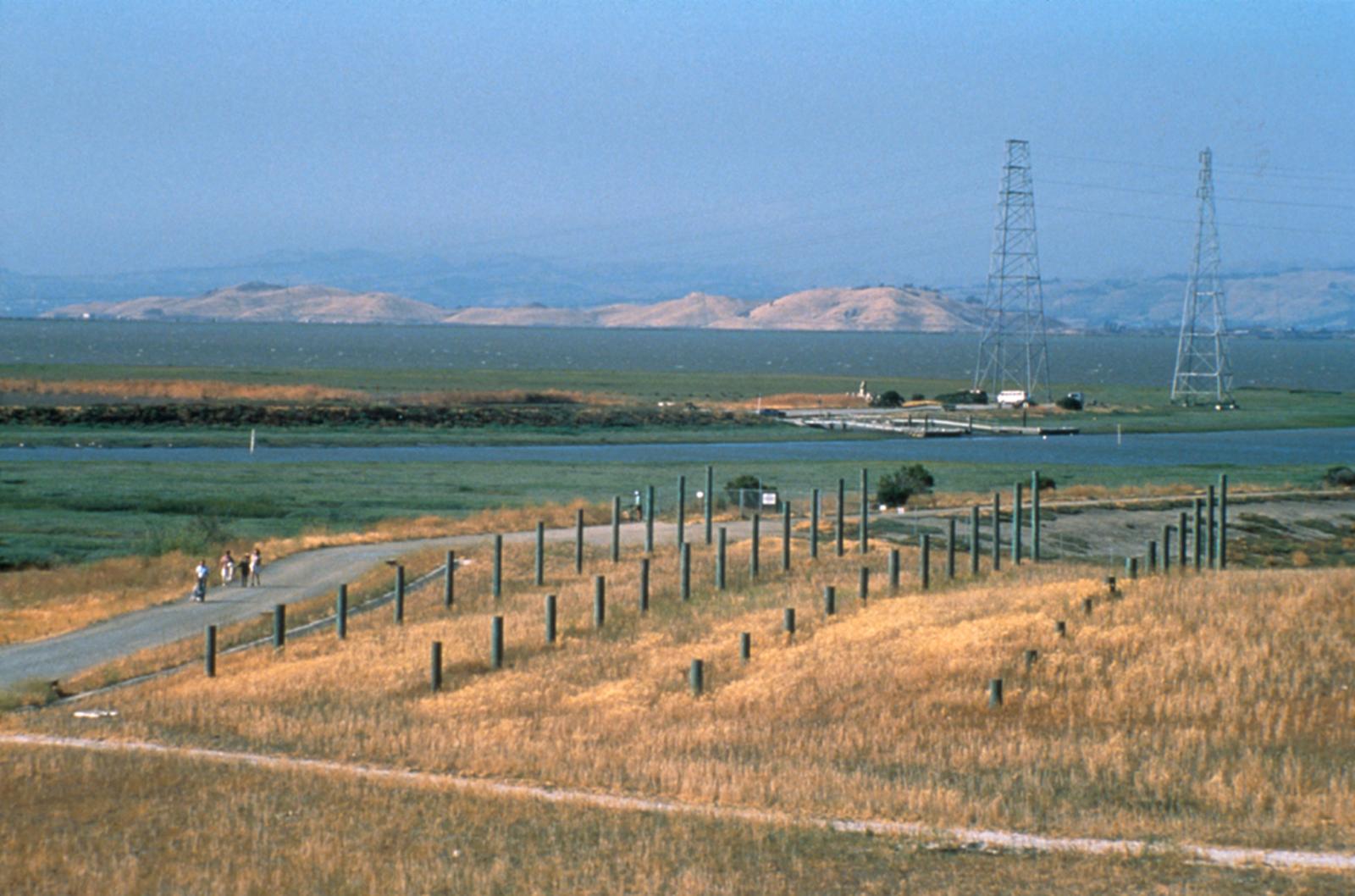
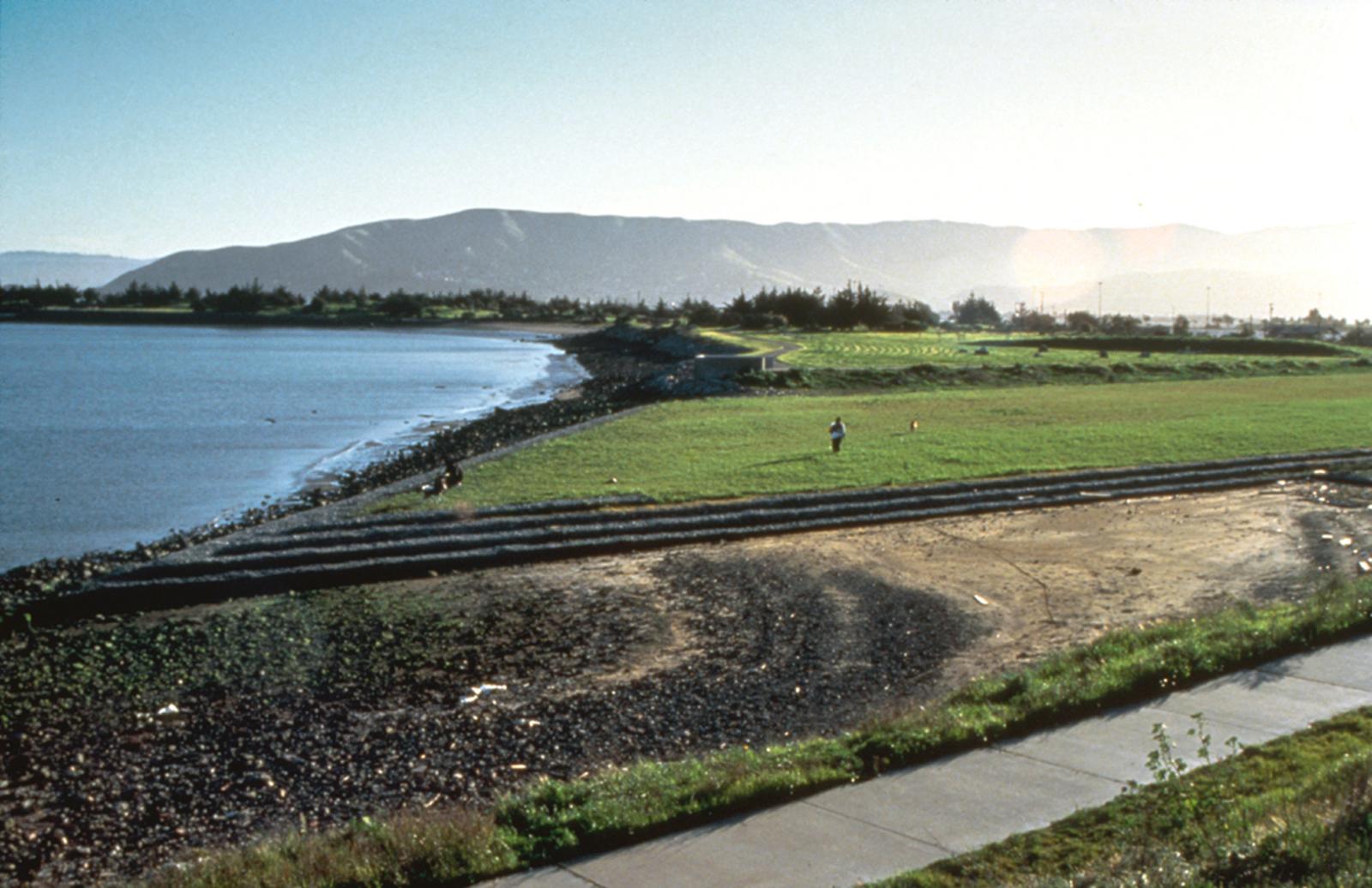
Candlestick Park was a collaboration with the artist Douglas Hollis and the architect Mark Mack. Byxbee Park was a collaboration with artists Peter Richards and Michael Oppenheimer, who were first chosen by the city’s Art Commission and Engineering Department and were part of the selection of our firm as landscape architects, an unusual turning of the tables.
In these two projects, the collaboration began on day one. The artists and designers were at the table together, not yet occupying the silos of their respective disciplines, but rather pushing each other to think outside traditional boundaries. The resulting landscapes amplify the inherent qualities of their places and, by contrasting the natural settings with the manmade interventions, make both more legible.
MAKING LANDSCAPES FOR ART AND CULTURE
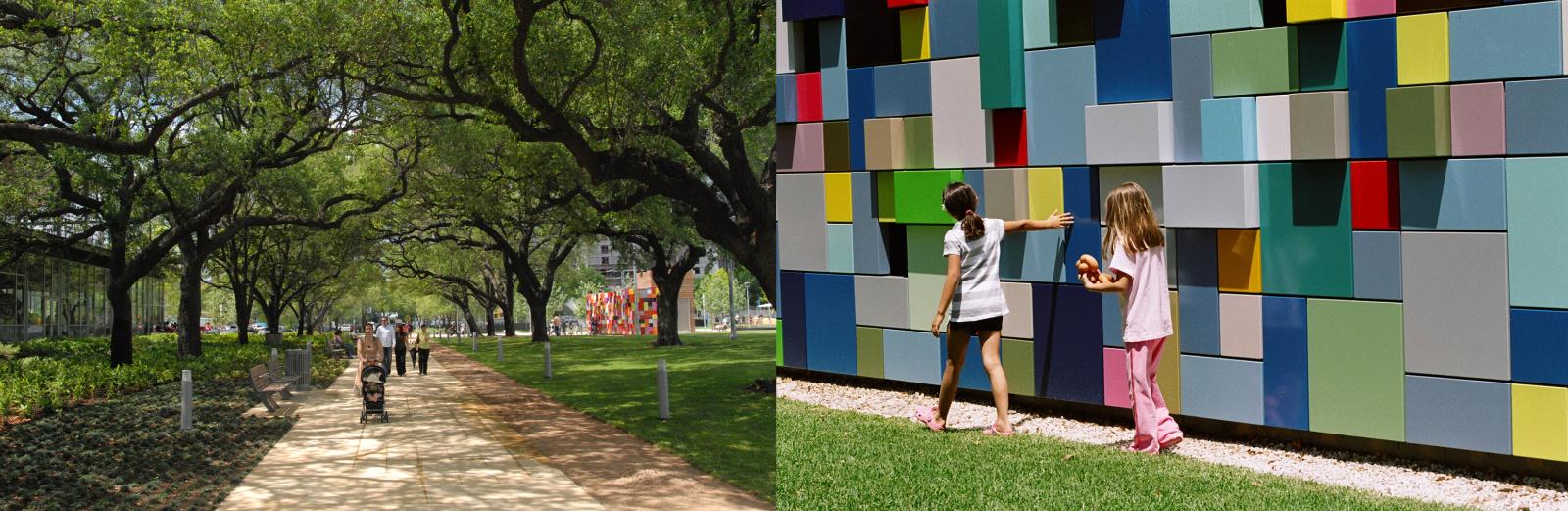
Artists expand our work as landscape architects and planners, and Discovery Green in Houston is exemplary of these fruitful collaborations. This project transformed vast surface parking lots into a vibrant open space destination that has been a catalyst for change for downtown and the adjacent neighborhoods. The park establishes a landscape framework that creates a series of outdoor rooms within which programs can evolve, and the park’s uses can change over time.
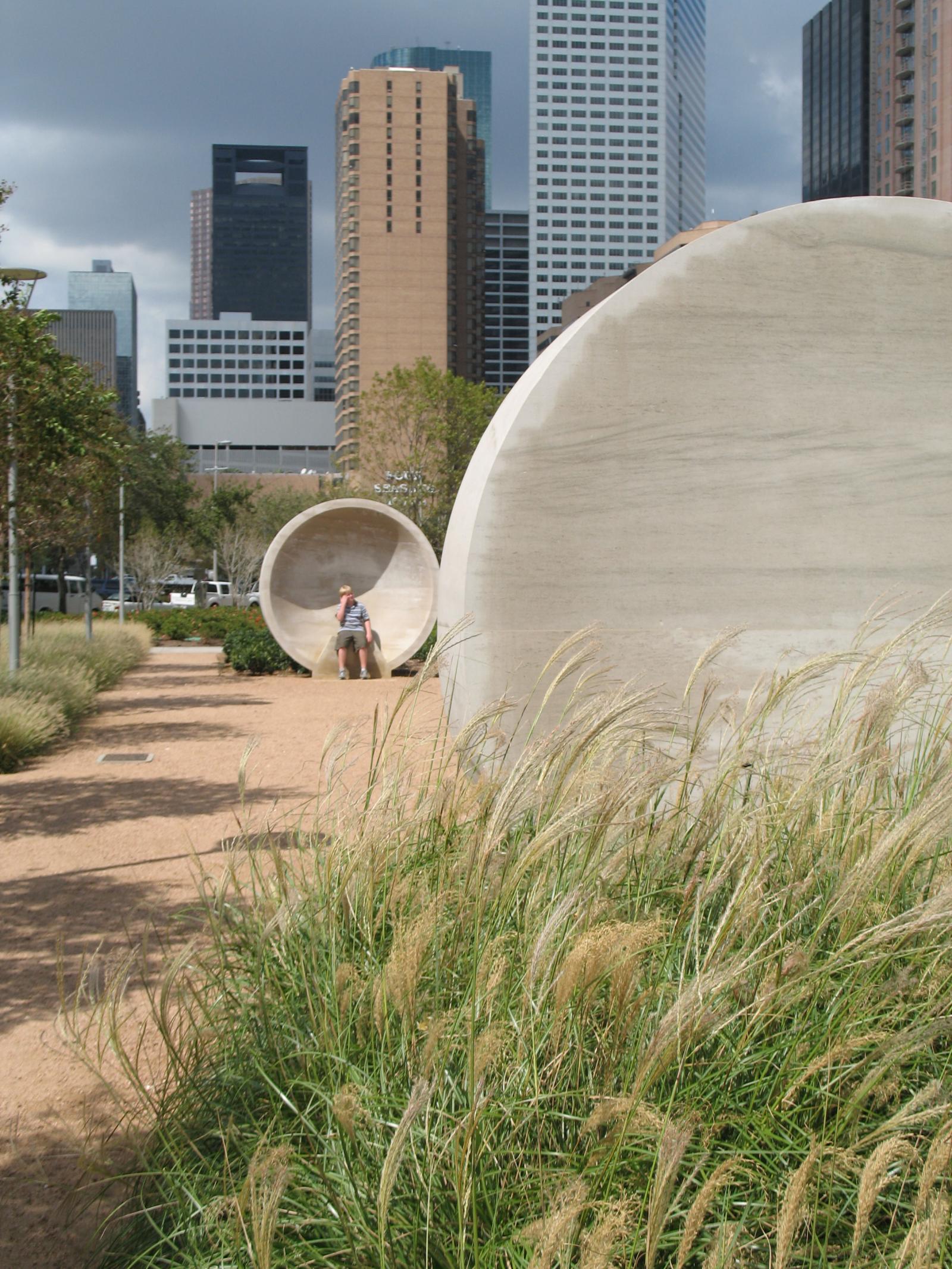
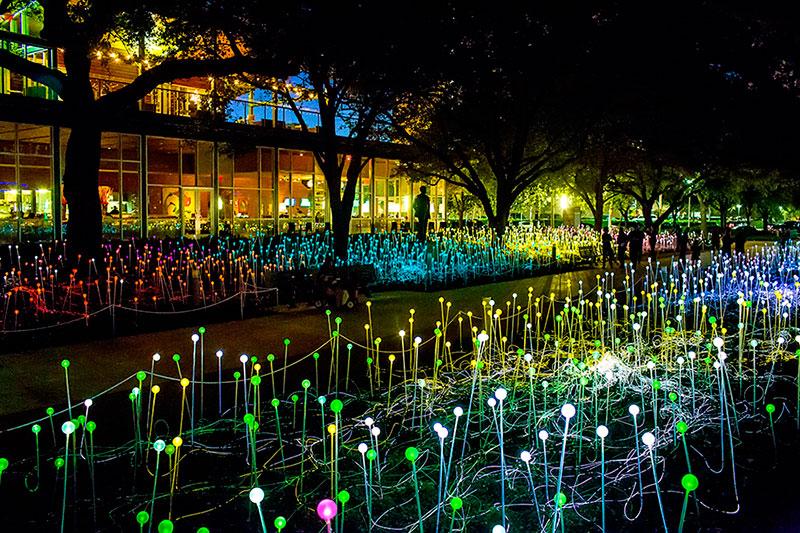
Artists Douglas Hollis and Margo Sawyer were invited to the table to creatively activate our design work: Doug, who offered two interactive pieces within the landscape, the MistTree fountain and Listening Vessels, and Margo, who created Synchronicity of Color—two headhouses for access to the below grade parking structure, working with the architect of the park’s buildings, Larry Speck of PAGE. In this case, the artists were working within the park’s design structure and finding ways to animate and engage users. The park also hosts temporary installations, such as Bruce Munro’s Field of Light, which attracted thousands of visitors throughout one winter season.
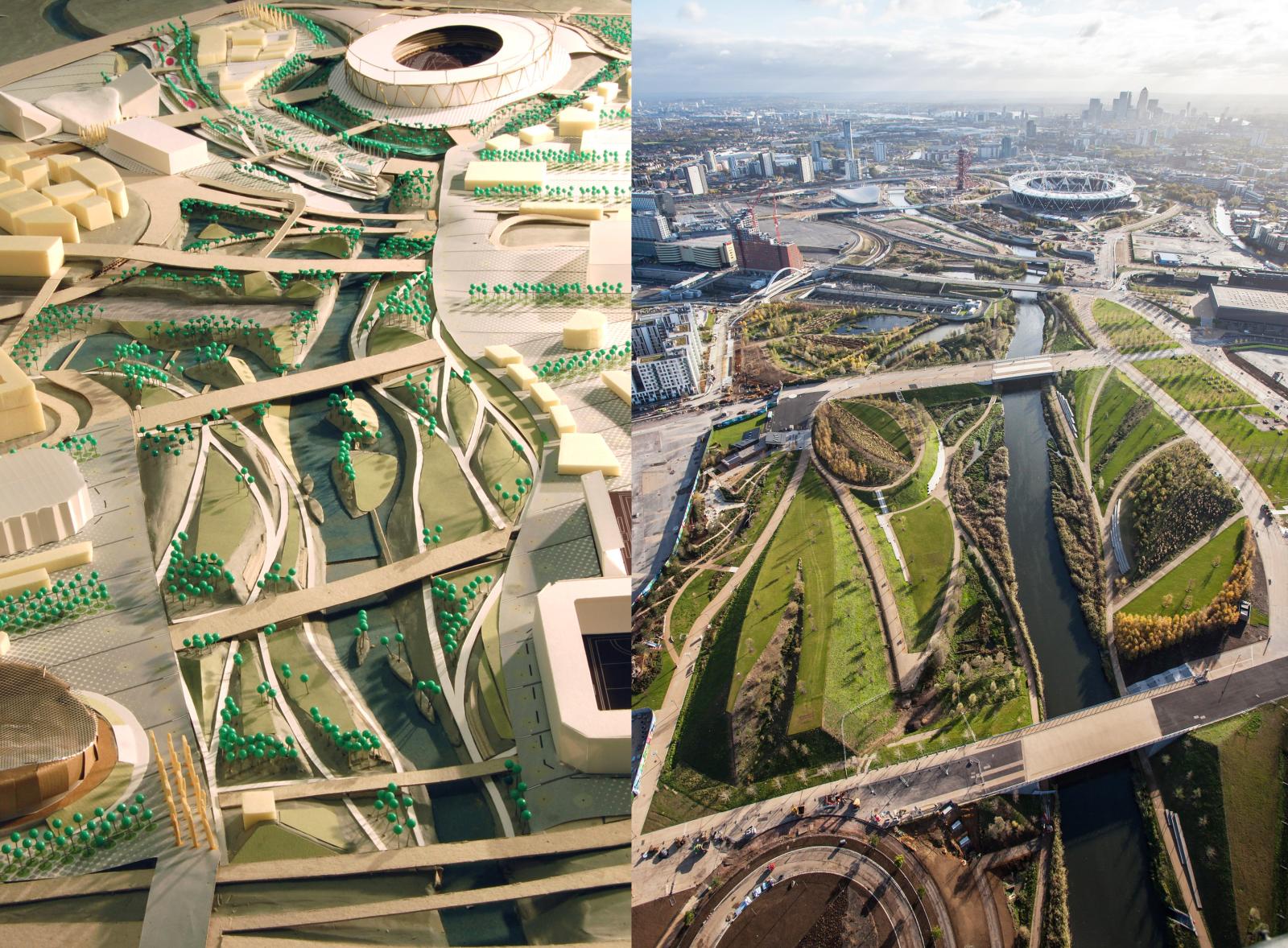
Our work has reached monumental scales, especially through the Queen Elizabeth Olympic Park for the 2012 London Games, which restored a river and converted 274 acres of post-industrial polluted land into an ecologically rich landscape. It is a place for people from all over the world to gather, and a legacy park for future generations.
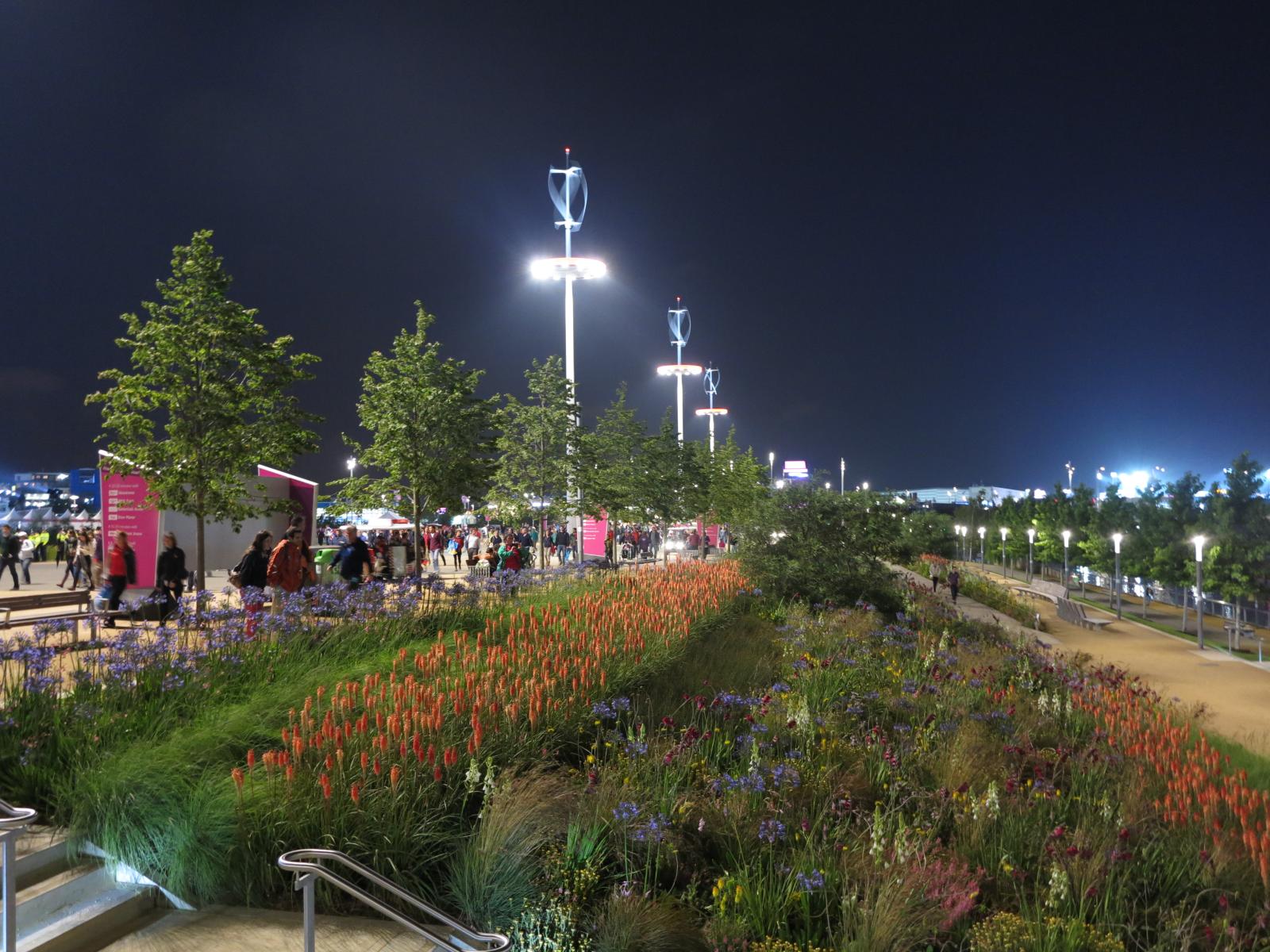
The park hosts not only Anish Kapoor’s monumental sculpture Orbit as well as other art found throughout the park but also transformed a derelict landscape into a place for cultural expression and cross-cultural events. The Olympic Gardens are themed around the countries that participate in the Games, celebrating international connections as well as the British tradition of plant collecting and gardening. At this expansive scale, the landscape sponsors art, culture, connectivity and a lasting legacy of open space for London’s East End.
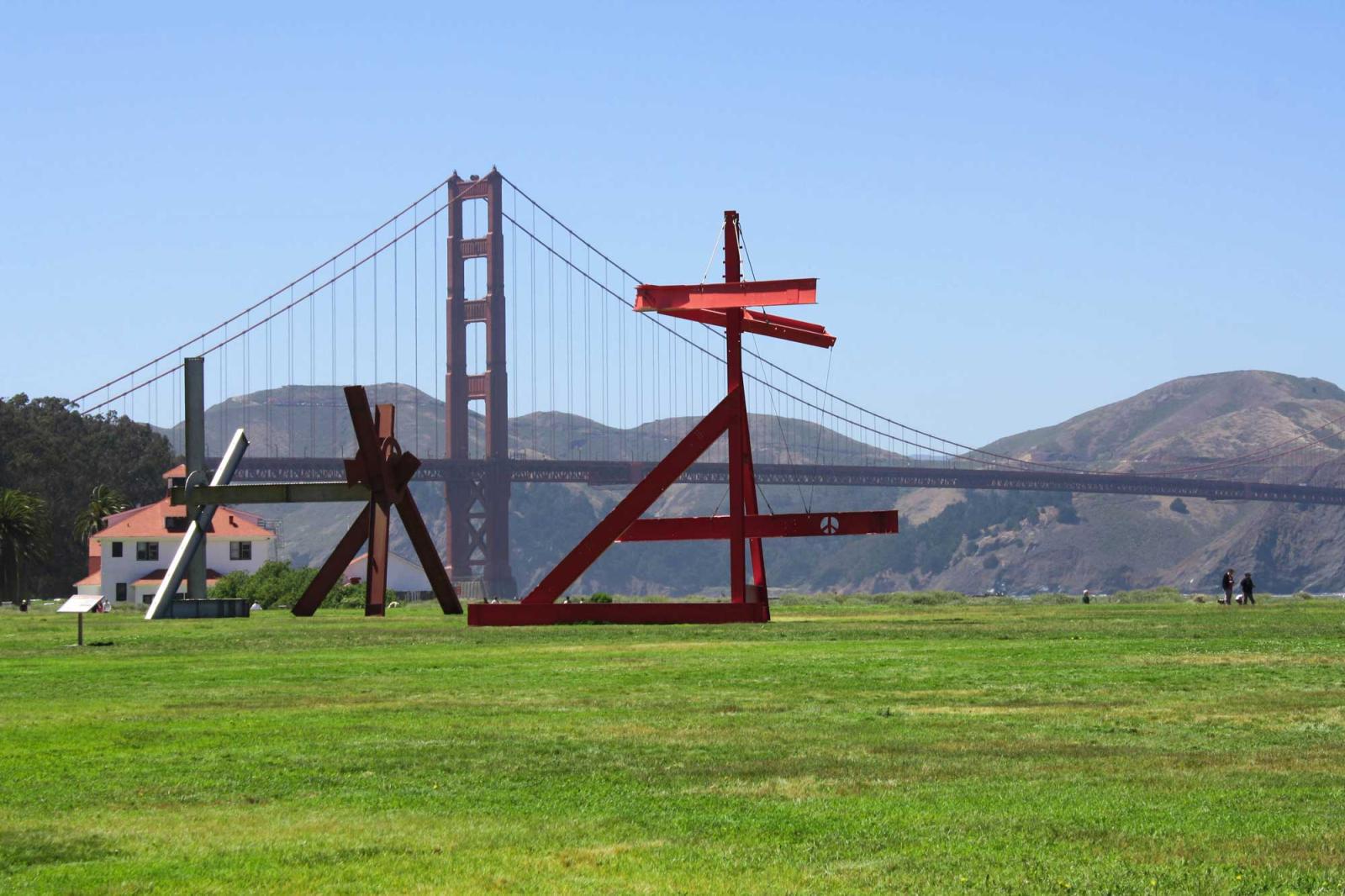
In San Francisco, Crissy Field converted a storied landscape into a 100-acre national park that traces the grass airfield of the 1920’s and restores the tidal marsh that pre-existed human settlement. The site has great historic significance: it is ancestral land of the native Ramaytush Ohlone people, who were drawn to its protected conditions and source of plentiful food, and the land was later established as an army base to take advantage of its key defensive position at the mouth of the Golden Gate. The juxtaposition of these historic and natural features in the park amplifies the importance of both, and they are made legible in the landscape’s plan—one can see the airfield and interpret the movement of the bi-planes that landed there as well as the grand tidal movement that creates changes in the marsh daily. The rich marine and bird life thrives as a result.
This integration of cultural and natural resources is both monumental and subtle: 100,000 cubic yards of dirt were moved to create the park, but it looks as if it might always have been this way. Millions of visitors and tens of thousands of schoolchildren enjoy and learn from Crissy Field every year as the dynamic movement of the marsh evolves and the grass airfield hosts cultural events as well as art displays such as the field of large sculptures by Mark di Suvero that were exhibited there from May 2013 to May 2014. Their awesome scale matched the power of the sweeping landscape.
INCORPORATING ART IN THE PUBLIC REALM
JFK Plaza / Love Park in Philadelphia was home to Robert Indiana’s LOVE sculpture, which attracted thousands of visitors each year, but the park itself was in great disrepair and was not living up to its potential as an open space amenity for the city.
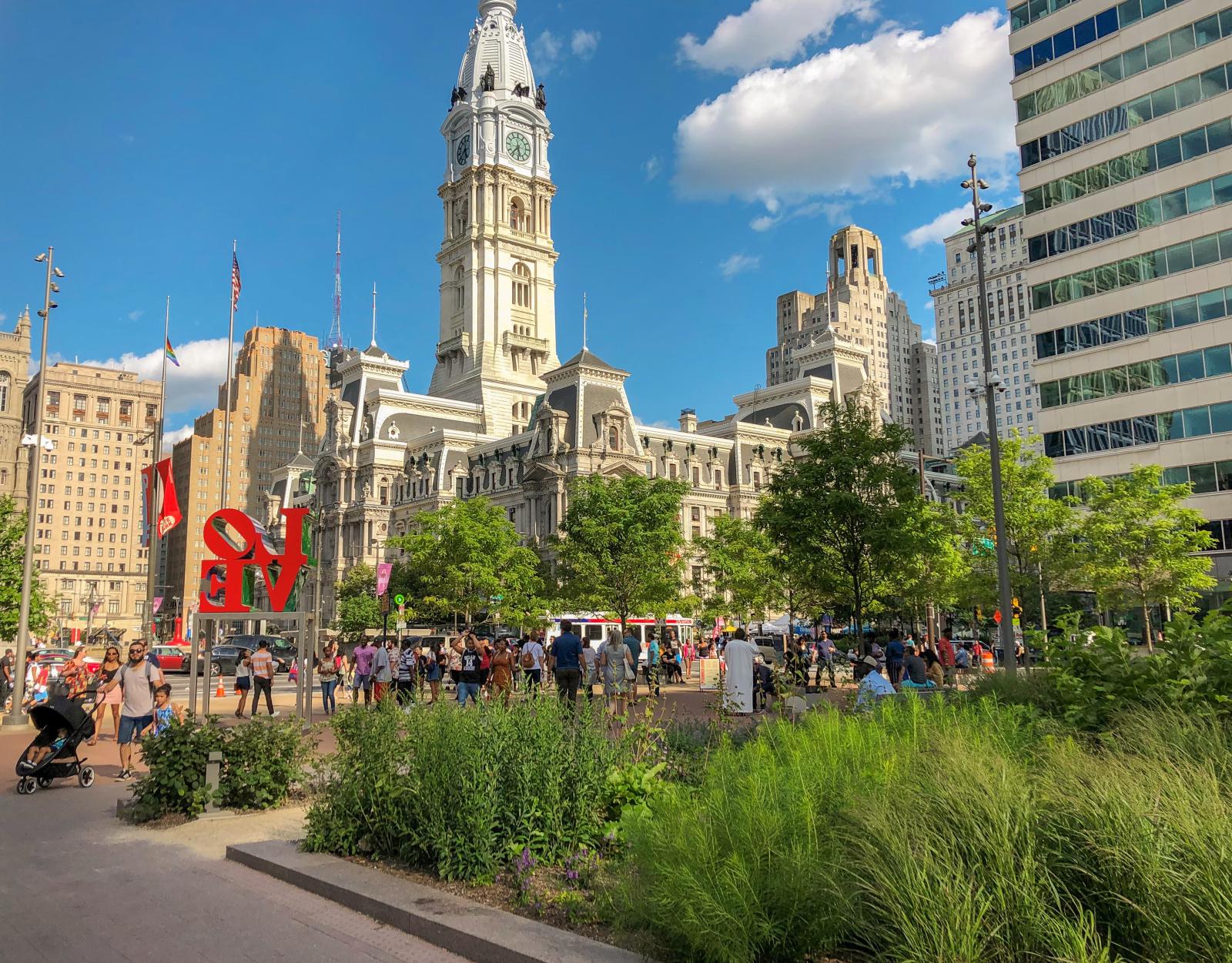
The redesigned park has created a landscape and plaza that both emphasizes the sculpture’s significance on the axis of the Benjamin Franklin Parkway but also has made a green oasis in the city and a place for cultural events and social gatherings—a space where a tradition of free speech will continue to prevail.
A related example is Elizabeth Caruthers Park in Portland, Oregon, where Doug Hollis’s sculpture bring sound to the Pacific Northwest rain gardens and reflects the bicycle culture that is strong in Portland through his piece Song Cycles. As they spin and click like playing cards in spokes, they make one aware of both nature and culture.
REPOSITIONING ART AND LANDSCAPE
Carpenter Park in Dallas was the setting for a major sculpture by Robert Irwin, Portal Park Slice, a weathered steel wall over 100’ long, framing a highway exit ramp within a landscape that was park only in name—largely unused and unknown. When the Texas Department of Transportation decided to remove the off-ramp and the city and civic leaders approached us to re-imagine the park now unencumbered by the off-ramp, we were faced with an opportunity and a challenge: to make a park that would connect with growing neighborhoods east of downtown and, at the same time, respect Irwin’s site conditional art.
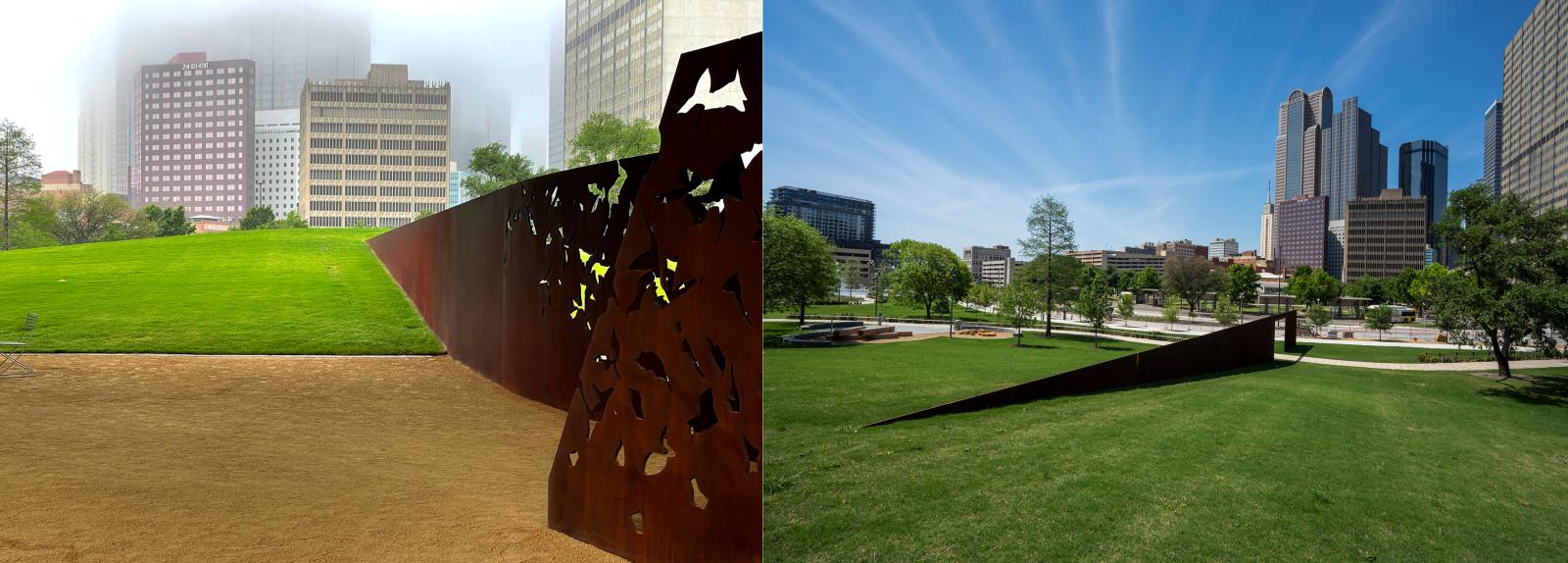
We started by approaching Irwin, whose response to the planned demolition of the highway exit ramp was to advise that the city simply demolish the sculpture. He maintained that it no longer existed with the change to the conditions and was emphatic that it should go – feeling fairly philosophical that “things change”, and that to understand his work was to understand his position. However, the city was reluctant to demolish an early work of this seminal artist and asked if we could find a creative solution that might preserve the sculpture.
We approached Irwin with the proposal that we consider replacing the roadway with a pedestrian walkway that traced the movement once made by cars. He took it a step further. He returned small drawings and a photo of his stainless-steel piece installed at Wellsley College rolled up in a Chanel No. 5 perfume box marked “+ REPO”. His proposal was to turn the piece 180 degrees, reaching under the overhead freeway from the direction of downtown toward the east neighborhood and to create two new ends to arc against each other forming a gateway beneath the highway, each cut in a filigree pattern similar to his work at Wellesley.
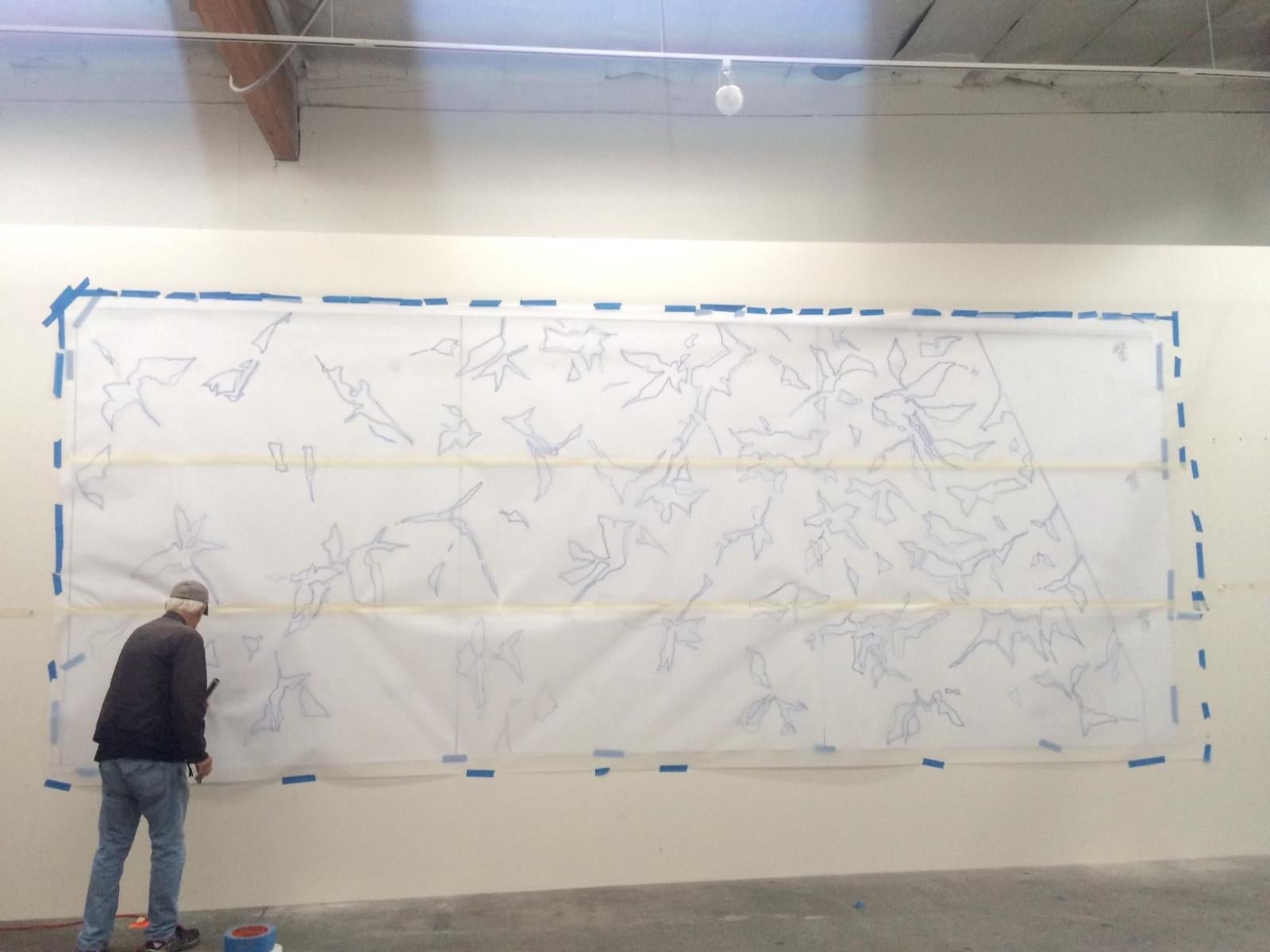
This solution opened up new possibilities for the park’s design, reimagining and updating his own work—something he told us he had never done before (indeed, a re-positioning). Carpenter Park is now the largest downtown park and Irwin’s work interacts with a large hill, as it had originally, but also enlivens a plaza area beneath the freeway.
The park’s winding granite path connects a corner entry, marked by a statue of the park’s original benefactor, John Carpenter, through Portal Park Slice, meandering around the base of the hill to a central lawn, through gardens and to a plaza with tall fountain jets that mark an axial relationship to downtown with low interactive sprays that cool and delight children of all ages. Beneath the highway sits a concession building, moveable tables and chairs, a basketball court, and a dog park that animate the park by day in the shade of the bridge overhead, and at night, in the glow of color changing lights that create a unique outdoor room, these features make infrastructure an amenity.
LANDSCAPE ARCHITECTURE AS CATALYST
Landscape architecture and landscape architects have the ability to create catalytic changes in our cities: ecological, social, economic, and cultural shifts. Parks, plazas, and infrastructure can be art, incorporate the works of artists, and sponsor artistic and cultural expression, bringing joy to people’s lives in places that resonate with meaning. Landscape architects must embrace the opportunity to not just satisfy functional needs or solve infrastructural problems in their work, but to create memorable places that connect people to nature and each other, sparking engagement and emotional response that makes one think or feel or wonder or just be more aware of their surroundings. Achieving that is when landscape architecture is art.
Note: At the time of this writing TXDOT is planning to depress the overhead freeway that spans over the eastern edge of the park , which will demolish as approximately one quarter of Carpenter Park and about the same amount of Portal Park Slice, which lies within their R.O.W.
Mary Margaret Jones (RLA, FASLA, FAAR) is President and CEO of Hargreaves Jones, leading the firm’s offices in New York City, San Francisco, and Cambridge, MA. Mary Margaret has over 30 years of experience, demonstrating the power of investing in the public realm to transform cities, institutions, communities, and individuals. She is a recognized leader in landscape architecture and planning, lecturing widely and shaping professional design practice and education. She holds board positions with the American Academy in Rome; The Architectural League NY; the Regional Plan Association; and ODC Dance in San Francisco. She is a Fellow and Artist in Residence of the American Academy in Rome; Fellow of the American Society of Landscape Architects; Fellow of the Urban Design Forum in New York; and Senior Fellow of the Design Futures Council.
Mary Margaret’s work with Hargreaves Jones has been recognized nationally and internationally, including the prestigious Cooper Hewitt National Design Award, the Rosa Barba International Landscape Prize, and the American Society of Landscape Architecture Landmark Award. Her significant contributions to the public realm include her leadership on complex urban projects, including Queen Elizabeth Olympic Park in London, UK; Scissortail Park in Oklahoma, OK; Discovery Green in Houston, TX; Zaryadye Park in Moscow, Russia; Crissy Field in San Francisco, CA; University of Cincinnati’s Campus in Cincinnati, OH; Denver Union Station Redevelopment in Denver, CO; and Guadalupe River Park in San Jose, CA. Her leadership is also noteworthy on the firm’s smaller yet equally distinctive projects, including Civic Garden in Dallas, TX; Elizabeth Caruthers Park in Portland, OR; 555 Mission in San Francisco, CA; Stanford University’s Science and Engineering Quad in Palo Alto, CA; and The Commons in Minneapolis, MN.

This article is part of a series of essays exploring topics inspired by “Landscape First” hosted at The University of Texas at Austin in the spring of 2025 with the generous support of the Still Water Foundation. All opinions, views, and provocations expressed are solely those of the authors and do not represent the official positions, policies, or perspectives of the School of Architecture.
READ THE ENTIRE LANDSCAPE FIRST ESSAY SERIES HERE →