
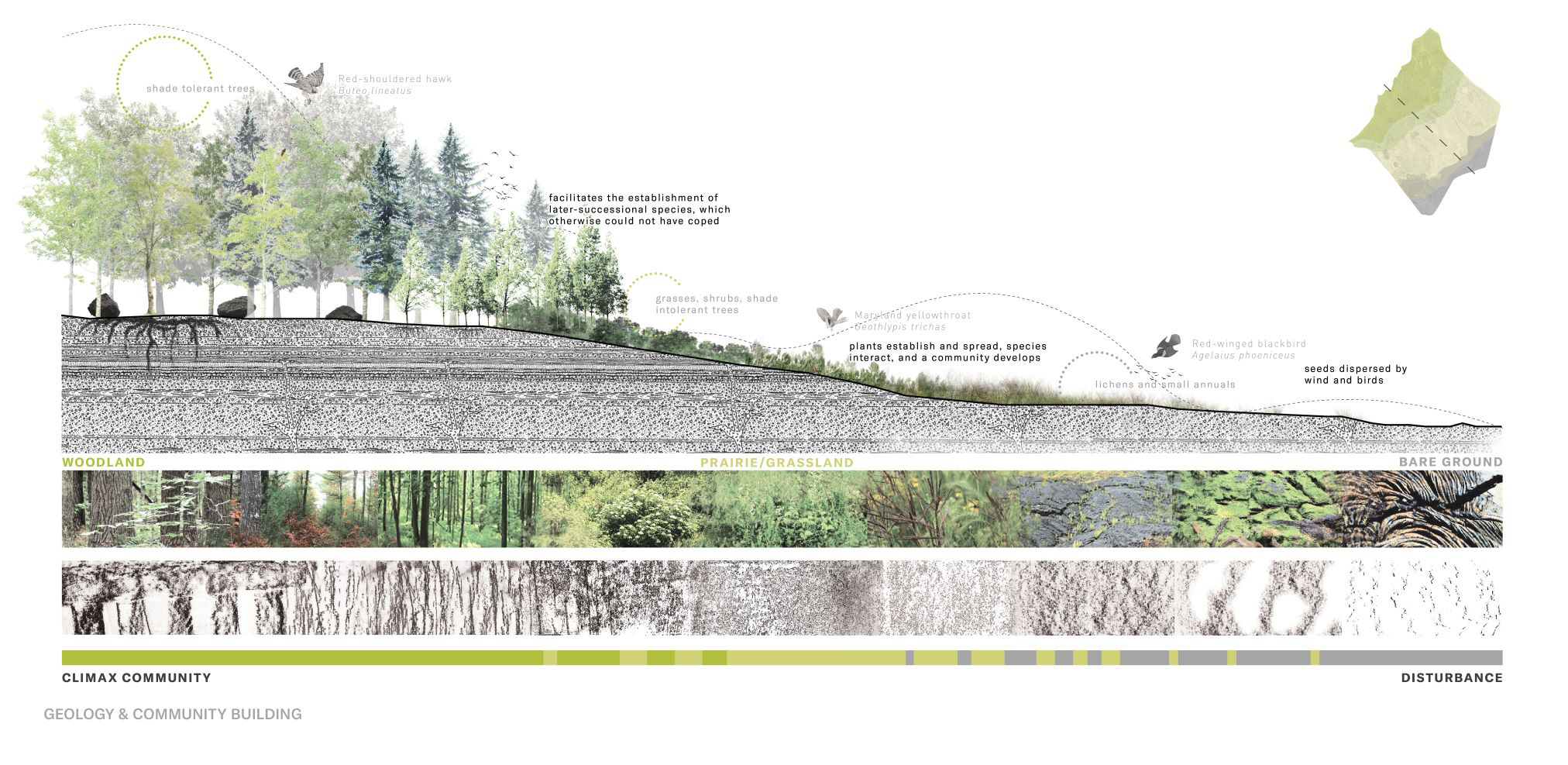
 Expand view for photograph Illustration showing ecological succession from bare ground to woodland, labeling plant and animal species at each stage and depicting progression from grasses to shrubs to mature forest. Includes a small site map in the upper right corner.
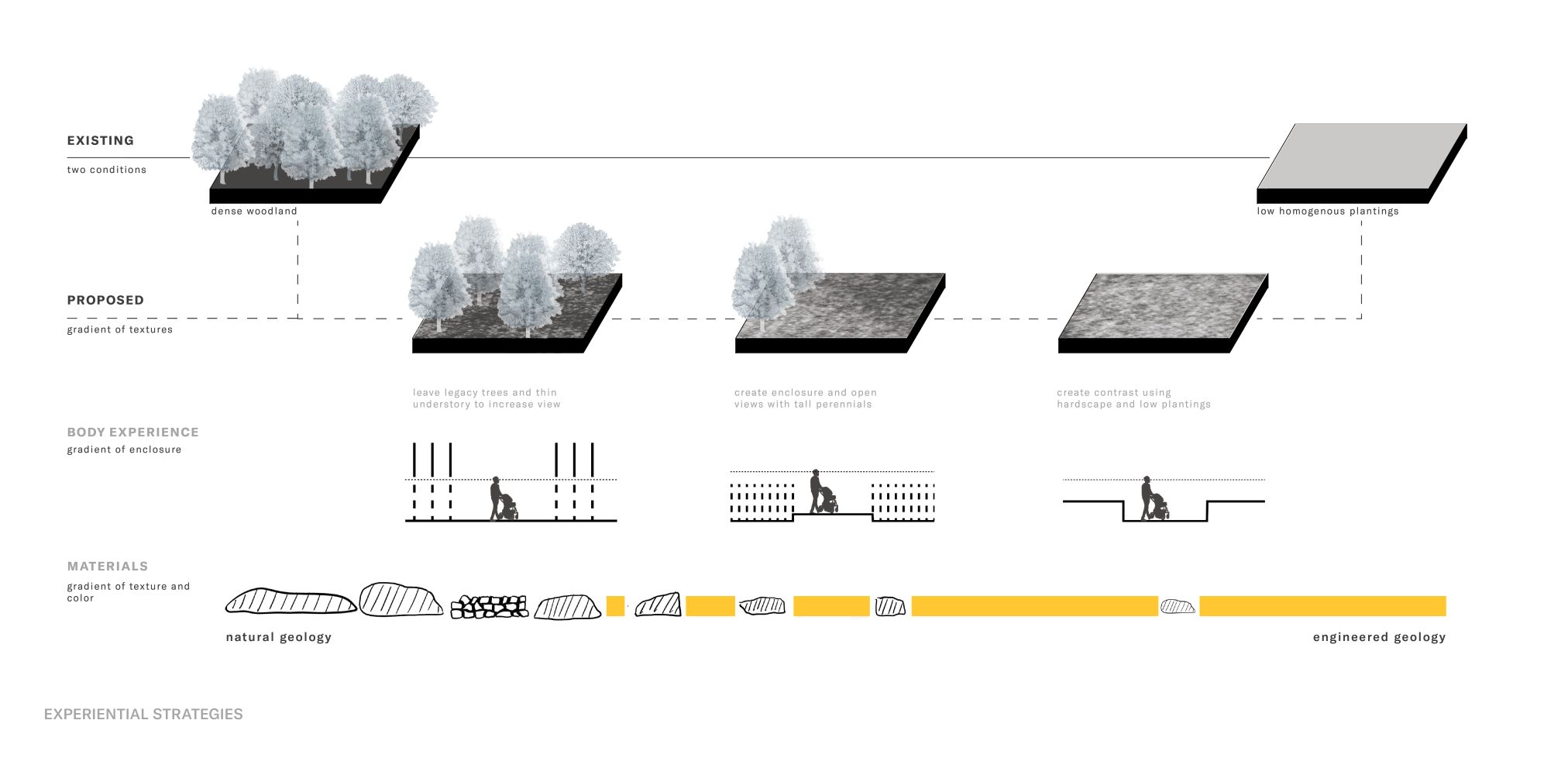 Expand view for photograph A diagram comparing existing dense woodland with a proposed landscape transformation, showing gradual tree thinning, terrain variation, and material changes from natural geology to engineered geology, accompanied by body experience diagrams.
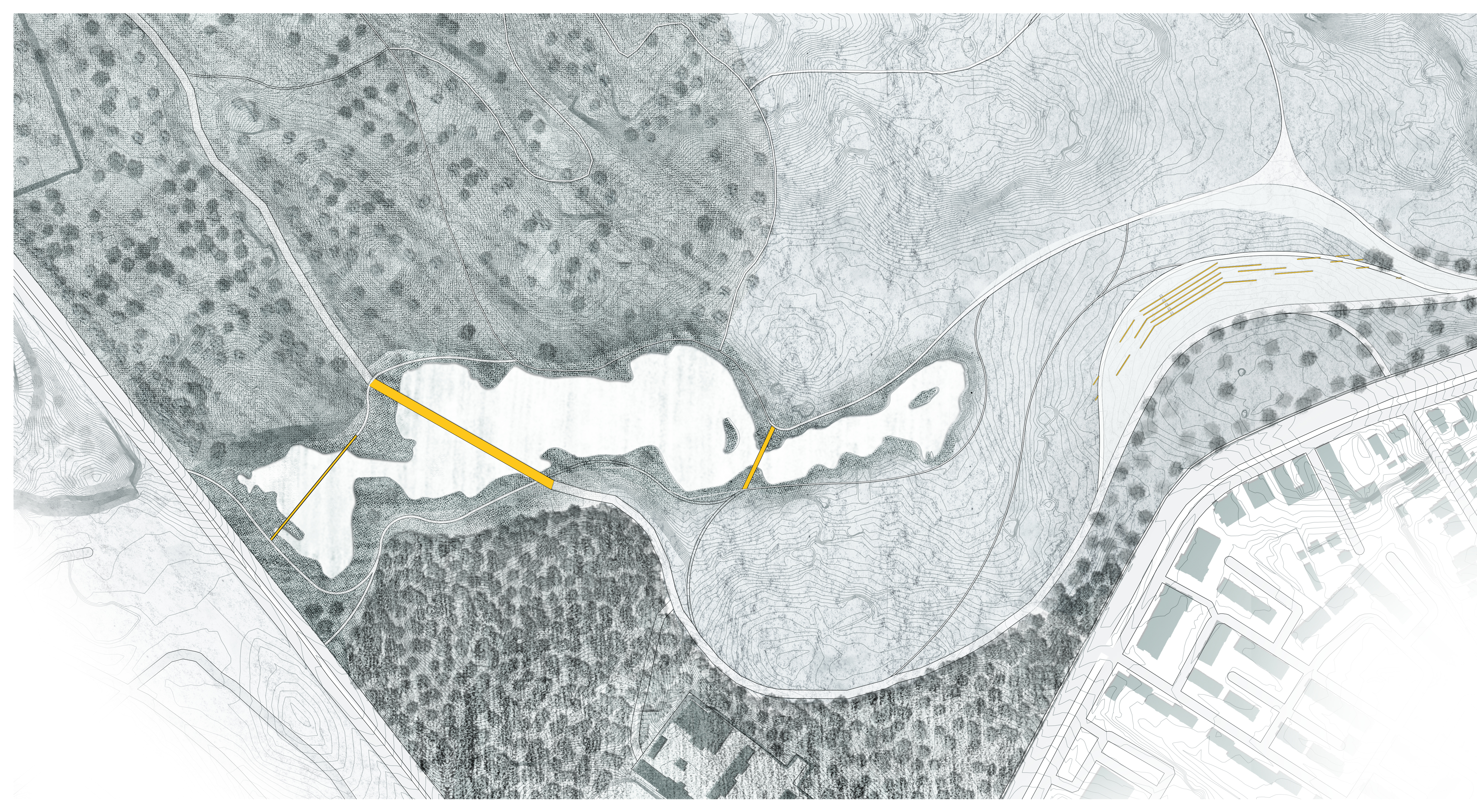
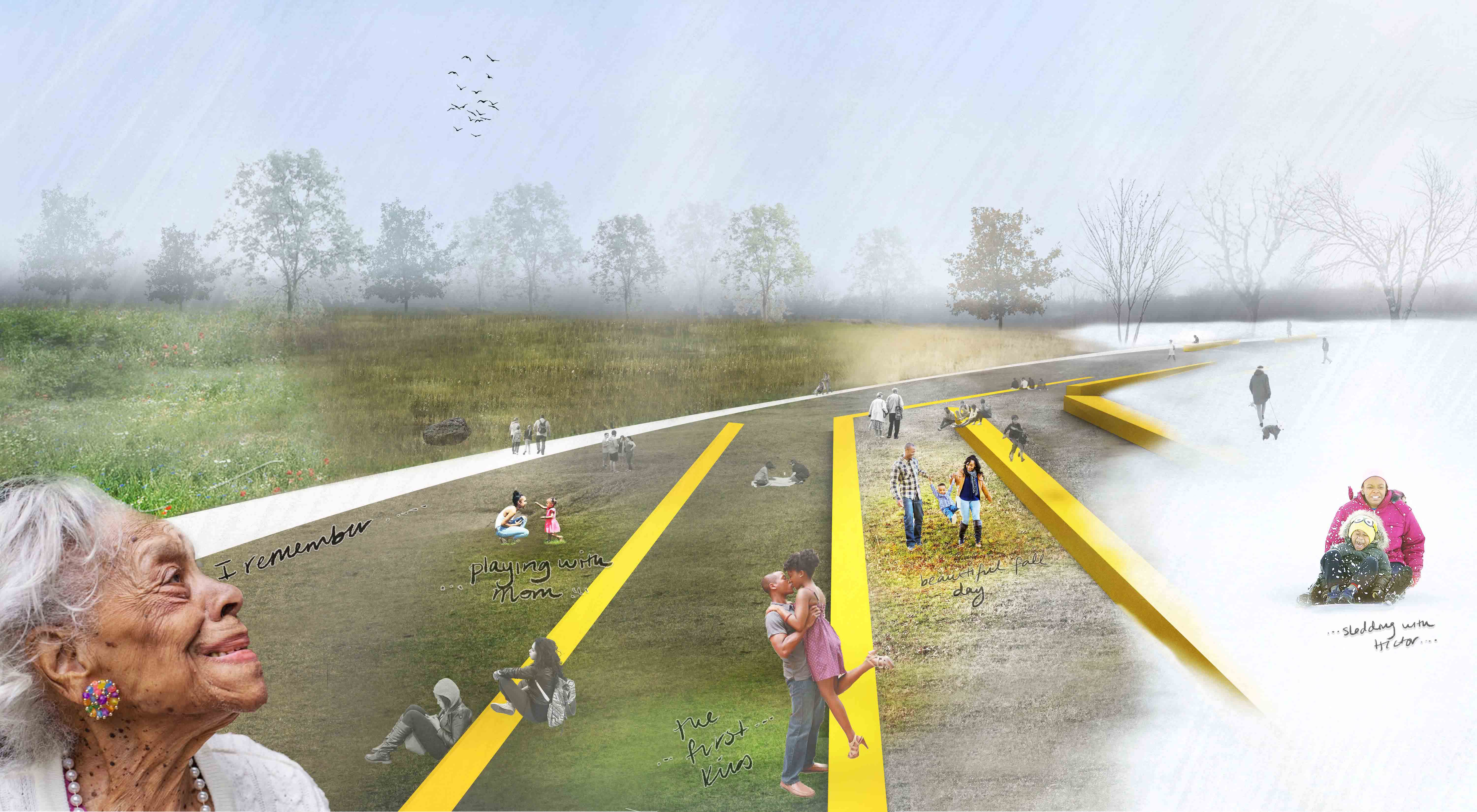
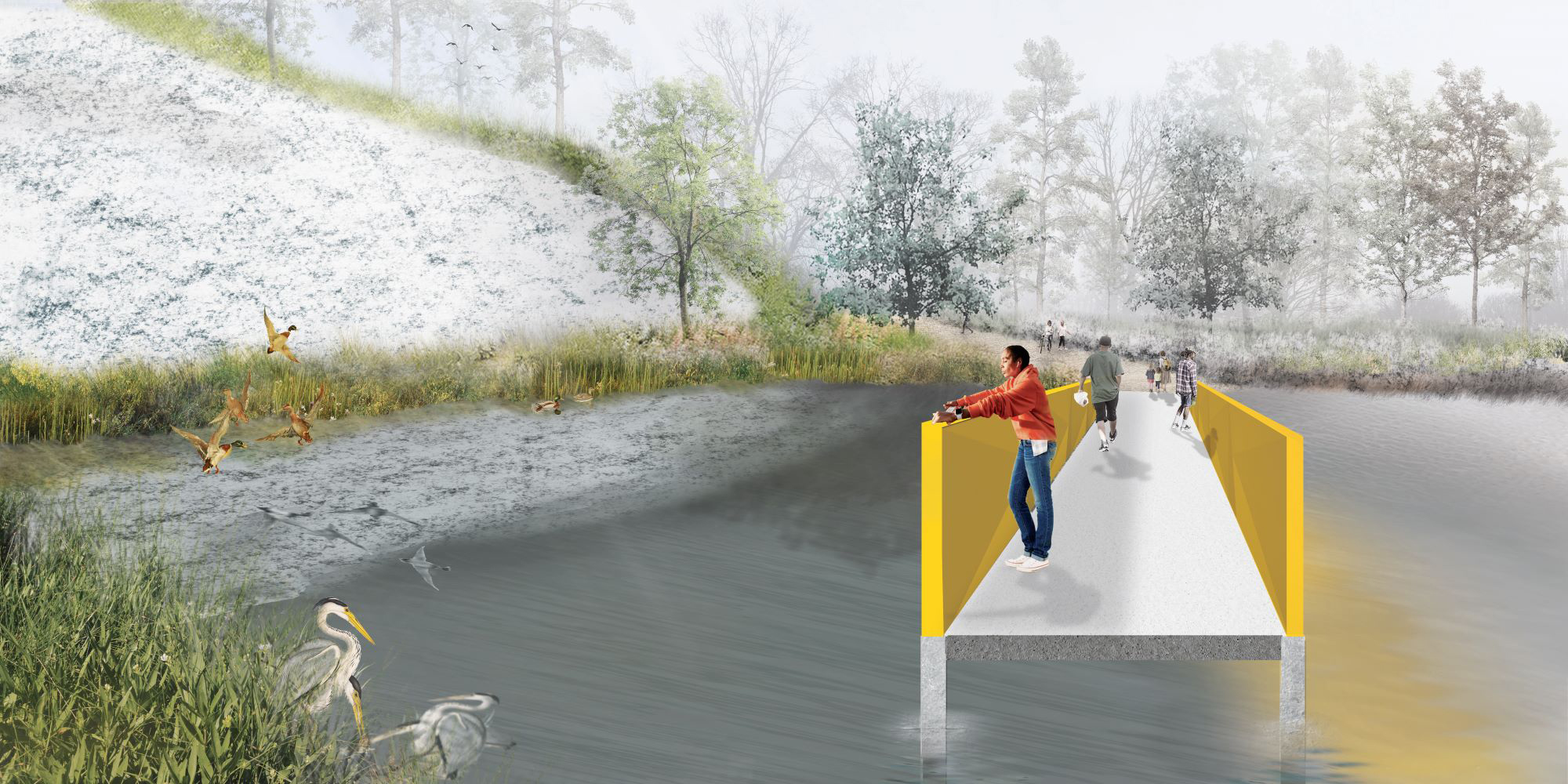
Humans are agents of change, altering our surroundings since the beginning of anthropogenic history. This proposal examines how we interact with inert materials and how, in turn, inert materials interact with us. By re-evaluating the notion of site history, the project argues for the value of inert materiality in its connection to the human experience. Material feminists, such as Jane Bennett, rethink enchantment in materialism, a notion which framed the design process. Through the study of the Roxbury Puddingstone, a rock formation only seen in the Roxbury neighborhood of Boston in which Franklin Park is located, the design highlights material texture and contrast to vitalize the park. The proposal engages diverse scales, from geological transformation to that of the human body, to create comfortable and engaging nodes for the surrounding communities. While the proposal investigates the past of Franklin Park, its intention is to provide a place for its users to write new stories on the landscape.
Spring 2020 Design Excellence Award Winner
Laura Brusson
Advanced Studio
Instructors: Gina Marie Ford and Maggie Hansen
Related work


